Article: Best Hair Cutting Shears Under $300: Professional Quality Without Breaking the Bank
Best Hair Cutting Shears Under $300: Professional Quality Without Breaking the Bank
A working stylist's shears are the one tool that touches every single client, and the price spread is absurd: $40 to $1,200 for two blades and a pivot. The good news is that the $150–$300 bracket is where professional shears stop being a gamble. Named Japanese steel, stated hardness numbers, adjustable tension, and a lifetime warranty are all available under $300 — the Saki Kotaro cutting and thinning set at $275 is a complete working setup for less than some brands charge for a single blade. This guide covers what $300 actually buys, which steels matter at this price, how nine specific options compare, and what you give up by not spending $500. No mystery-metal listings, no inflated trade-in math — just specs and prices you can check.
What $300 Actually Buys in 2026
Start with the income math, because it frames every tool decision a stylist makes. The U.S. Bureau of Labor Statistics puts the 2024 median pay for barbers, hairstylists, and cosmetologists at $35,420 per year. On that income, a $1,000 shear is a serious financial event. A $200–$275 shear is a manageable one — and the performance gap between those two price points is far smaller than the price gap suggests.
The core of any shear is its steel and heat treatment, and the steels used in well-made sub-$300 shears — 440C and VG-10 — are the same alloys that appear in shears costing twice as much. What changes above $300 is mostly labor: more hand-finishing time, more exotic blade material, more cosmetic work. Those things are real, but they refine a shear rather than transform it. Below roughly $120, the opposite problem appears: listings stop naming the steel at all, hardness numbers vanish, and the pivot — the mechanical heart of the shear — is where the factory saved its money.
So the practical question is not "cheap or expensive." It is whether a shear in the honest middle discloses its steel, holds its tension setting, fits your hand geometry, and is backed by a warranty long enough to matter. Every recommendation below clears that bar.

Steel First: 440C and VG-10 in Plain Terms
Two steels dominate the quality end of this bracket, and knowing the difference tells you more than any marketing page.
440C is a high-carbon martensitic stainless steel — 0.95–1.2% carbon with 16–18% chromium — that typically hardens to 58–60 HRC; Saki's 440C shears state 60–61 HRC on their spec sheets. The high carbon is what lets it take and hold a fine edge; the chromium is what keeps salon moisture and chemical exposure from corroding it. It has been the standard professional shear steel for decades because it balances edge retention, corrosion resistance, and sharpenability without excelling so far in one direction that it fails in another.
VG-10 is a Japanese alloy from Takefu Special Steel with about 1% carbon plus cobalt and vanadium; Takefu's own spec puts it at 60 HRC or above, and the VG-10 Grand Master below states 61–62 HRC. The cobalt lets the steel run harder without becoming fragile, which stretches the interval between sharpenings — how much longer depends on your daily volume — and gives a crisper feel through thick or coarse hair.
| Steel | Carbon | Typical hardness | At the chair |
|---|---|---|---|
| 440C | 0.95–1.2% | 58–60 HRC | Reliable edge, forgiving to sharpen, corrosion-resistant |
| VG-10 | ~1% + cobalt | 60+ HRC | Harder edge, longer sharpening interval, crisper through coarse hair |
Composition and hardness figures from the Wikipedia 440C entry and the zknives steel database.
The trade-off runs in both directions. Harder steel holds its edge longer, but when it does fail, it chips rather than rolls — a VG-10 edge that kisses a clip or hits the floor needs a sharpening service, where a slightly softer 440C edge often burnishes back into line. For a deeper comparison of how these two alloys behave over months of daily cutting, our VG10 vs 440C breakdown goes through it steel property by steel property.
Nine Options Under $300, Compared
Full disclosure up front: all nine shears in this table are ours. This is the Saki lineup under $300, specced from the product pages so you can check it line by line against anything else you are considering. Every entry carries Saki's lifetime warranty — material and workmanship defects, repaired or replaced — and prices are current as of this writing; they move with promotions, so treat the last column as a snapshot rather than a contract.
| Shear | Blade size | Steel (stated HRC) | In the box | Price |
|---|---|---|---|---|
| Katana Cutting | 5.5" or 7" | 440C (59–61) | Cutting shear | $149.25 |
| Tomika | 5.5" | 440C (60–61) | Cutting shear, razor, case | $180.00 |
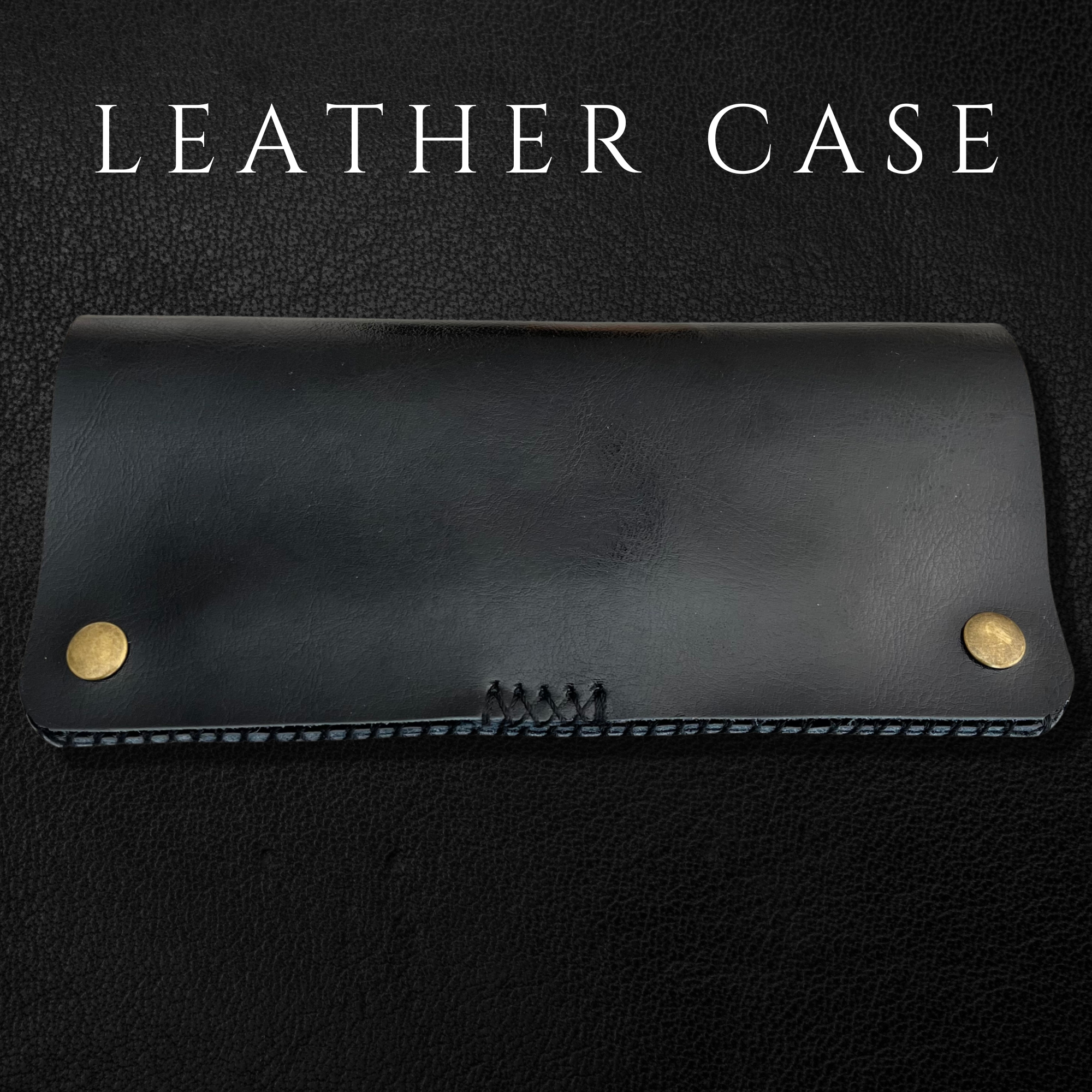
| Kotaro Cutting | 5.5" or 6" (6" lefty) | 440C (60–61) | Cutting shear, leather case | $189.00 |
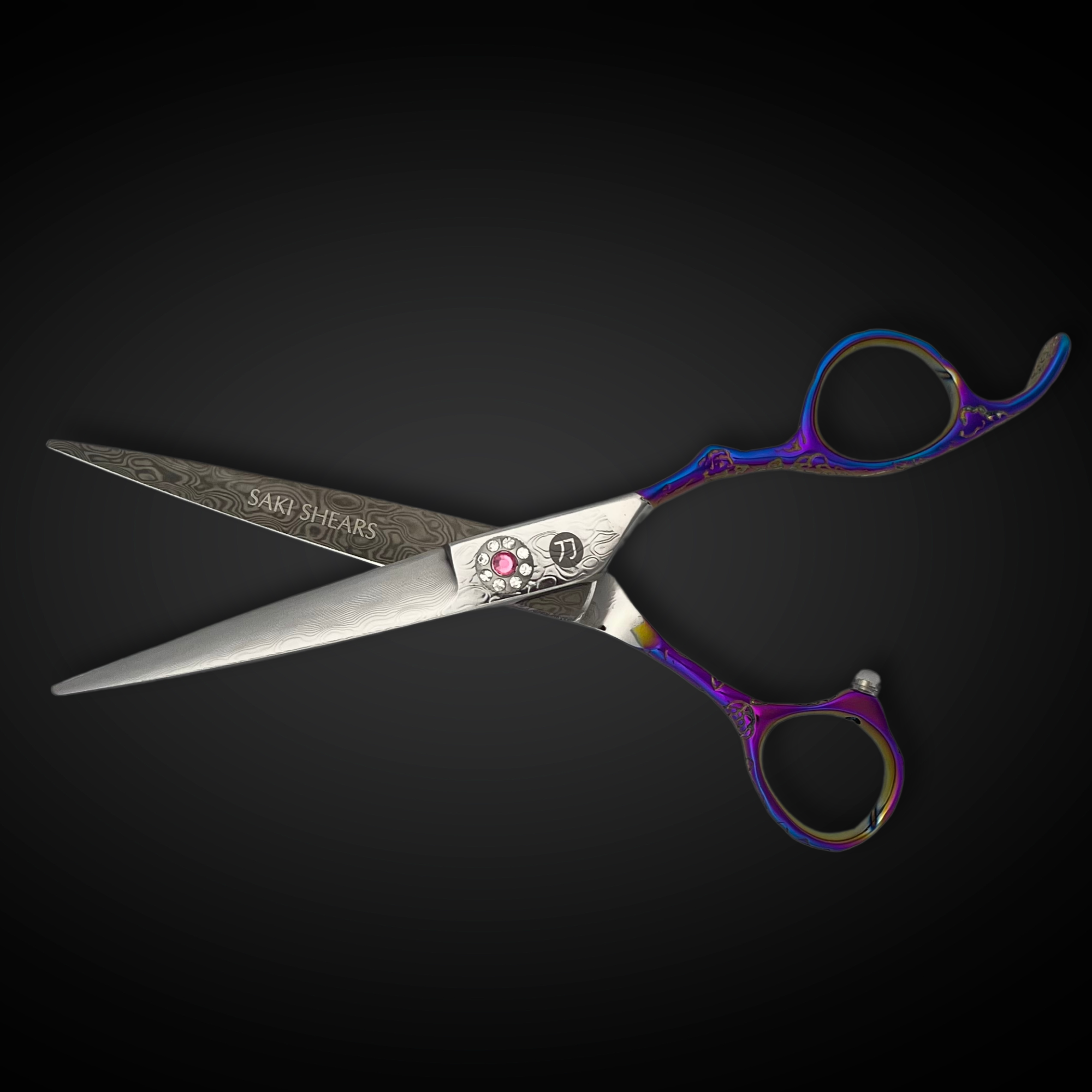
| Grand Master | 6" | VG-10 (61–62) | Cutting shear | $201.75 |
| Katana Set | 5.5" or 7" + 6" thinner | 440C | Both shears, swivel razor, case | $224.25 |
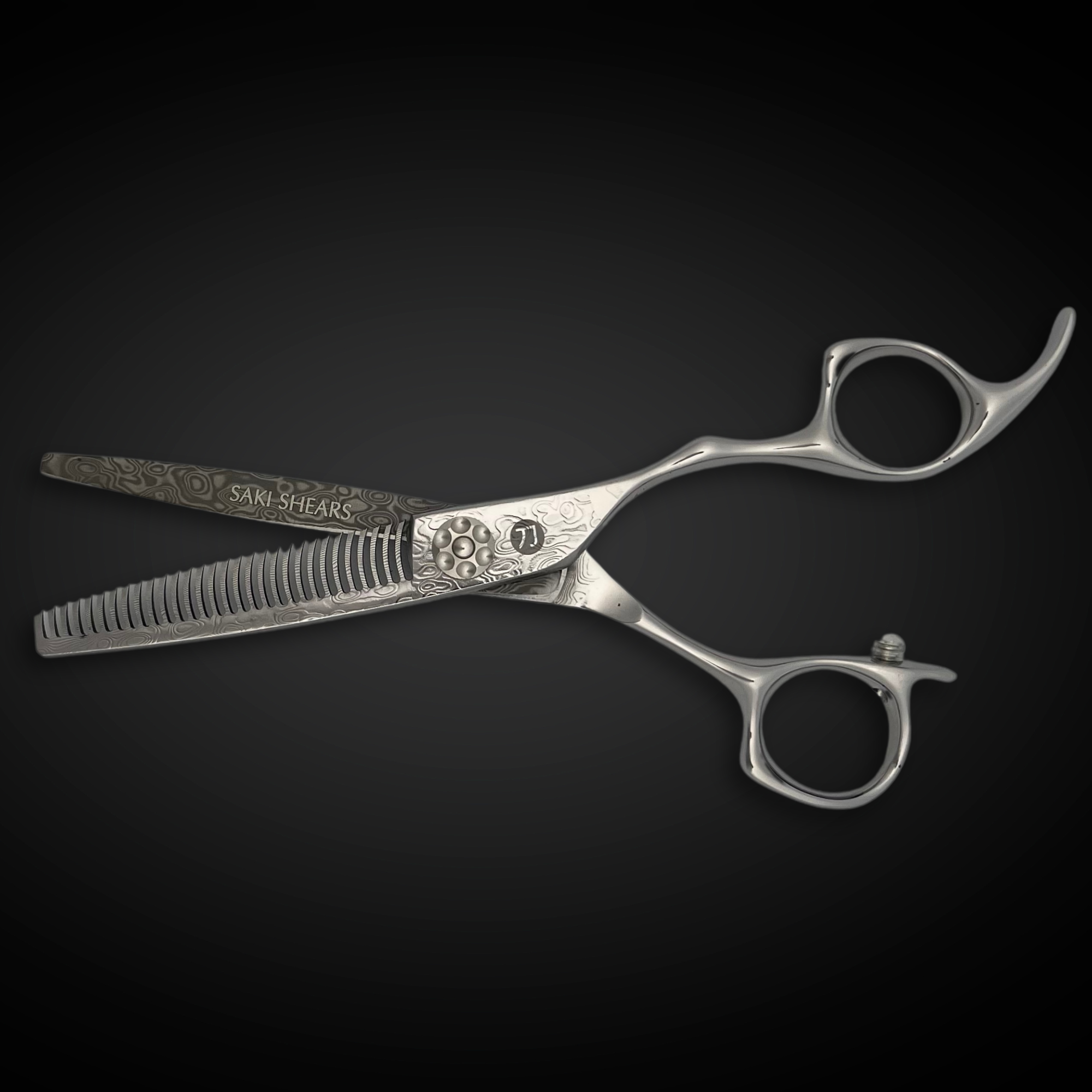
| Premium Gold Set | 6" + 6" thinner (35T) | VG-10 (60–61) | Both shears, razor, case | $262.50 |
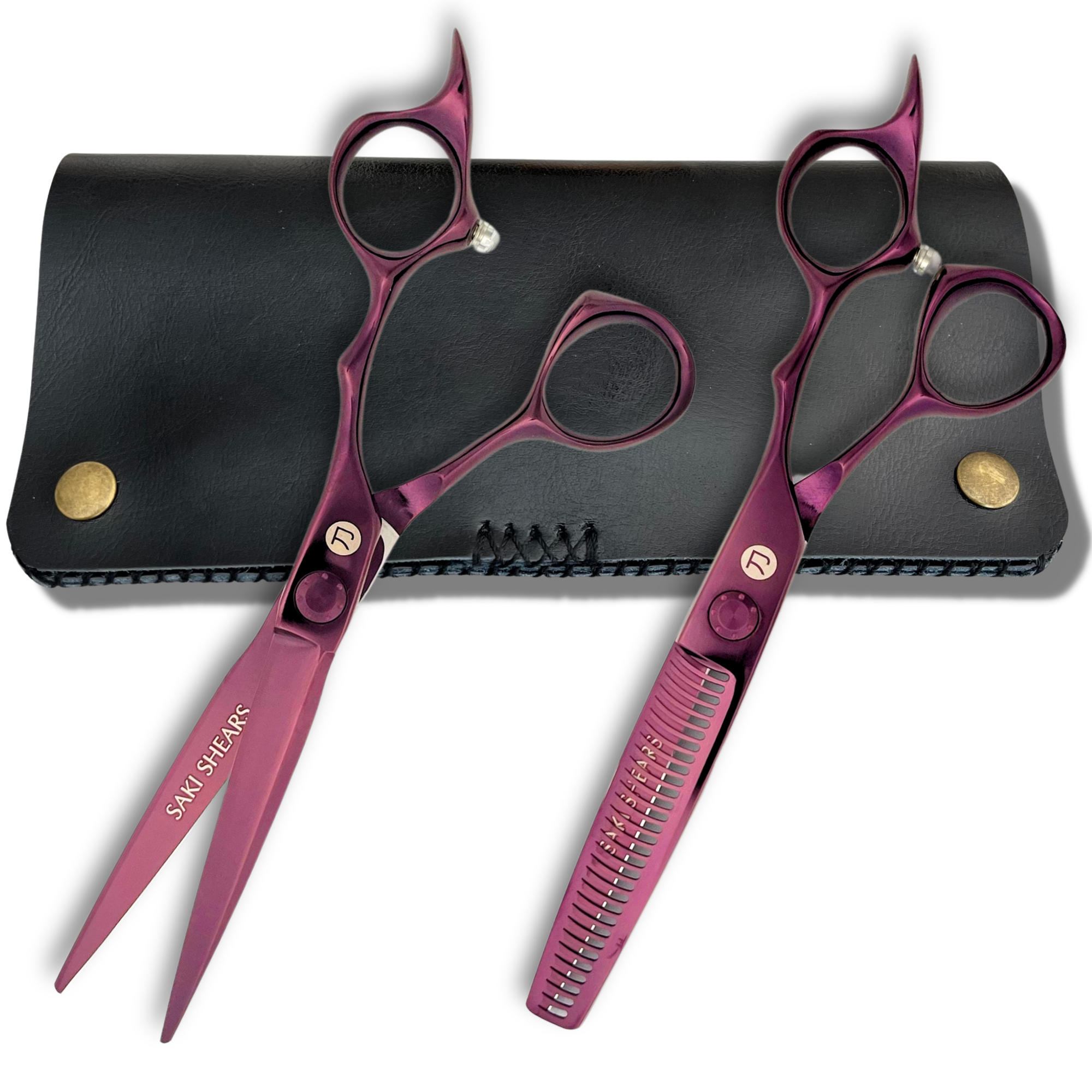
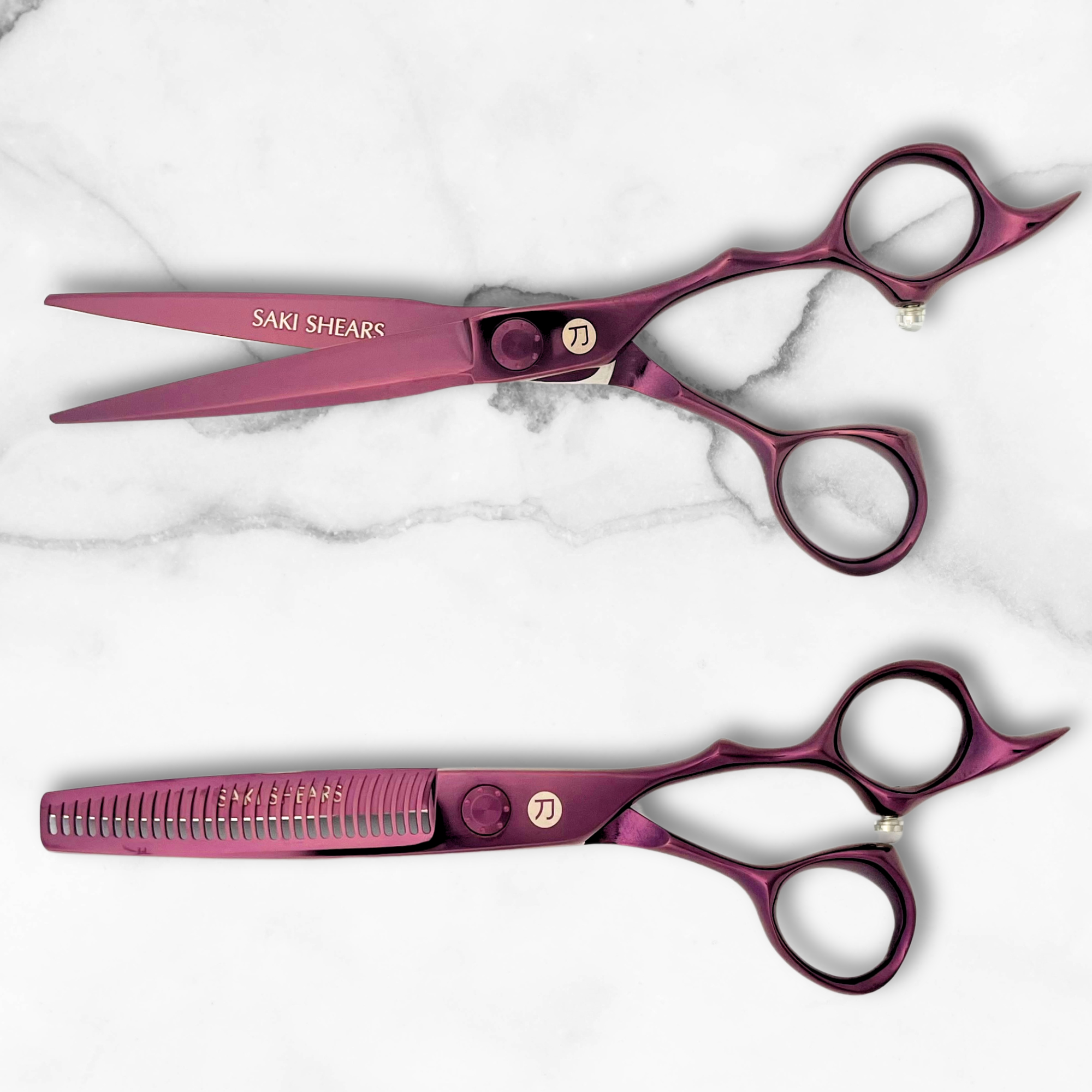
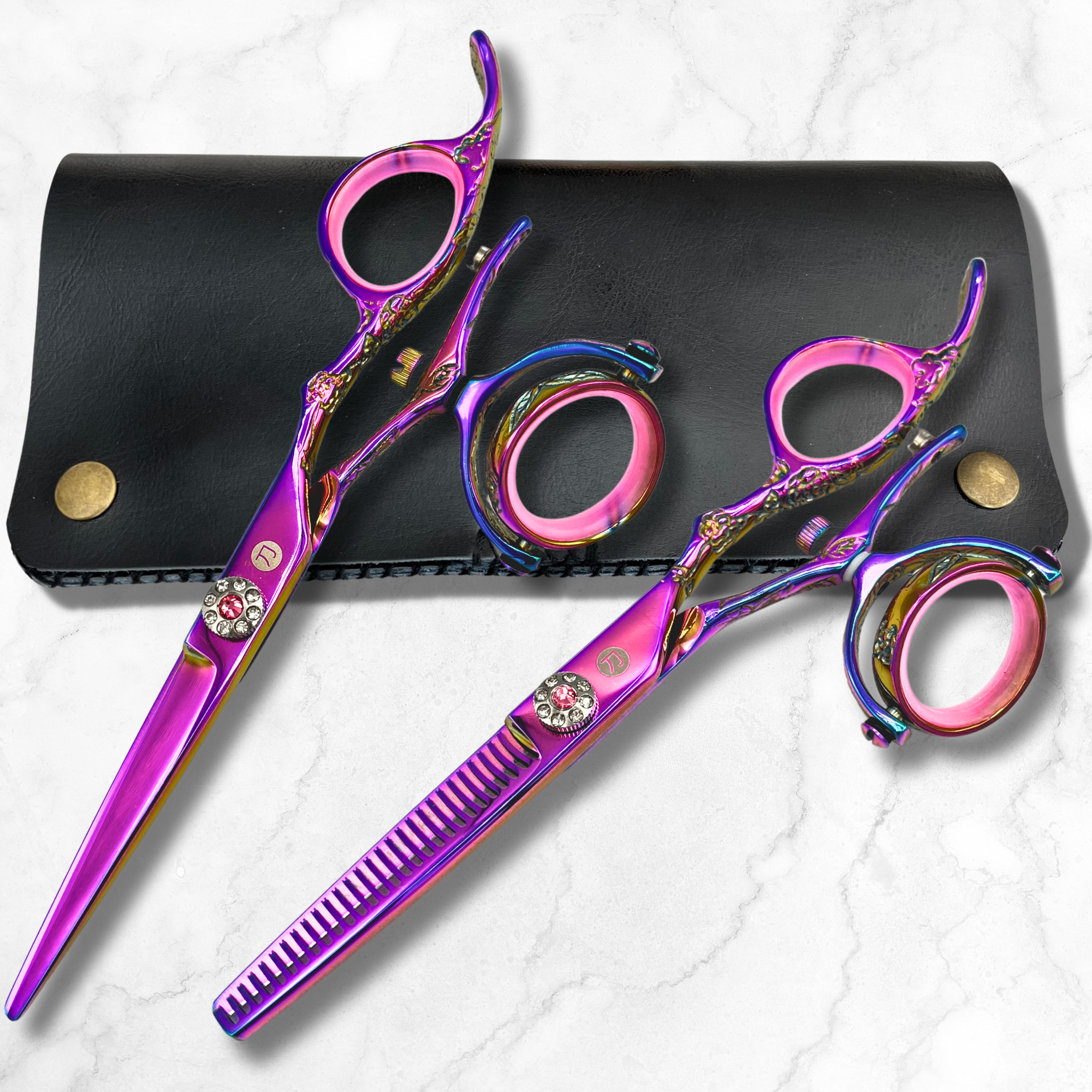
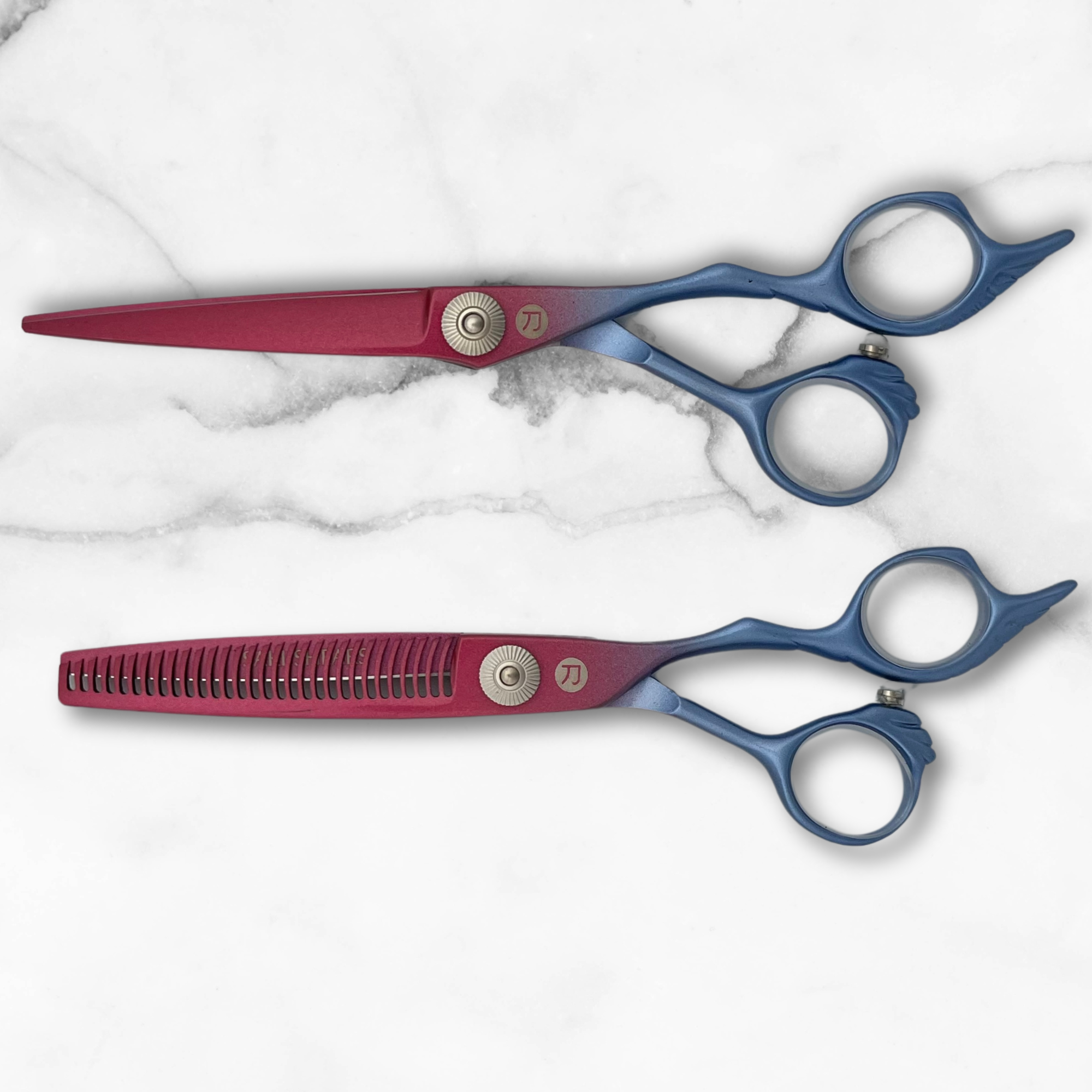
| Kohana Pink Set | 5.5" + 6" thinner (30T) | Japanese stainless, Ti-coated (60–61) | Both shears, swivel razor, case | $265.00 |
| Kotaro Set | 5.5" or 6" + thinner (27T/30T) | 440C (60–61) | Both shears, razor, leather case | $275.00 |
| Sakura Swivel Set | 5.5" + 5.75" thinner (27T) | 440C (60–61) | Both shears, razor, case | $290.00 |
Sizes, steel grades, hardness figures, and contents as stated on each sakishears.com product page; prices current at publication.
Among the singles, the Katana at $149.25 is the least you can spend in this lineup for named 440C steel on an offset handle, and its 7-inch variant is the one true long blade in the table. The 5.5-inch Tomika is the detail specialist — offset handle, removable thumb rest, and it ships with a razor and carrying case even as a single. Left-handed stylists are not an afterthought here either: the Kotaro's spec list includes a true 6-inch lefty grind, not a flipped-handle compromise. All of these are working shears, not stepping stones — the steel does not know what you paid for it.

The one single that breaks the 440C pattern is the Grand Master: a 6-inch sword blade in VG-10 at $201.75, carrying the hardest stated edge in the table at 61–62 HRC. If your priority is maximum edge retention per dollar and you already own a thinning shear you trust, that is the spec-sheet winner here. The trade-off is that it is a single shear — no thinner, no case economics — so it suits stylists filling a specific gap rather than building from zero.
Set Math: When One Purchase Beats Two
Most stylists eventually carry both a cutting shear and a thinning shear, which makes set pricing worth a hard look. The Kotaro illustrates it cleanly: bought separately, the Kotaro cutting shear ($189) and Kotaro thinning shear ($189) total $378. The set is $275 — a straight bundle discount of $103 for the same two blades, and the box also holds a hair razor and the leather case. Same steel, same 60–61 HRC blades, one purchase instead of two.

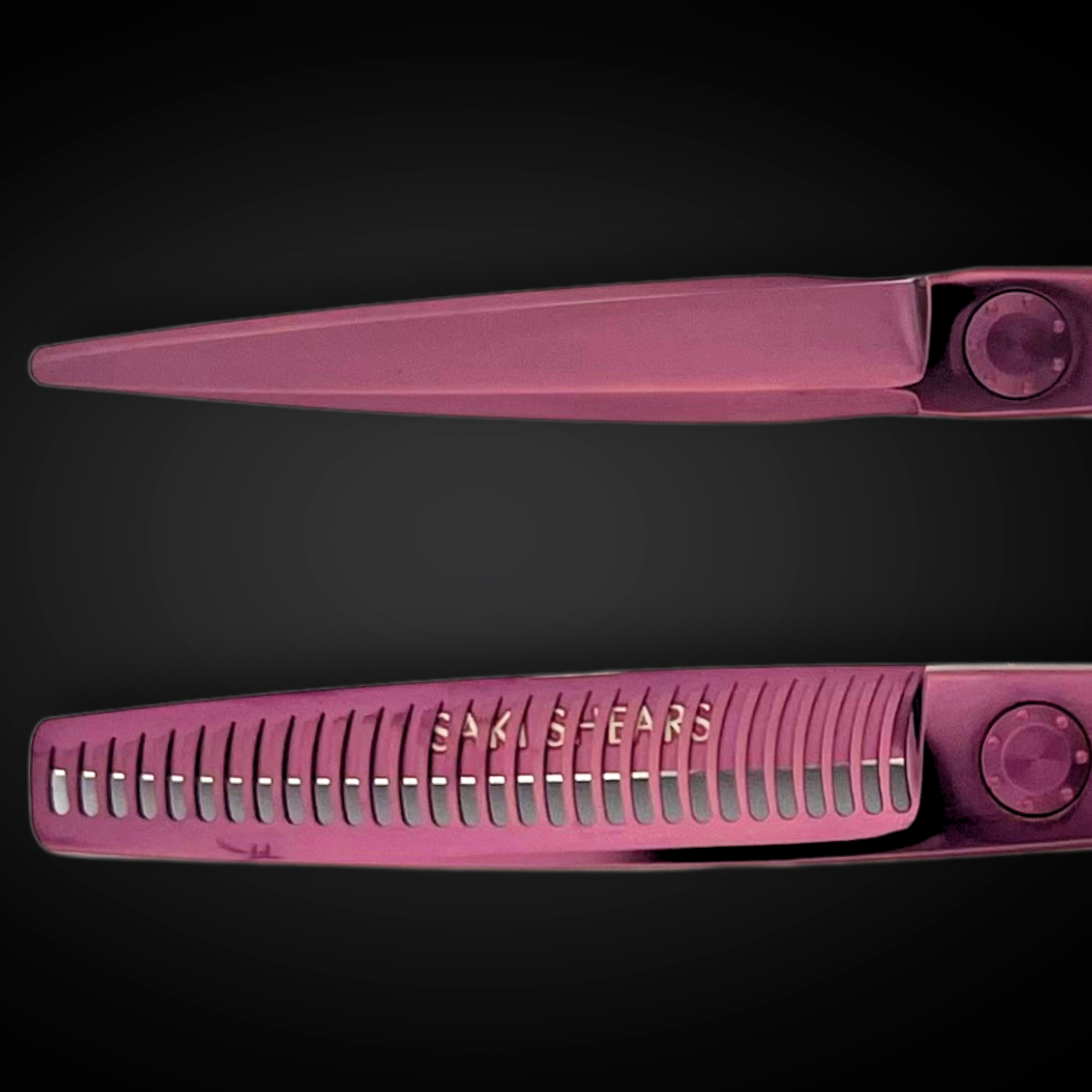
The same logic applies up and down the table. The Premium Gold set at $262.50 is the least expensive way in this lineup to get VG-10 in both a cutting and a thinning blade — and its 35-tooth thinner is specced for about 25% hair removal per closure, a number worth knowing before you commit to a texturizing tool. The Kohana Pink set takes the other route: the 1.5-micron titanium coating is the color story, and the cutting behavior comes from the convex-edge 60–61 HRC Japanese stainless blades underneath it.

One caution on sets: a set only saves money if you will actually use both blades. A barber who removes bulk clipper-over-comb and rarely reaches for a thinning shear is better served putting the whole budget into one excellent cutting shear — the Grand Master argument again. Run your own service mix before you run the discount math.
Fit Decides Between Finalists
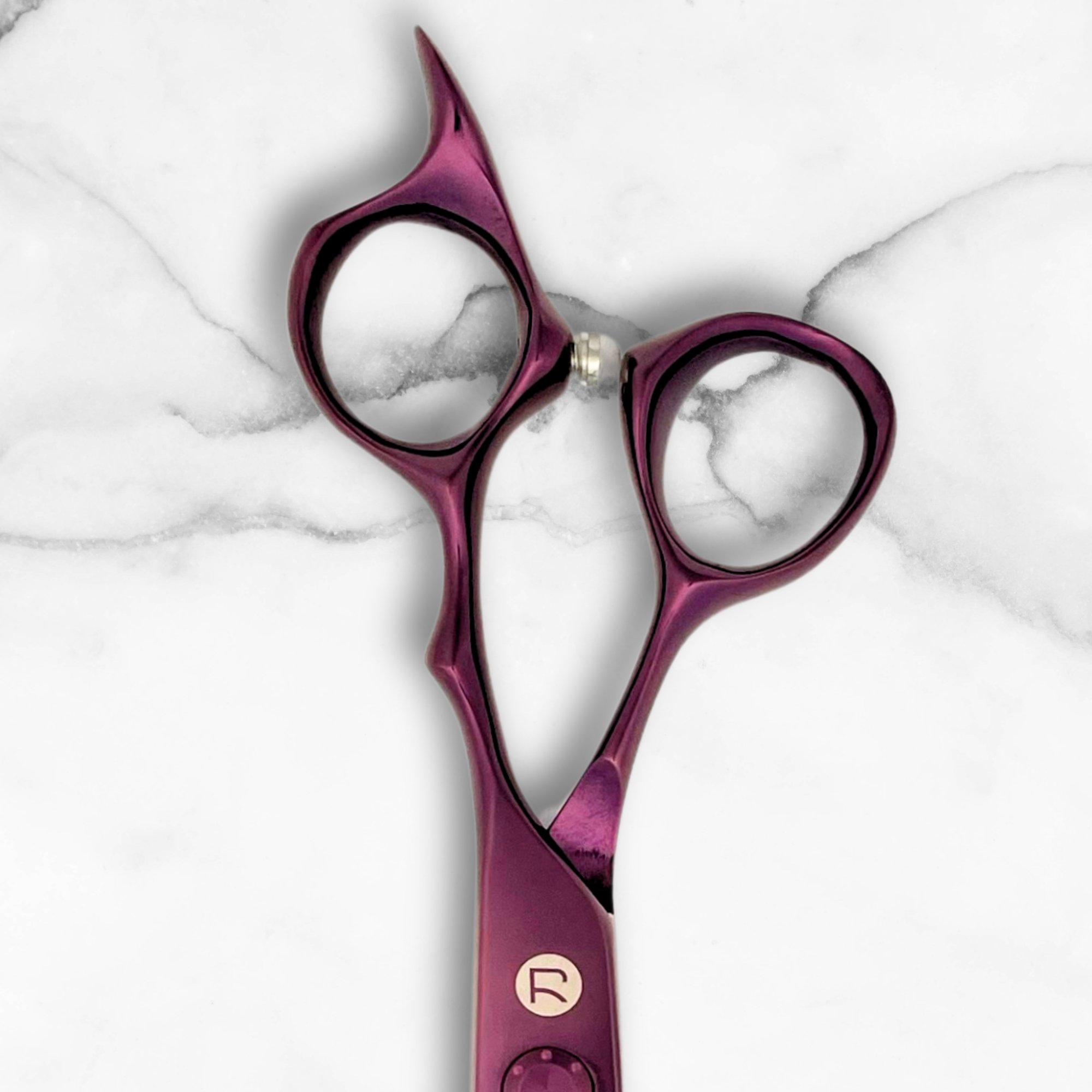
Once steel and format are settled, hand fit separates the shear you tolerate from the shear you forget you are holding. Handle geometry matters more for fatigue than any material spec: an offset handle shortens the thumb's travel and drops the elbow into a more neutral position compared to an opposing-grip design, and a swivel thumb goes further still for stylists managing wrist strain. Our offset vs crane handle comparison covers the geometry in detail.
Within this bracket, the Sakura Swivel set is the ergonomics pick: a thumb ring with 360-degree rotation on the cutting shear that lets the thumb stay neutral through elevation changes. The trade-off is acclimation — stylists who have cut for years on fixed handles typically need a week or two before a swivel stops feeling loose. If a client-heavy Saturday leaves your thumb aching, that adjustment period is a fair price; if you have no wrist complaints, a conventional offset handle keeps things simple.
Blade length is in the table for a reason: the lineup concentrates at 5.5 and 6 inches — the control-first span where most all-around stylists live — with the Katana's 7-inch variant standing alone for shear-over-comb and barbering work. Match the length to your service mix, not to what your last pair happened to be.
What the Extra Money Buys Above $300
The other half of the picture matters just as much, because above $300 you do get real things. You get more hand-finishing hours — edges polished and balanced by a person rather than a machine line. You get exotic blade materials: Saki's own Kohana Damascus at $329 moves into layered Damascus steel, and powder steels and premium alloys climb from there. You get cosmetic work — engraving, mirror polish, distinctive hardware — that has zero effect on a haircut and a real effect on how a tool feels to own.
What you do not get is a different category of cutting. A properly tensioned, professionally sharpened 440C or VG-10 shear produces clean, unfrayed cuts; the edge type matters more than the invoice. On that point, the edge geometry conversation — why professional Japanese-style shears carry convex edges and what that means for slide and point cutting — is covered in our convex vs beveled edge guide. A $250 convex-edge shear will out-cut a $500 shear that has been sharpened badly, every time.
The short version: spend above $300 when your income is stable, your technique has outgrown your current blades, or a specific material calls to you. Spend inside the bracket when you need professional performance and want the remaining budget for the things that also build a career — education, a better chair, a marketing push.
Protecting a Three-Figure Tool
A sub-$300 shear treated well outlasts a neglected $600 one, and the routine takes minutes: wipe dry after each client, oil the pivot, store closed in the case. The check most stylists skip is tension, and it has an actual test — open the blades to about 90 degrees and release one handle; the moving blade should glide roughly two-thirds closed and stop. Slamming shut means too loose (fold-over risk on fine hair); barely moving means too tight (fatigue and premature edge wear).
When the edge finally dulls, use a sharpener who works convex edges specifically — a flat-ground sharpening on a convex blade takes multiple corrective services and a lot of sacrificed steel to undo. Budget for sharpening as part of ownership, not as an emergency, and know what the warranty does and does not carry: Saki's lifetime coverage handles material and workmanship defects, while accidental damage on 440C models is a flat $50 replacement fee ($100 for VG-10). How purchase price, maintenance, and service life interact over a career is its own subject — our piece on the economics of hair shears works through the full cost-of-ownership picture — but maintenance is cheap and replacement is not.
Three Stylists, Three Right Answers
Specs pick the shortlist; the working situation picks the shear. Consider how differently this bracket resolves for three real cases.
A cosmetology graduate three months into a first salon job, cutting eight to ten clients a day on school-issued shears, has the clearest case for a set: one purchase covers cutting and thinning, the case protects the investment in a shared back room, and $224–$275 keeps a first-year budget intact. Waiting a year to "buy right" at $600 means a year of harder work on softer steel.
A barber ten years in, who blends with clippers and touches a thinning shear twice a week, wastes money on a set. The service mix argues for one blade bought as well as possible — VG-10 hardness for high-volume work — which is the Grand Master case, with the balance of the budget going to sharpening service and a spare of the shear that actually earns.
A senior stylist who already owns a premium pair needs a backup that will not embarrass the main shear when it is out for sharpening. Matching steel matters more than matching price here: a 440C daily driver pairs naturally with the Kotaro or Tomika, while a VG-10 owner wants the same edge behavior in the backup, not a change the hands notice mid-week.
The Two Mistakes That Actually Cost Money
The first is buying on price alone within the bracket. A $10 difference between two shears means nothing; the difference between a disclosed steel with a hardness number and a "premium stainless" mystery listing means everything. If a listing will not name its steel, it has answered your question.
The second is waiting. A student or new stylist limping along on cosmetology-school shears while saving for a $700 pair is losing edge quality and comfort every working day for a future reward that a $180–$275 tool would deliver now. The warranty changes that risk calculation completely — on a covered set, you are no longer betting that nothing goes wrong, because the manufacturer is.
Frequently Asked Questions
Are expensive hair shears worth it?
Above $300, you are paying primarily for hand-finishing, exotic steels, and cosmetics — real refinements, not requirements. The steels that define professional cutting performance, 440C and VG-10, are both available under $300 with lifetime warranties. Expensive shears are worth it when your technique and income both support the purchase; they are not a prerequisite for professional work.
How much should I spend on my first pair of professional shears?
Enough to get a named steel, an adjustable tension system, and a real warranty — which in practice starts around $150. The $149.25 Katana and $180 Tomika clear that bar as singles; the $224.25 Katana set and $275 Kotaro set do it with a thinning shear included. Below roughly $120, steel disclosure largely disappears, and that is the corner not worth cutting.
What is the difference between $50 shears and $500 shears?
At $50: undisclosed steel, stamped construction, a pivot that drifts, and no meaningful warranty. At $500: hand-finished convex edges, harder or layered steels, and refined balance. The middle bracket captures most of that distance — named 440C or VG-10 steel, adjustable tension, convex edges, and warranty coverage — which is why the $150–$300 range is where value for money peaks for most working stylists.
The Bottom Line
Under $300, the decision tree is short. Need both blades? The Kotaro set at $275 or the Katana set at $224.25, with the Gold set at $262.50 if you want VG-10. Need one excellent cutting shear? The Grand Master for edge retention, the Tomika for detail work, the Katana single to spend the least on real steel. Managing wrist strain? The Sakura Swivel set. Every one of them cuts professionally and discloses what it is made of. The Kotaro set is the best under-$300 pick for a stylist building a complete setup, and the default recommendation here for one reason: it is the most complete answer to the question most stylists in this bracket are actually asking.