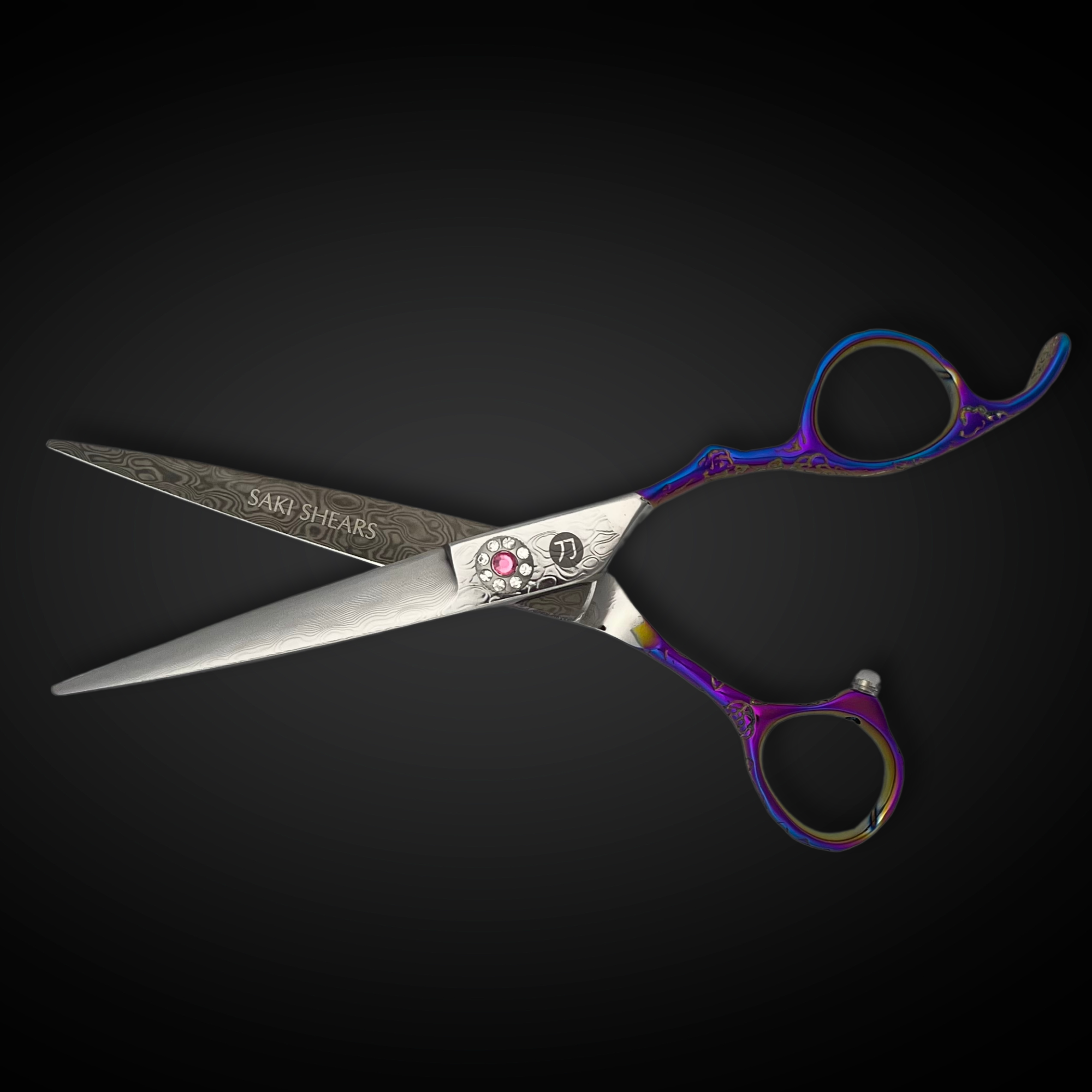
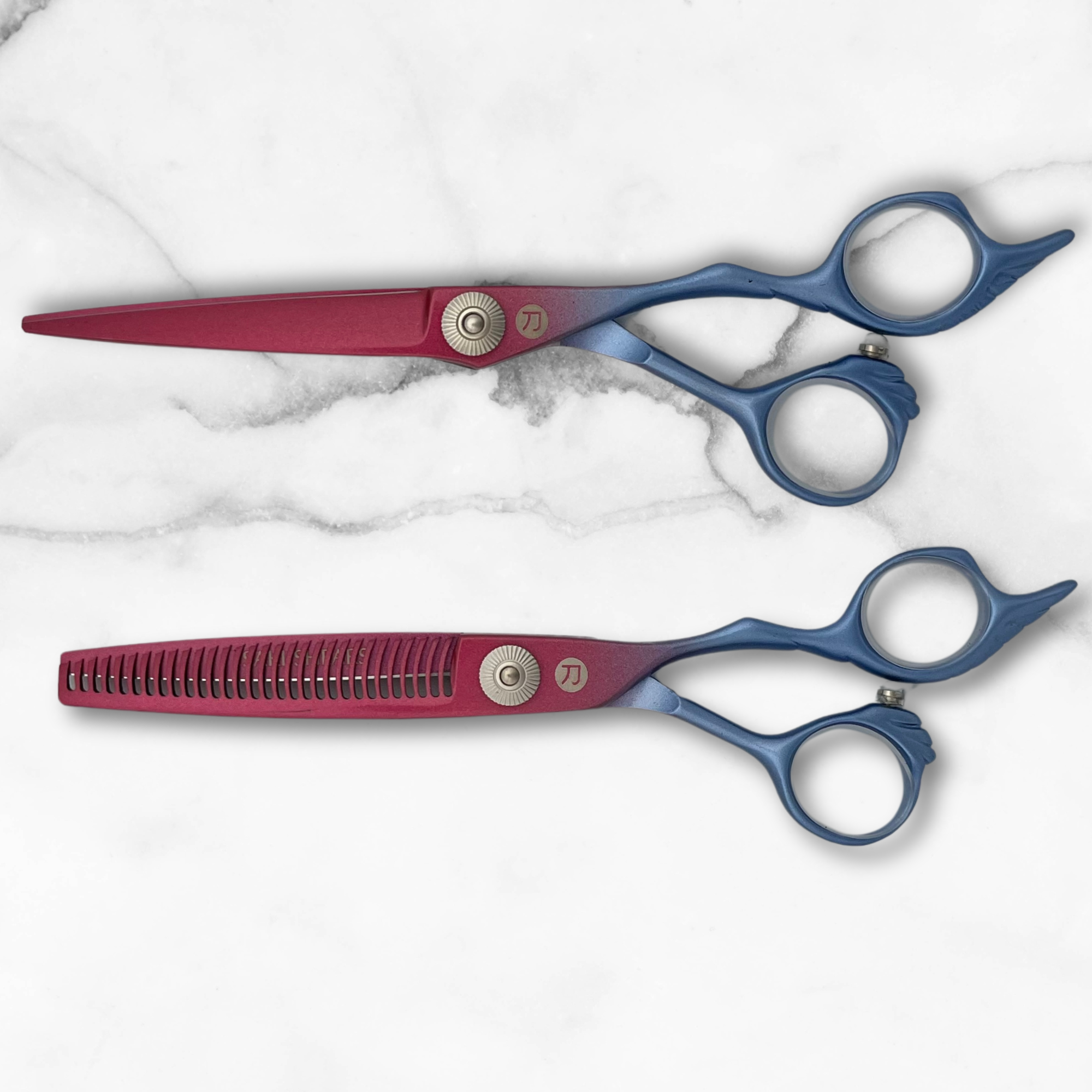
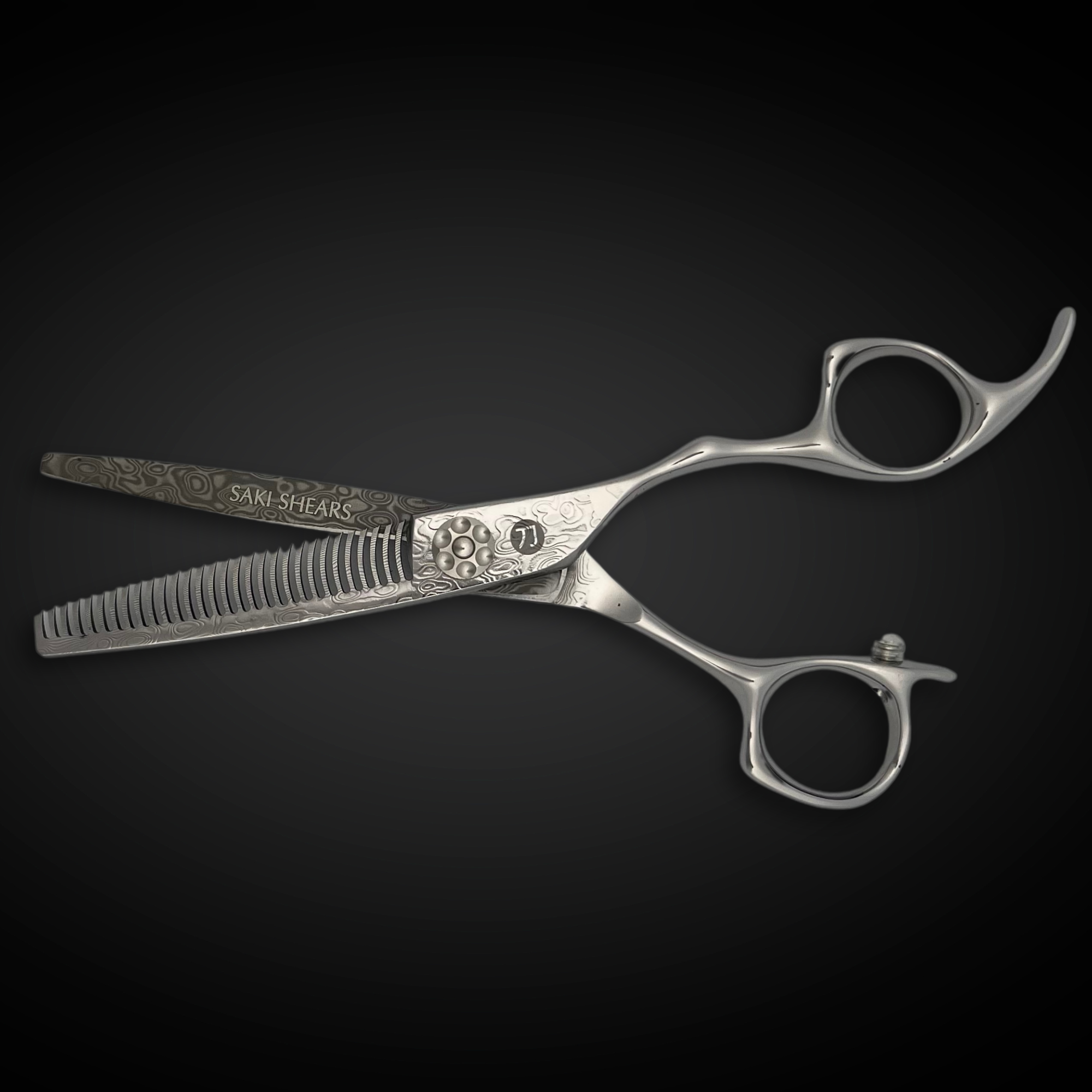
Saki Katana Hair Shears Set: Everything You Need in One Package
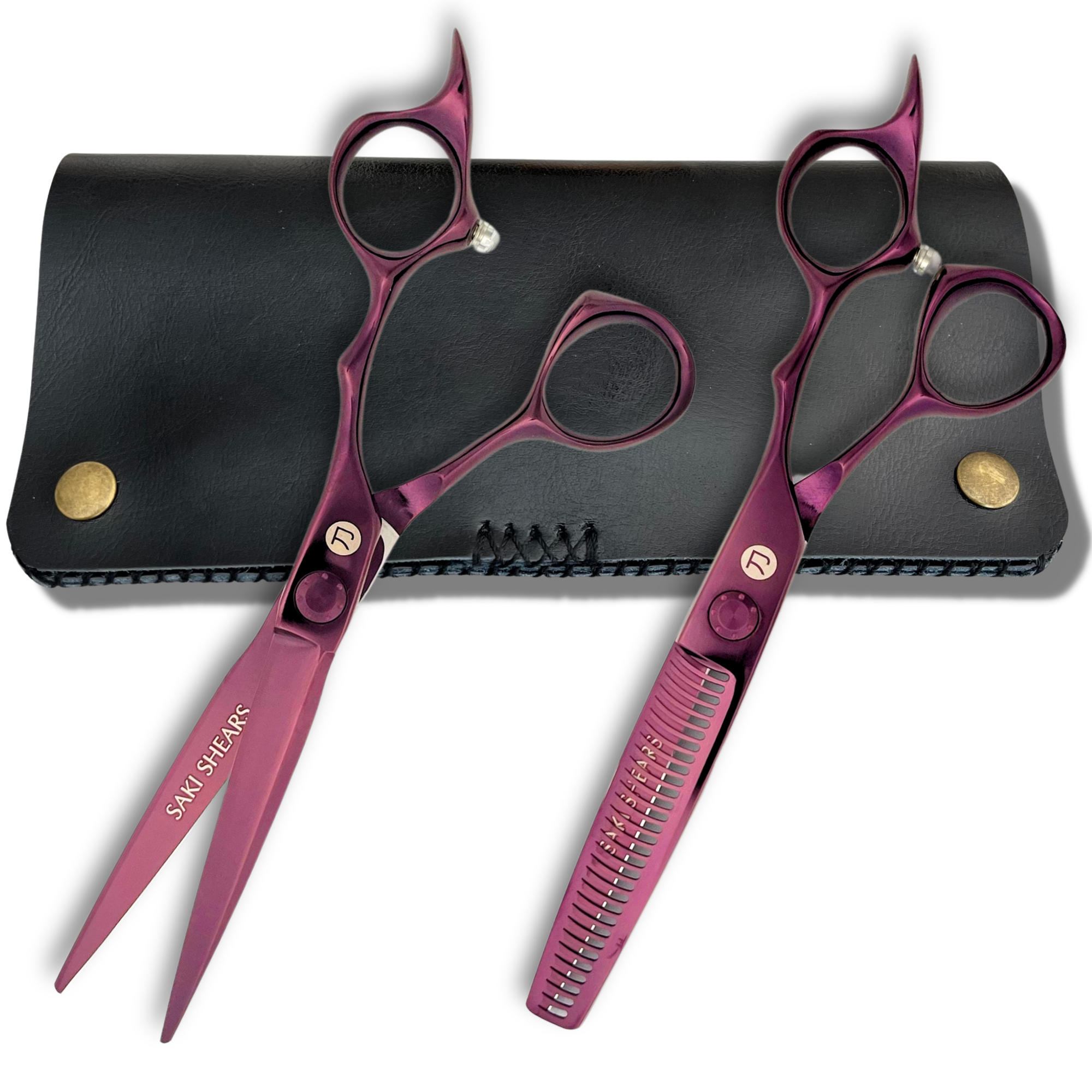
Most stylists build their station one purchase at a time: a cutting shear out of school, a thinning shear a year later, a case whenever the drawer gets embarrassing. The result is two tools from different makers, with different steels, different handles, and different maintenance schedules. The Saki Katana Hair Shears Set solves that in one box: a Katana cutting shear, a 6-inch 30-tooth thinning shear, a swivel razor, and a leather carrying case for $299. The same two shears bought individually run $398 — before the razor and case. What follows is what's in the set, the steel behind it, how the pair divides a working day, and where the set beats buying separately — and where it doesn't.
What's Actually in the Box
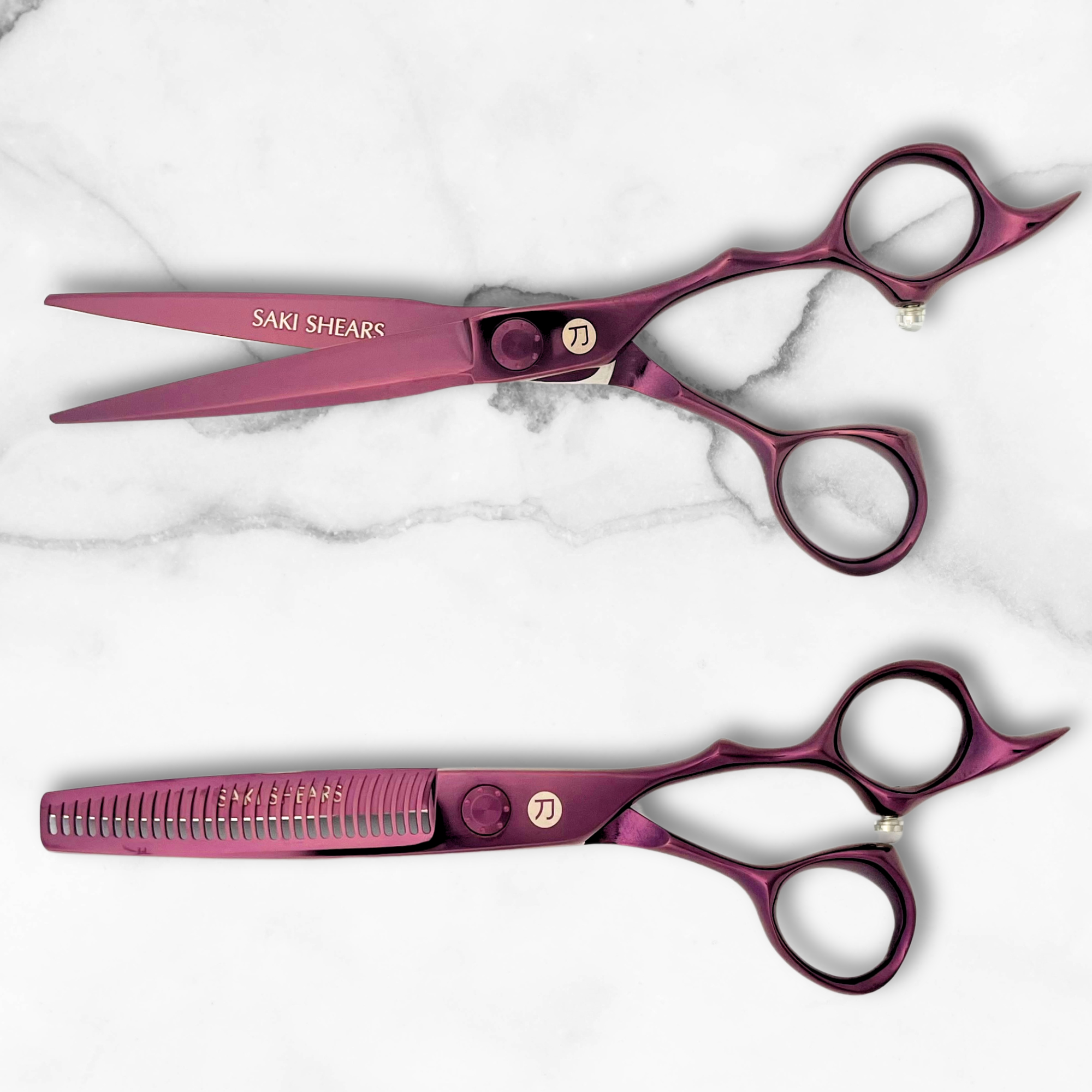
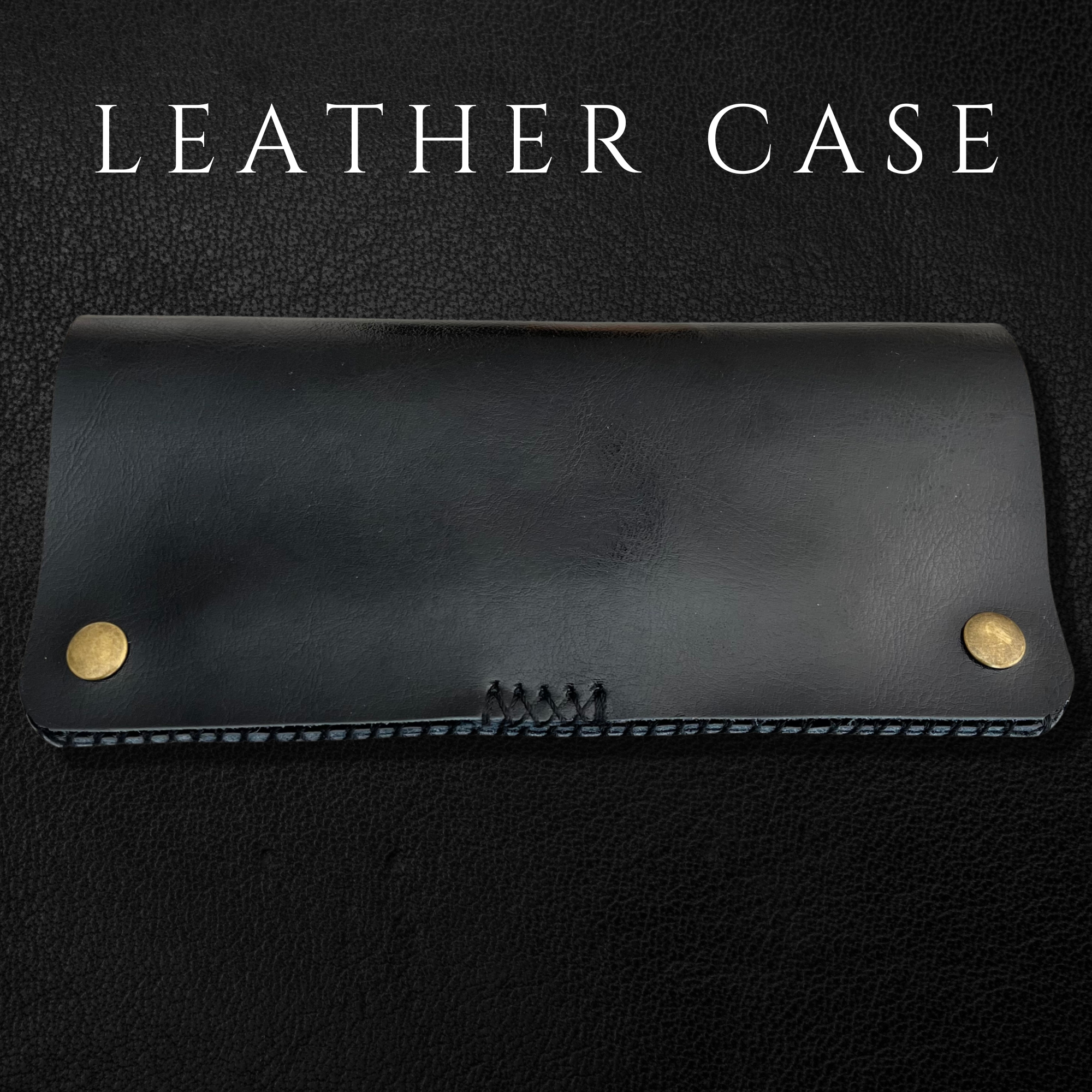
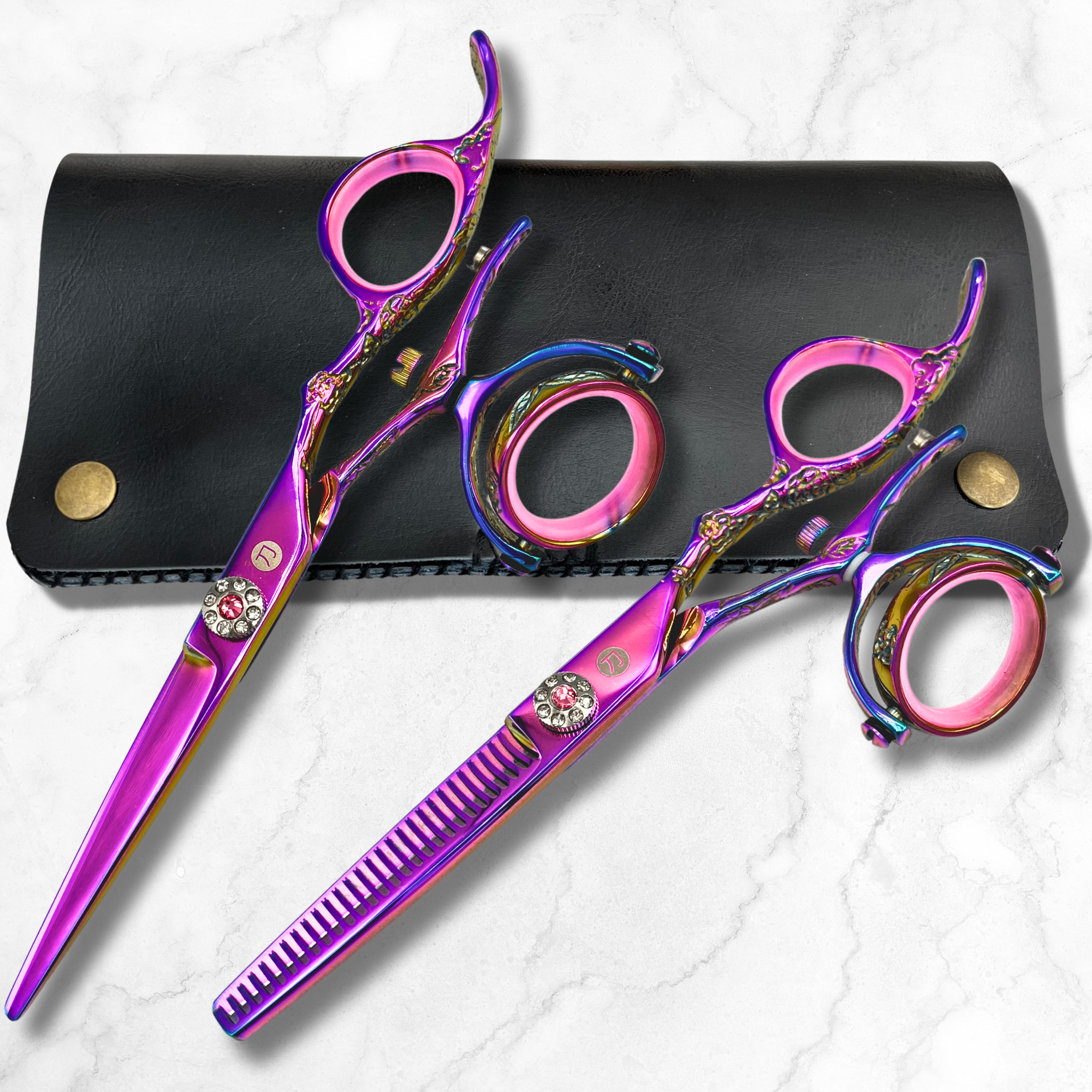
The set comes in two configurations at the same $299. The 5.5-inch set pairs the Katana 5.5" cutting shears with the 6-inch thinning shears — the precision pick for detail work, point cutting, and tight necklines. The 7-inch set swaps in the 7" cutting shear for barbers and stylists who live in shear-over-comb territory, where the longer blade bridges the comb and holds a straighter line across flat-top and scissor-fade work. Both configurations include the swivel razor for detailing and the leather case.
| Component | Spec | Bought separately |
|---|---|---|
| Katana cutting shears | 5.5" or 7", 440C steel, convex edge, 59–61 HRC | $199 |
| Katana thinning shears | 6", 30 teeth, 440C steel, convex edge, 59–61 HRC | $199 |
| Swivel razor | Detailing and texture work | Included |
| Leather carrying case | Holds the full set | Included |
| Set price | $299 | $398 for the shears alone |
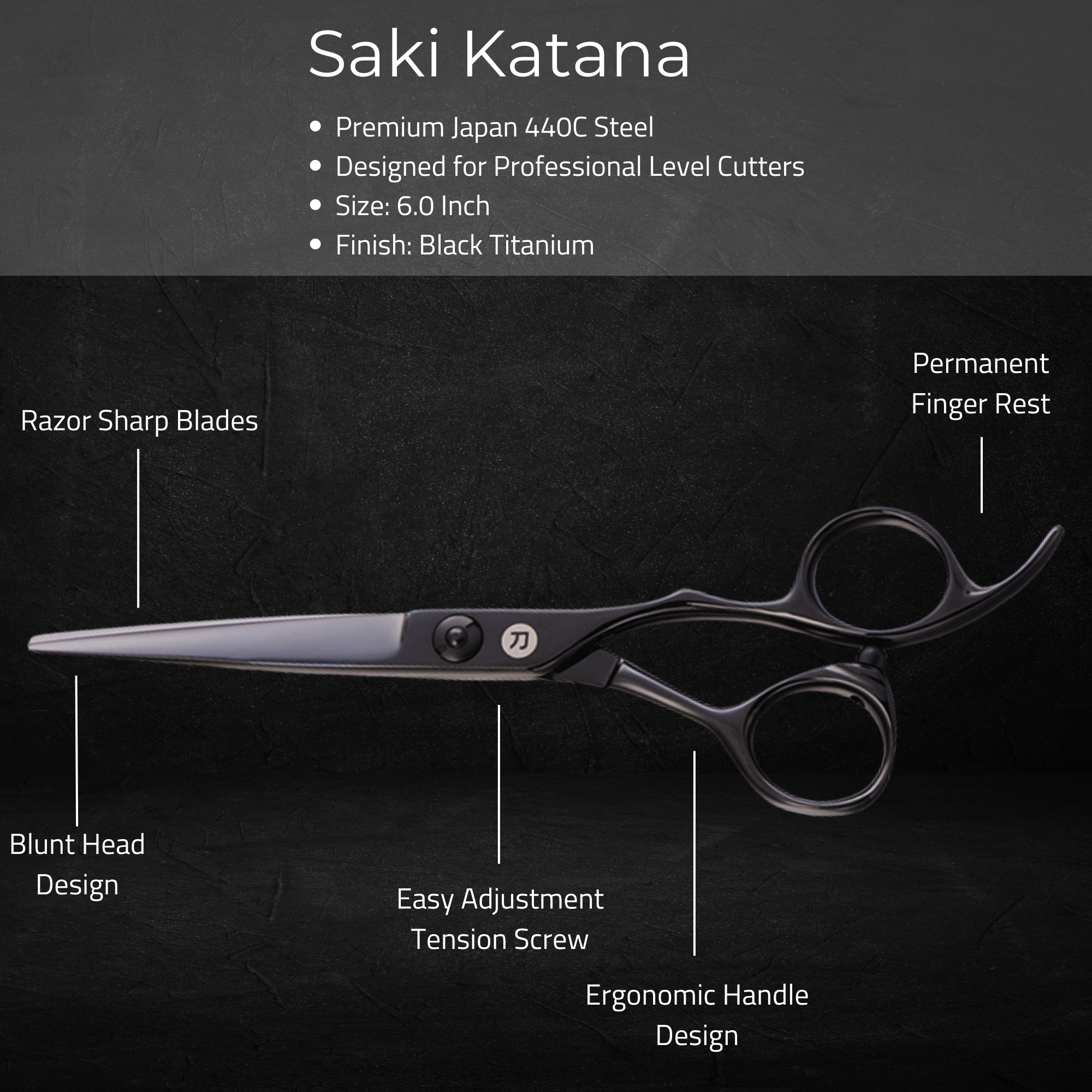
Two details worth knowing before you order. The set is also built in a dedicated left-handed configuration at the same $299. And both shears are finished in a thick black titanium coating over the steel: it's the Katana line's signature look, and it adds a layer of surface protection to tools that spend their day exposed to water, color, and styling product.

The Steel: 440C at 59–61 HRC
Both shears in the set are made from Japanese 440C stainless steel hardened to 59–61 HRC. 440C is a high-carbon martensitic stainless — 0.95–1.2% carbon and 16–18% chromium — and after heat treatment it reaches roughly 60 HRC, the highest hardness of any standard stainless steel. That's why it shows up in ball bearings and valve components as often as it does in shears: it's a steel chosen for holding a precise shape under repeated stress.
For a stylist, hardness translates directly into edge retention. A harder blade keeps its convex edge through more cuts before it starts pushing hair instead of slicing it. The trade-offs are two. Harder steel is more brittle, so a dropped 440C blade tends to chip where a softer blade would dent — one more reason the included case matters. And 440C's high carbon content means the steel will spot if it lives wet: dry the blades after work, oil the pivot, and keep both shears out of disinfectant soaks, which attack the edge.
Construction matters as much as the alloy. The Katana blades are hollow-ground to a convex edge — the Japanese-style geometry that slides through hair rather than chopping it, which is what makes clean blunt lines and smooth wet or dry cutting possible. The blades are two-piece welded, meaning the hardened cutting steel is joined to a separate handle steel, putting the expensive high-hardness alloy only where the cutting happens. A ball-bearing tension screw keeps the pivot action smooth and lets you dial tension without tools.

How the Two Shears Divide a Haircut
Take a standard one-length bob with interior graduation. The Katana cutting shear cuts the baseline and the graduated sections — convex-edge shears excel at exactly this kind of clean-line work, wet or dry. Then the Katana thinning shears come out for the last ten minutes: erasing the demarcation between graduated lengths and knocking the corners off the weight line so the shape doesn't read as a solid slab. On the barber side, the 7-inch configuration runs the same split — the long blade handles shear-over-comb through the sides and top, and the thinner blends the transition zones a clipper guard would normally gouge.
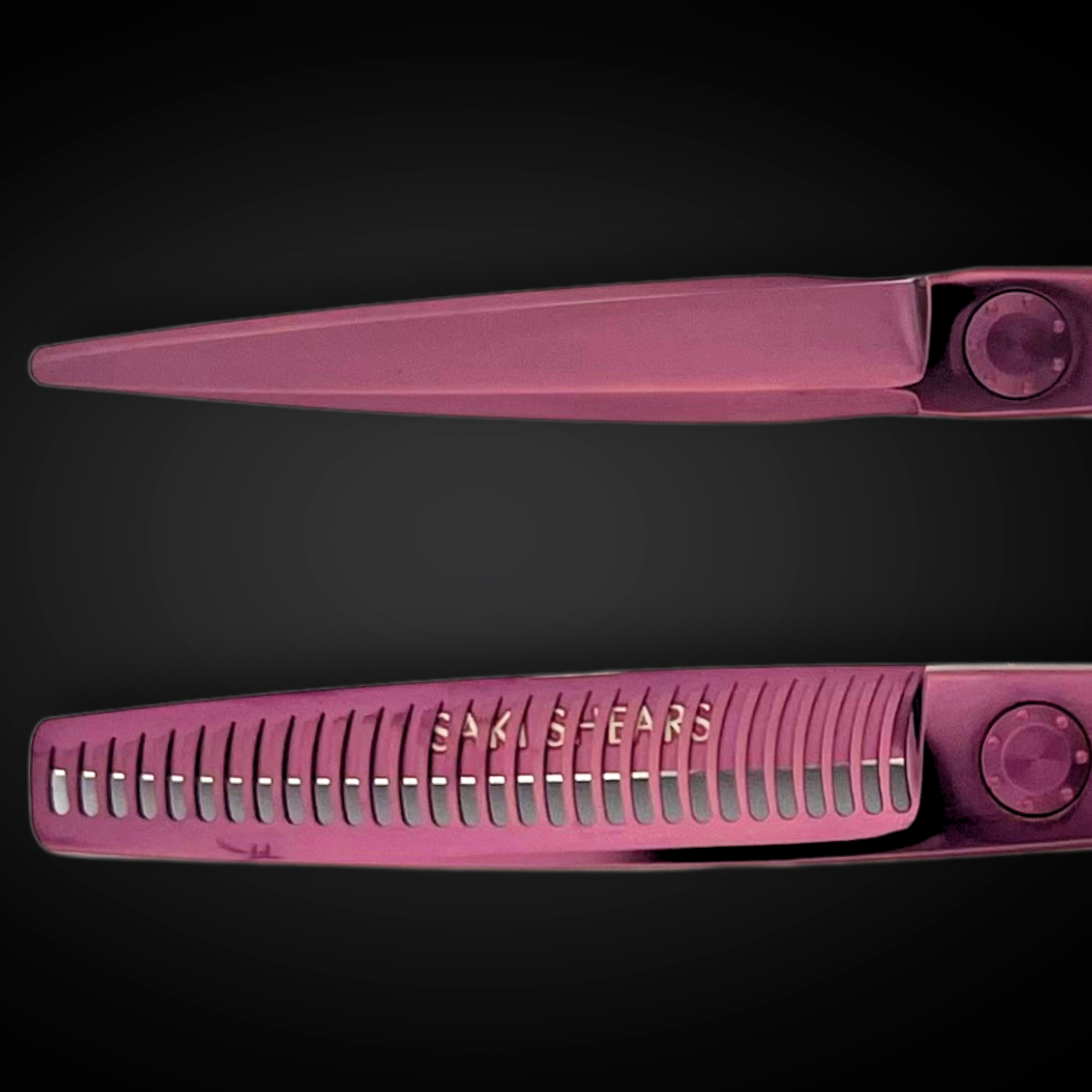
The 30-tooth count is the reason this thinning shear works as a finisher. Fewer, wider teeth take bigger bites and leave visible channels — that's texturizing territory. Thirty fine teeth remove hair in small, even increments, which is what you want for blending that shouldn't announce itself. If you're deciding how a thinner fits into your work, the breakdown in Thinning Shears vs Regular Shears: Key Differences covers when each tool earns its place in the rotation.
The Handle: Offset Crane, and Why It Matters Over a Career
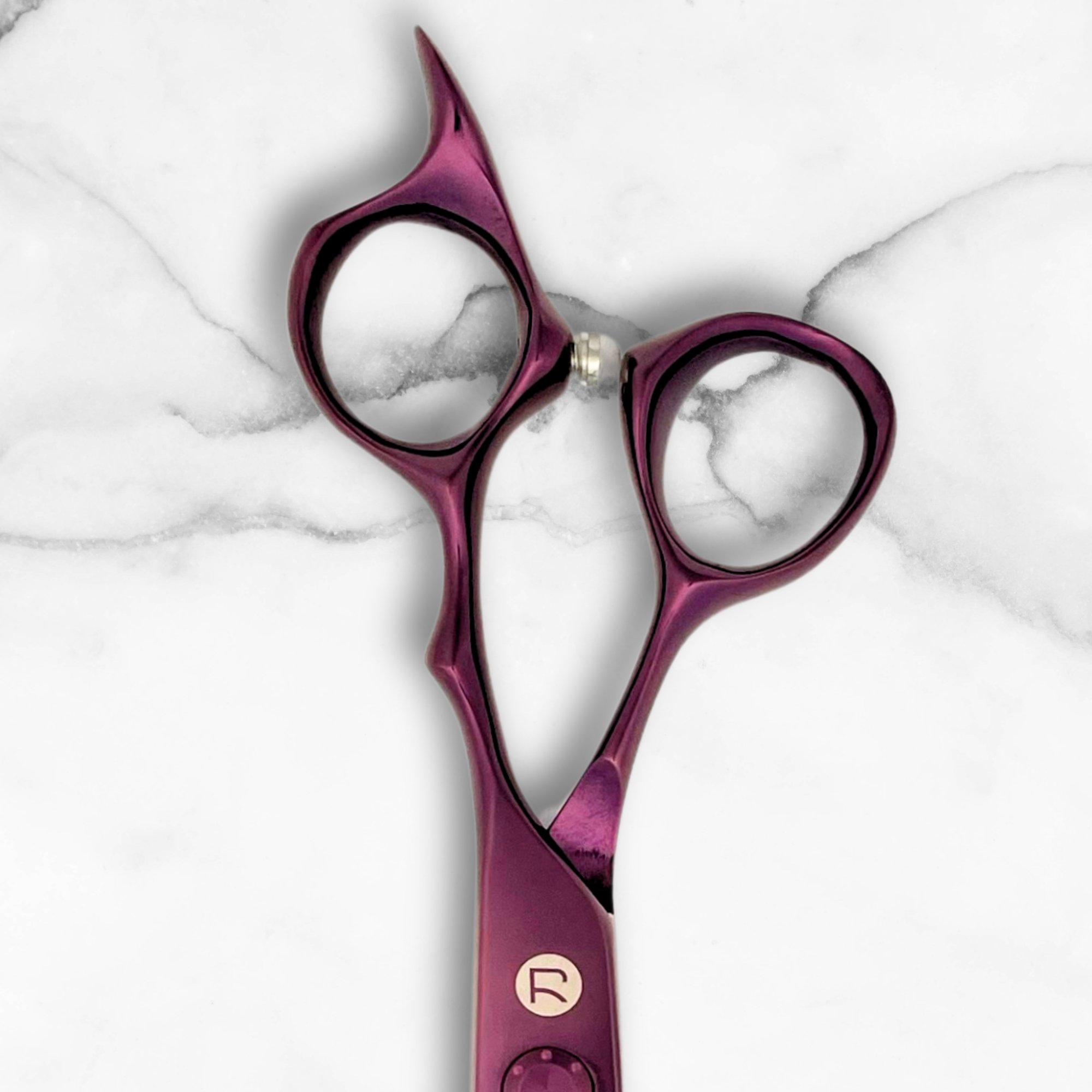
Both shears in the set use an offset handle with an extra-long crane shape. The offset puts your thumb closer to the pivot than your fingers, which shortens the thumb's travel; the crane angle drops your elbow into a lower, more natural cutting position instead of forcing it up and out.
That's not marketing geometry — it's the difference between finishing a double-booked Saturday with a working hand or a sore one. Musculoskeletal complaints are an occupational reality in this trade: a 2019 scoping review in the Journal of Occupational Medicine and Toxicology found 12-month prevalence of musculoskeletal complaints among hairdressers running as high as 53% for the hand and wrist, 60% for the shoulder, and 76% for the lower back. Handle design is one of the few variables you control every working day. For a deeper comparison of handle styles, see Offset vs Crane Handle Hair Shears: Which Fights Fatigue Better?

Ring size is adjustable on both shears, so stylists with slimmer fingers can tune the fit instead of gripping the shear to keep it from rotating — a grip habit that feeds exactly the wrist strain the handle geometry is trying to prevent.
Set vs. Buying Separately: The Price Math
The arithmetic is simple. The cutting shears are $199 on their own and the thinning shears are $199, so assembling the pair individually costs $398. The set is $299 and includes the swivel razor and leather case on top. If you want both shears, the set is the cheaper path by a wide margin — there's no scenario where buying both pieces separately at full price wins.
Separate purchases make sense in two cases. First, you already own a thinning shear you trust and only need a cutter — then the standalone Katana cutting shears are the move. Second, you want to mix lines deliberately: some stylists pair a workhorse 440C cutter with a finer or coarser texturizer from a different series. That's a legitimate strategy — it just costs more than the box.
There's also a quieter benefit to the matched pair: both shears share the same steel, the same hardness, and the same edge geometry, so they dull at a comparable rate and can go to the sharpener together. Mixed pairs rarely do, which is how stylists end up cutting with one sharp shear and one tired one.
Where the Katana Set Sits in the Saki Lineup
Saki builds several cutting-and-thinning sets, and the differences are concrete enough to put in a table rather than prose.
| Set | Steel / Hardness | Sizes | Thinning teeth | Price |
|---|---|---|---|---|
| Katana Set | 440C, 59–61 HRC | 5.5" or 7" cutter + 6" thinner | 30 | $299 |
| Kotaro Set | 440C, 60–61 HRC | 5.5" or 6" cutter | 27 or 30 | $275 |
| Sakura Swivel Set | 440C, 60–61 HRC | 5.5" cutter, swivel thumb | 27 | $290 |
| Premium Gold Set | VG10 cobalt, 60–61 HRC | 6" cutter + 6" thinner | 35 W-shaped | $350 |
Against the Kotaro — same 440C steel, $24 less — the Katana buys you three things: the 7-inch option the Kotaro doesn't offer, the extra-long crane handle versus the Kotaro's offset handle with removable finger rest, and the black titanium finish. If you cut exclusively at 5.5 or 6 inches and don't care about the coating, the Kotaro set is the value play; if there's any shear-over-comb in your week, the Katana's 7-inch configuration settles it. The Sakura trades edge-length options for a 360-degree swivel thumb aimed at stylists managing wrist or carpal tunnel trouble. The Gold Set steps up to VG10 cobalt steel and a 35-tooth W-pattern thinner for the finest blending — the premium route if your work leans heavily on soft, invisible texture.
Setting Up a New Pair on Day One
A new set out of the box needs ten minutes of setup before it touches a paying client. Start with tension, because factory settings travel: hold the cutting shear points-up, lift one handle to vertical, and let it fall. If the blade drops fully closed on its own, tighten the ball-bearing screw a notch; if it barely moves, back it off. The blade should fall to roughly half closed and stop. Run the same test on the thinning shear — toothed blades hide tension problems until they start leaving lines, so don't skip it.
Next, fit the rings. The adjustable ring sizing exists so the shear hangs on your fingers without being squeezed — if you have to grip to control rotation, size down until you don't. Then make a few test cuts on a mannequin or a swatch before your first client: a properly tensioned convex edge should close through wet hair with almost no resistance and zero folding at the tips.
Finally, decide where each tool lives. The case isn't just for transport — between clients, shears on a flat towel away from the sink stay dry and nick-free, and at close of day everything goes back in the leather case. The stylists who get the longest service life out of a hard steel like 440C are, almost without exception, the ones with a boring routine.
Keeping a Matched Pair Matched
A set only stays an advantage if both shears stay in the same condition. The routine is short: wipe both blades dry after every client, oil the pivot at the end of the day, and check tension before your first cut each morning — a blade that falls closed on its own is too loose and will fold hair; one that fights you is too tight and will wear the edge. The step-by-step is in How to Adjust Shear Tension Correctly.
The titanium coating doesn't change the routine — it protects the surface, not the cutting edge, and the edge is where corrosion and product buildup do their damage. Use shear oil and a soft cloth, not disinfectant soaks. The full cleaning sequence is covered in How to Clean and Oil Professional Hair Shears. The leather case matters here too: shears that ride loose in a drawer with combs and clips pick up edge nicks that no amount of oiling fixes — and with a brittle high-hardness steel, a nick means a sharpener visit, not a buffing.
Conclusion
The Katana set is the shortest path to a complete, matched cutting setup: one steel, one edge geometry, one maintenance schedule, and a $99 saving over assembling the same pair separately — with the razor and case included. If you're starting out, it replaces three or four staggered purchases with one. If you're established, it's a clean way to standardize your primary pair — in right- or left-handed form, at 5.5 or 7 inches, depending on how you actually cut.
Frequently Asked Questions
Should I get the 5.5-inch or 7-inch Katana set?
Match the blade to your work, not your hand size alone. The 5.5-inch cutter is the salon pick: more control for point cutting, detail work around ears and necklines, and precision lines. The 7-inch earns its length in barbering — shear-over-comb, flat tops, and scissor fades, where the longer blade spans the comb and keeps lines straight. Both configurations ship with the same 6-inch, 30-tooth thinning shear, so only the cutter changes.
How often should hair shears be sharpened?
Sharpen on evidence, not a calendar. The signs: hair bending or pushing at the tips instead of slicing cleanly, split or frayed ends on fresh cuts, or needing extra pressure to close. Harder steels like the Katana's 440C at 59–61 HRC hold an edge longer between services, and daily cleaning plus correct tension stretches the interval further. When one shear in a matched set needs sharpening, send both — they've done the same mileage.
Is it better to buy hair shears as a set or separately?
If you need both a cutting and a thinning shear, the set wins on price: the Katana pair costs $398 bought separately versus $299 as a set, with the razor and case included. A matched set also shares one steel and edge geometry, so both shears wear and sharpen on the same schedule. Buy separately only if you already own half the pair, or you deliberately want a thinner with a different tooth count than the set offers.