How Long Do Professional Hair Shears Last? Lifespan and Care Tips
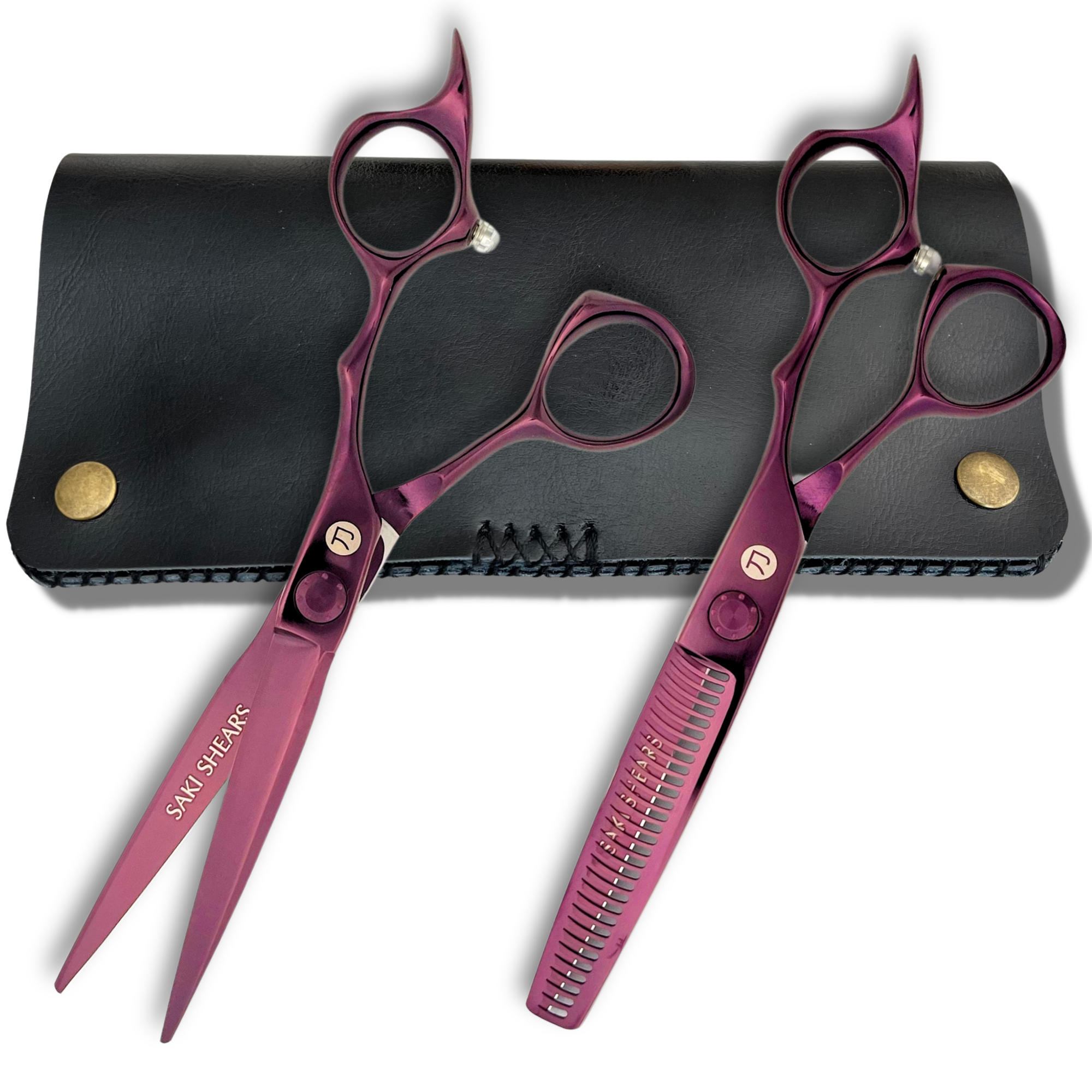
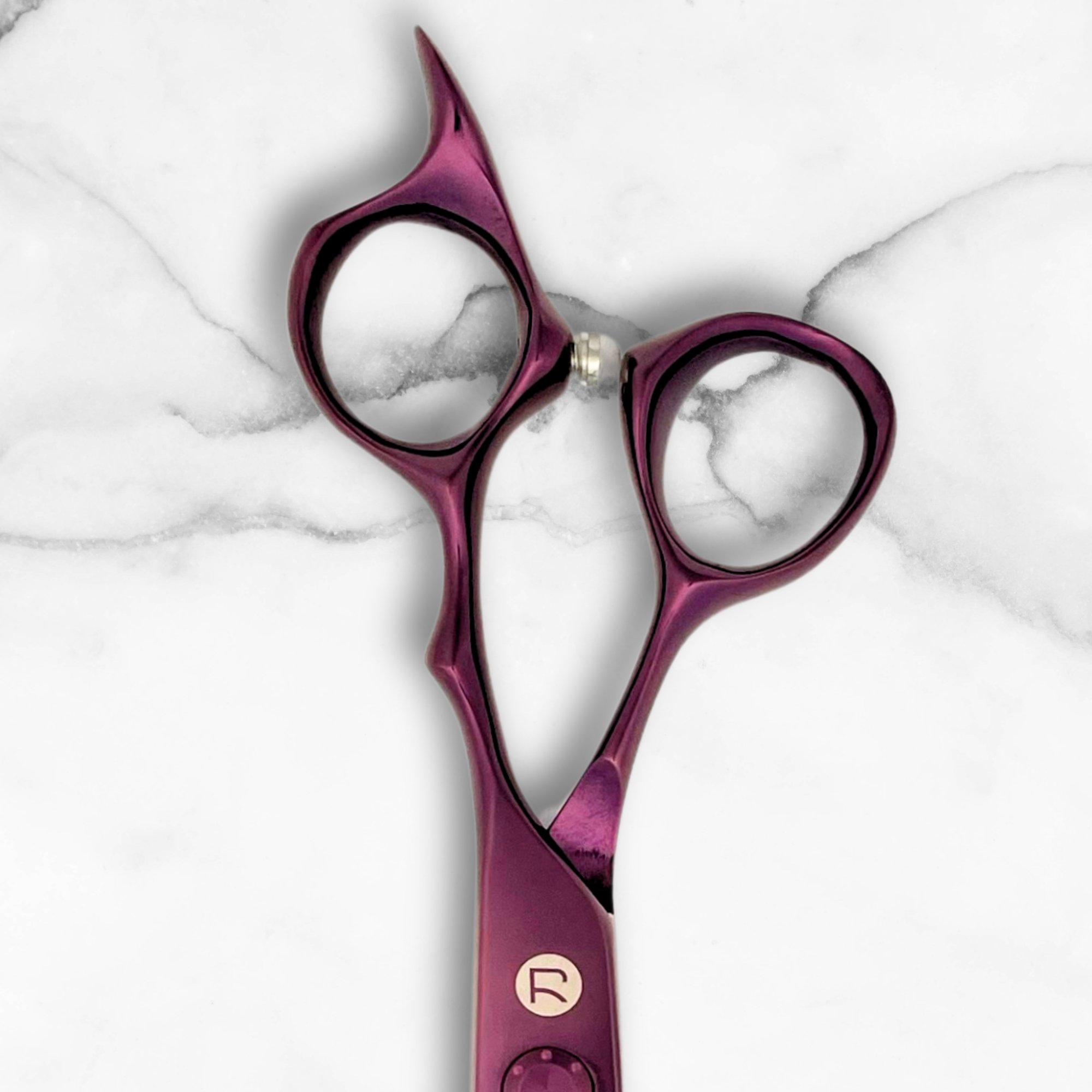
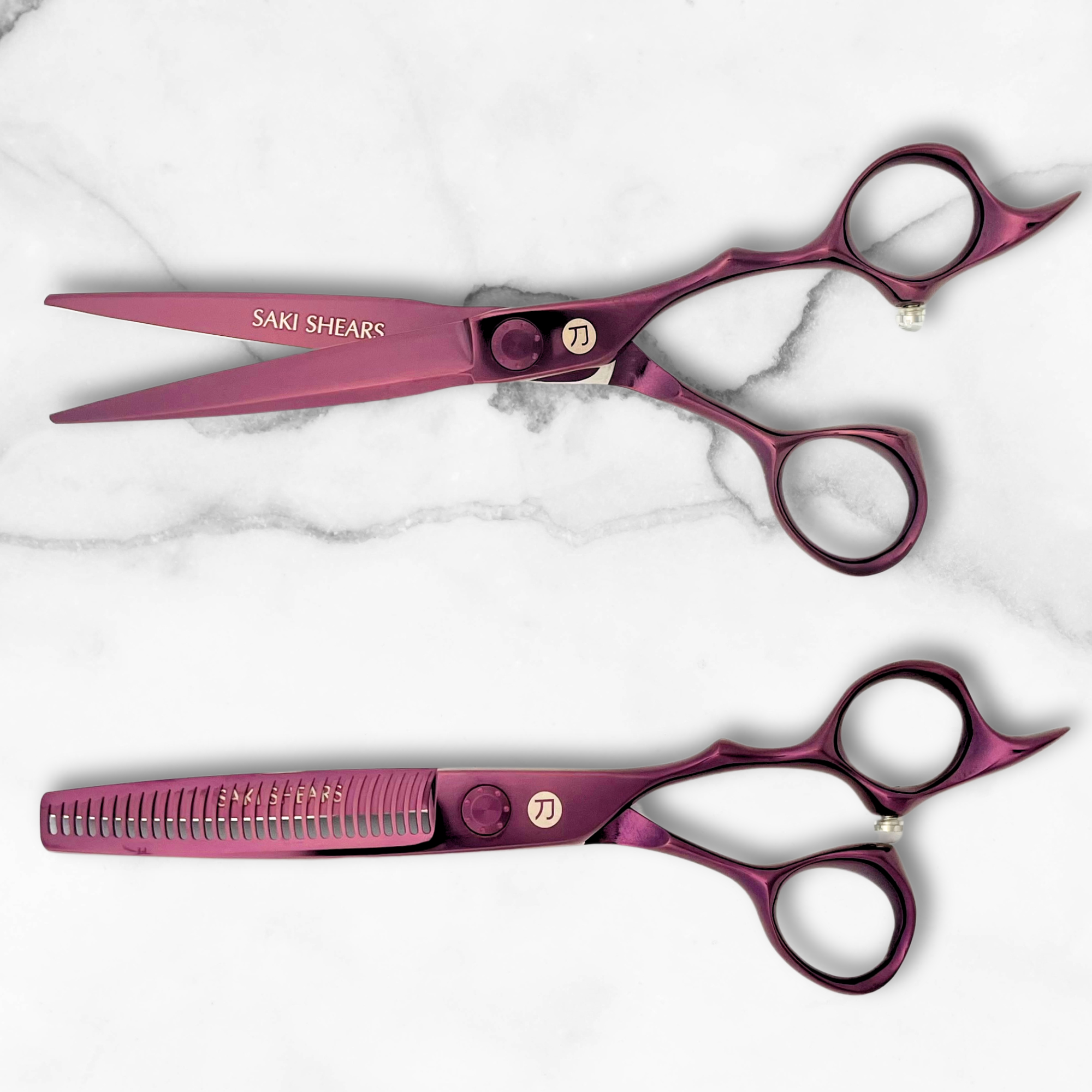
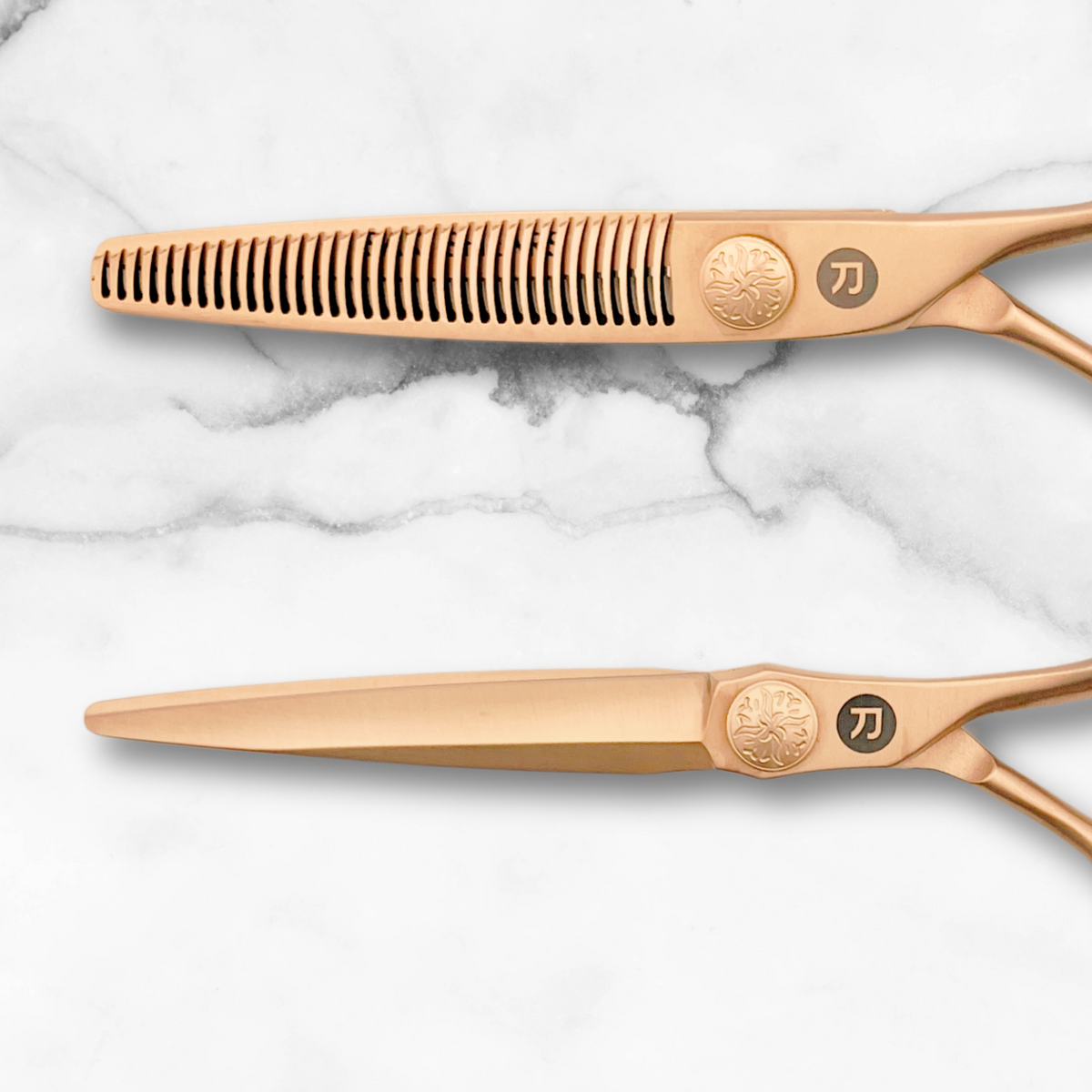
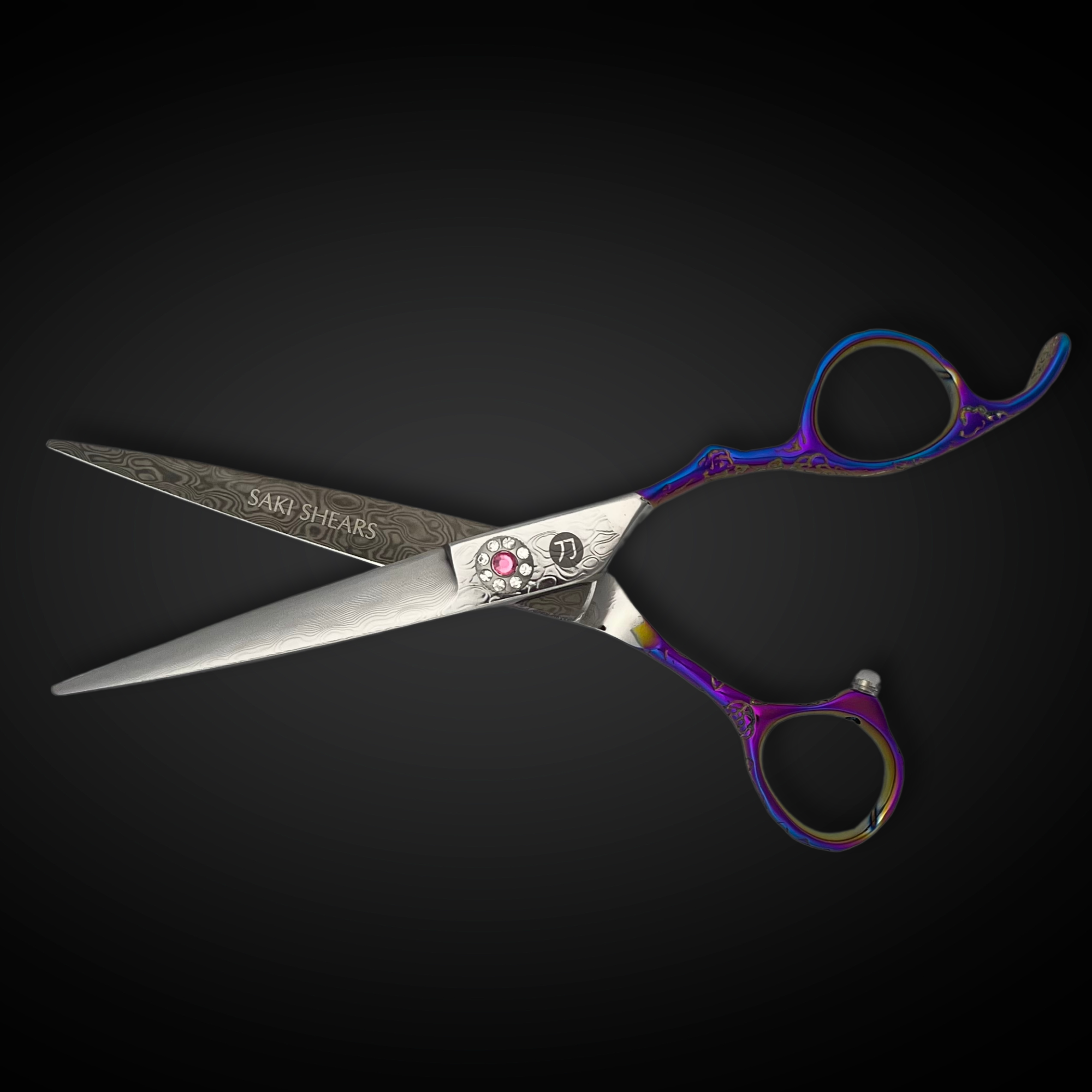
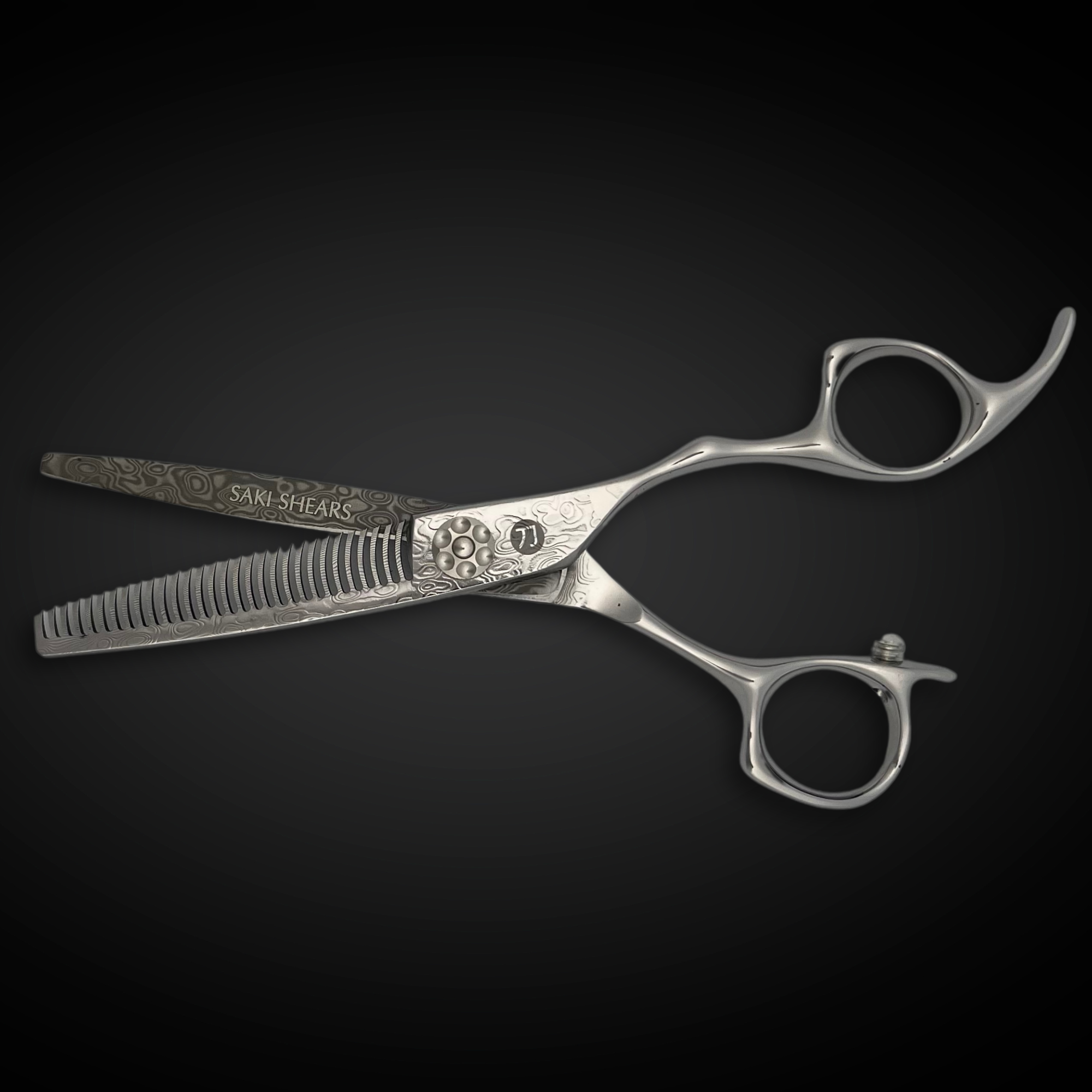
Every salon has both: the educator still cutting on the shears she bought a decade ago, and the stylist whose two-year-old pair already folds hair. Same question — "how long do shears last?" — two honest answers. Lifespan isn't a property of the shear alone. It's the product of three variables: the steel you bought, who sharpens it, and what you do with it between clients. A neglected budget pair can be cutting ragged lines within a couple of years, while a maintained pair of Saki Gold VG-10 cobalt steel shears is built to stay in service for as long as you're behind the chair — and covered by a lifetime defect warranty while it does.
One mindset shift up front: stop thinking of lifespan as a countdown clock and start thinking of it as a budget of sharpenings. Every service on the stone or wheel removes a small amount of blade steel. A shear dies when there's no longer enough blade geometry left to restore a true edge — or when a drop, rust, or a bad sharpening spends that budget all at once.

Steel Sets the Ceiling
Steel quality decides two things: how long an edge holds between sharpenings, and how gracefully the blade accepts being sharpened again and again. Both come down to hardness and composition.
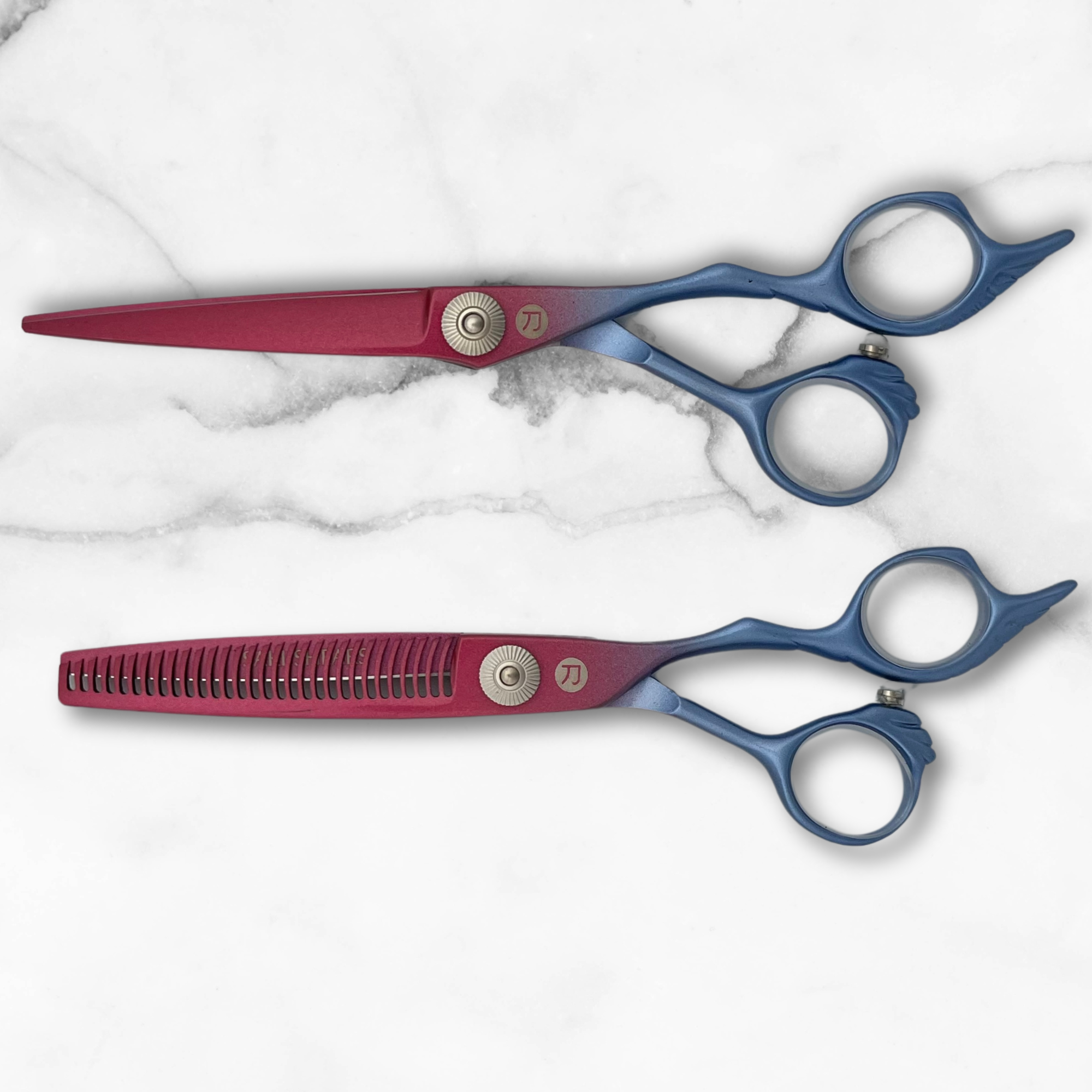
440C stainless is the workhorse steel in professional shears, including the Saki Katana and Kotaro lines.
Per the West Yorkshire Steel 440C datasheet, the alloy carries 0.95–1.20% carbon and 16–18% chromium, and tempers to around 60 HRC. The high carbon is what lets 440C reach that hardness; the chromium is what keeps salon moisture and chemical exposure from pitting the blade. VG-10, the steel in the Saki Gold set, runs the same 60–61 HRC — so hardness isn't what the premium buys. The difference is composition: VG-10 is alloyed with cobalt, which helps the steel hold a fine, polished edge longer at the same hardness. Treat 59+ HRC as the floor spec that makes a shear worth maintaining at all; past that floor, alloy quality is what stretches the interval between sharpenings. And since sharpenings are what consume a blade, a longer interval is the same thing as a longer life.
| Shear | Steel | Hardness | Price |
|---|---|---|---|
| Saki Kotaro | Japanese 440C | 60–61 HRC | $189 |
| Saki Katana | Japanese 440C | 59–61 HRC | $199 |
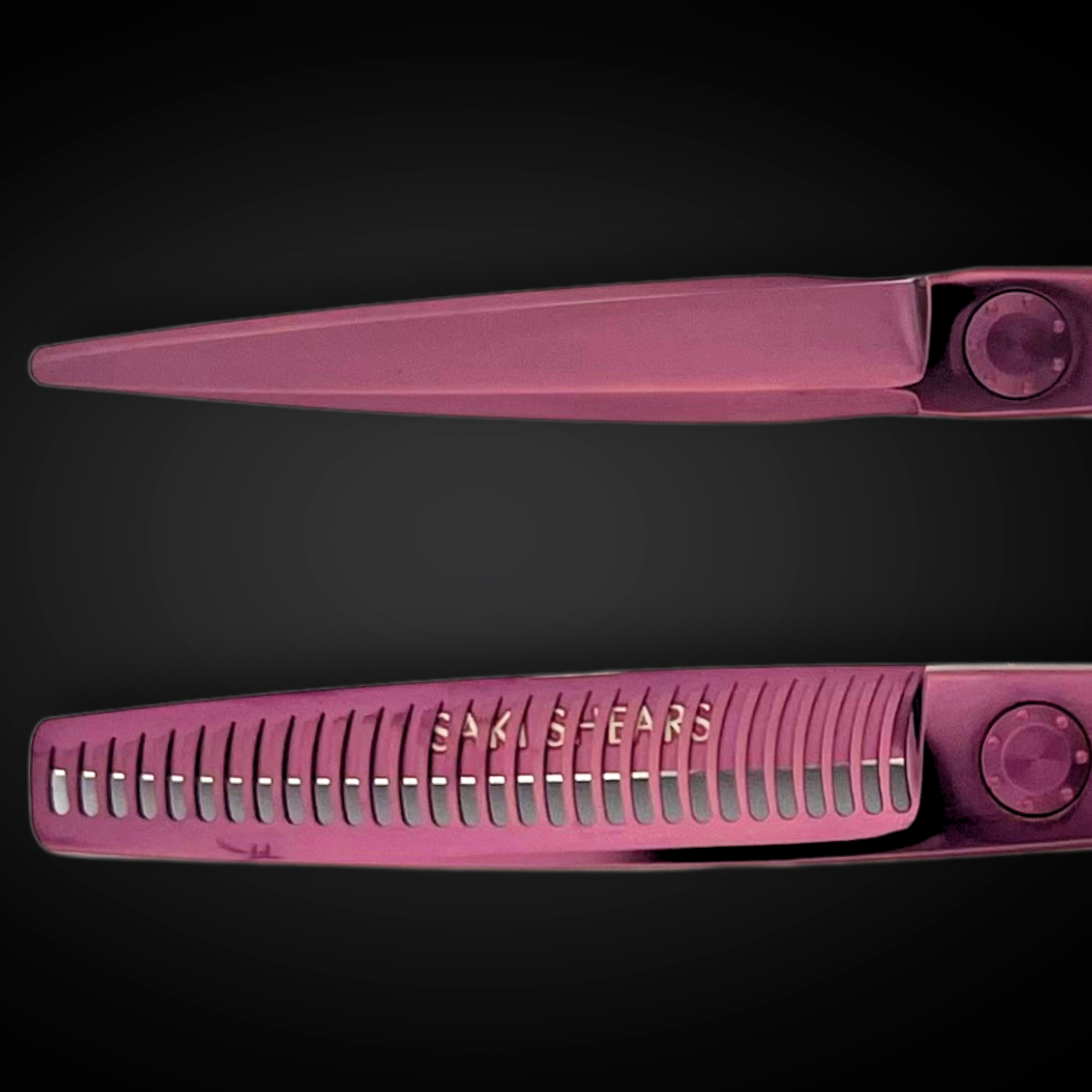
| Saki Gold set (cutting + thinning) | Japanese VG-10 cobalt | 60–61 HRC | $350 |
Steel and hardness as listed on each Saki product page.

The trade-off of high hardness: drop a 61 HRC blade on tile and the edge is more likely to chip than roll, and a chip costs far more steel to grind out than a rolled edge costs to hone. If your work environment is drop-prone — crowded stations, squirming kids, mobile work — don't solve it by buying a premium blade you're nervous about. Solve it with where the shear lives between cuts, and keep a retired pair at the station for anything risky.
Sharpening: Where Lifespans Are Made and Lost
Sharpening frequency is driven by workload, not the calendar. Scissors & Sharpening, a professional sharpening service, recommends servicing shears roughly every 500–600 haircuts. Run your own arithmetic: at 30 cuts a week, that's a service roughly every four to five months — two to three sharpenings a year. A booth renter doing 15 cuts a week is closer to one or two. If you're sharpening more often than your cut count justifies, the problem usually isn't the edge — it's tension, technique, or a previous bad sharpening.
Who does the work matters more than how often. A Japanese-style convex edge is a rounded outer bevel paired with a hollow-ground inner face, plus the ride line at the pivot where the blades bear on each other — and all of it has to be restored on specialized equipment at the correct angles. A general knife-and-tool grinder will flatten the convex bevel, and the shear will never slide-cut properly again. A bad sharpening also removes several services' worth of steel in one session — spending the blade's life budget with nothing to show for it. Find a specialist through a body like the National Sharpeners Guild, which certifies and lists trained sharpeners, and ask one question before handing over your shears: "How do you restore a convex edge?" If the answer doesn't involve specific equipment and angles, keep looking. Our guide to honing versus full resharpening covers what a proper service should include.
Daily Habits That Add Years
You know the baseline: wipe down and dry at the end of the day, a drop of oil at the pivot, case the shear, check tension. A bottle of shear oil and two minutes a day is the whole program — our guide to maintaining hair shears between sharpenings walks through it. What's worth spelling out is where experienced stylists quietly get it wrong:
The wrong oil. Clipper oil is thin by design — it has to wick across a reciprocating blade, and on a shear pivot it runs off quickly. Use shear oil or camellia oil instead; it stays at the pivot and keeps the screw and ride line moving on a film instead of metal on metal. An unlubricated pivot wears loose, and a loose pivot folds hair — which most stylists misread as a dull edge and "fix" with an unnecessary sharpening. That's steel removed to solve a lubrication problem.
The damp towel. Wiping blades with the same towel you just used with disinfectant solution, then casing the shear, seals moisture and chemicals against the steel all night. Even high-chromium stainless will spot and pit at the pivot, where water hides. Clean with one towel, dry with another, and case the shear bone-dry. Our step-by-step cleaning guide covers the full end-of-day sequence.
Over-tightening after a service. A freshly sharpened shear feels different, and the reflex is to crank the tension screw until it feels "solid" again. Too tight grinds the ride line on every stroke and wears the fresh edge faster than cutting does. Set tension by the drop test, not by feel.

The drop test, weekly: hold the shear tips-up, lift one handle to 90 degrees, and let it fall. It should close most of the way and stop just short of shut. Slams fully closed: too loose, and the blades are slapping each other's edges on every stroke. Barely moves: too tight. Adjust in small increments and re-test until the fall stops just short of closed.
What Kills Shears Early
Most shears don't wear out. They're killed, usually by one of these:
The drop. One fall onto a hard floor can chip a hardened edge, bend a tip, or knock the set of the blades out of alignment — damage a sharpener can sometimes grind out, at the cost of a disproportionate amount of steel, and sometimes can't. Make a habit of setting shears down in a case or holster, never on the edge of a trolley; nearly every drop starts as a shear "just for a second" on a flat surface.
Loose-drawer storage. A shear tossed in a drawer with combs and clips takes micro-impacts to the edge all day — contact a hardened edge is never designed for. A dedicated shear carrying case with individual slots solves this for your whole collection; just case the shear dry, since a closed case holds whatever moisture goes in with the steel.

The wrong sharpener. A good blade can be ruined in one session by a flat-ground "sharpening." Know the symptoms: a shear that comes back from service feeling rough, pushing hair, or showing a visible flat bevel where the convex curve was has been damaged, not sharpened — and the next service has to buy back that mistake with even more steel.
Corrosion at the pivot. Water trapped under the tension screw works on the steel every night the shear goes to bed wet. By the time rust is visible from outside, the ride line underneath is usually worse.
Repair or Replace? How to Make the Call
When a shear starts underperforming, diagnose before you spend. Work through this order: clean and oil it, set the tension, then have it professionally sharpened. Each step is cheaper than the next, and each fixes a different failure that reads as "dull" behind the chair.
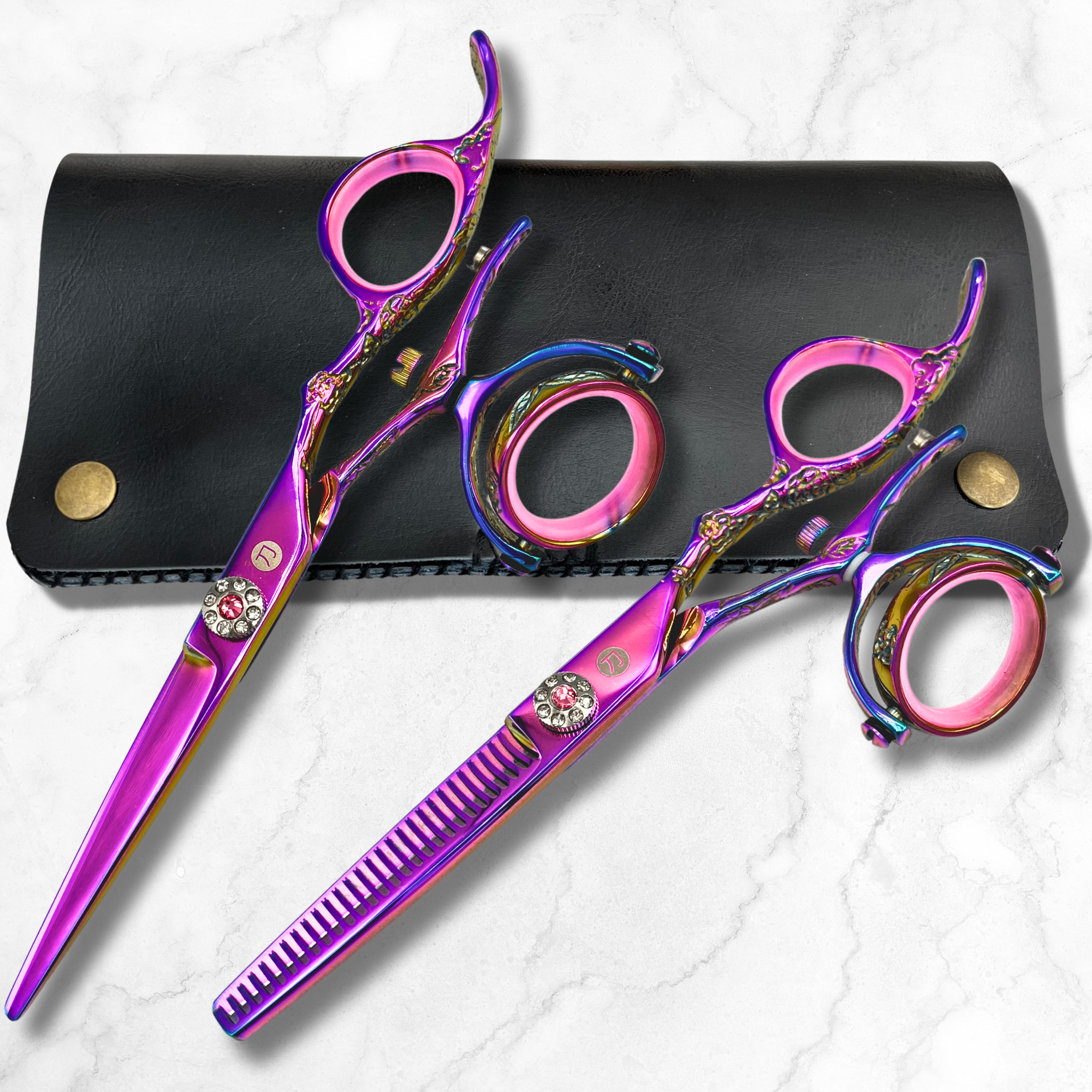
Replacement becomes the right call when the structure itself is gone: blades so thinned by years of sharpening that they flex away from each other under load, a bent blade or tip that returns after correction, a pivot worn past what the tension system can compensate for, or chip damage deep enough that grinding it out would leave the blade too narrow. Get a quote for the full repair — regrind, tip correction, any pivot work — and put it against the price of the equivalent new shear: $189 for a Kotaro, $199 for a Katana. When the quote passes roughly half the replacement price on a shear that's already structurally tired, you're paying restoration prices for a blade that can no longer hold the geometry the restoration is trying to rebuild. And since a worn, badly tensioned shear also makes you squeeze harder on every cut, replacement day is the right day to fix ergonomics too — a swivel design like the Sakura changes the thumb mechanics entirely.
Manufacturer defects are a separate category. Saki covers material and workmanship defects with a lifetime warranty on all shears — a blade that cracks or a weld that fails isn't a replacement cost, it's a warranty claim. Wear, drops, and third-party sharpening damage are on you, which is one more reason the habits above pay for themselves.
Frequently Asked Questions
How often should hair shears be sharpened?
Go by cut count, not the calendar: roughly every 500–600 haircuts, per professional sharpening service guidance. For a stylist doing 30 cuts a week that works out to every four to five months. Sharpen sooner if the shear pushes or folds clean, wet hair after you've verified the tension is set correctly.
How many times can hair shears be sharpened before they're worn out?
There's no fixed number — it depends on how much steel each service removes. A skilled sharpener restoring a convex edge takes off very little, so a quality blade can absorb many services over its life. A single aggressive grind can remove more steel than years of proper service. Choose the sharpener carefully and the question may never come up during your career.
Does dropping my shears ruin them?
Not always, but treat every drop as an injury. Inspect the edge under light for chips, check that the tips meet cleanly, and do a slow test cut through a strand of hair along the full blade. If the shear folds hair at one point, snags, or the blades click where they didn't before, stop using it and have a professional assess it — cutting through the damage makes the eventual repair bigger.
The Bottom Line
"How long do hair shears last?" has an honest answer: as long as your steel, your sharpener, and your habits allow. Buy 440C or better at 59+ HRC, service the shear by cut count with someone who can prove they restore convex edges, and give it two minutes of cleaning, oil, and tension attention each day — and the shear you buy this year can still be your primary a decade from now. If you're starting that plan with new steel, the Gold VG-10 set is the pair we'd put that decade of care into.