Why Professional Stylists Are Switching to Japanese Hair Shears
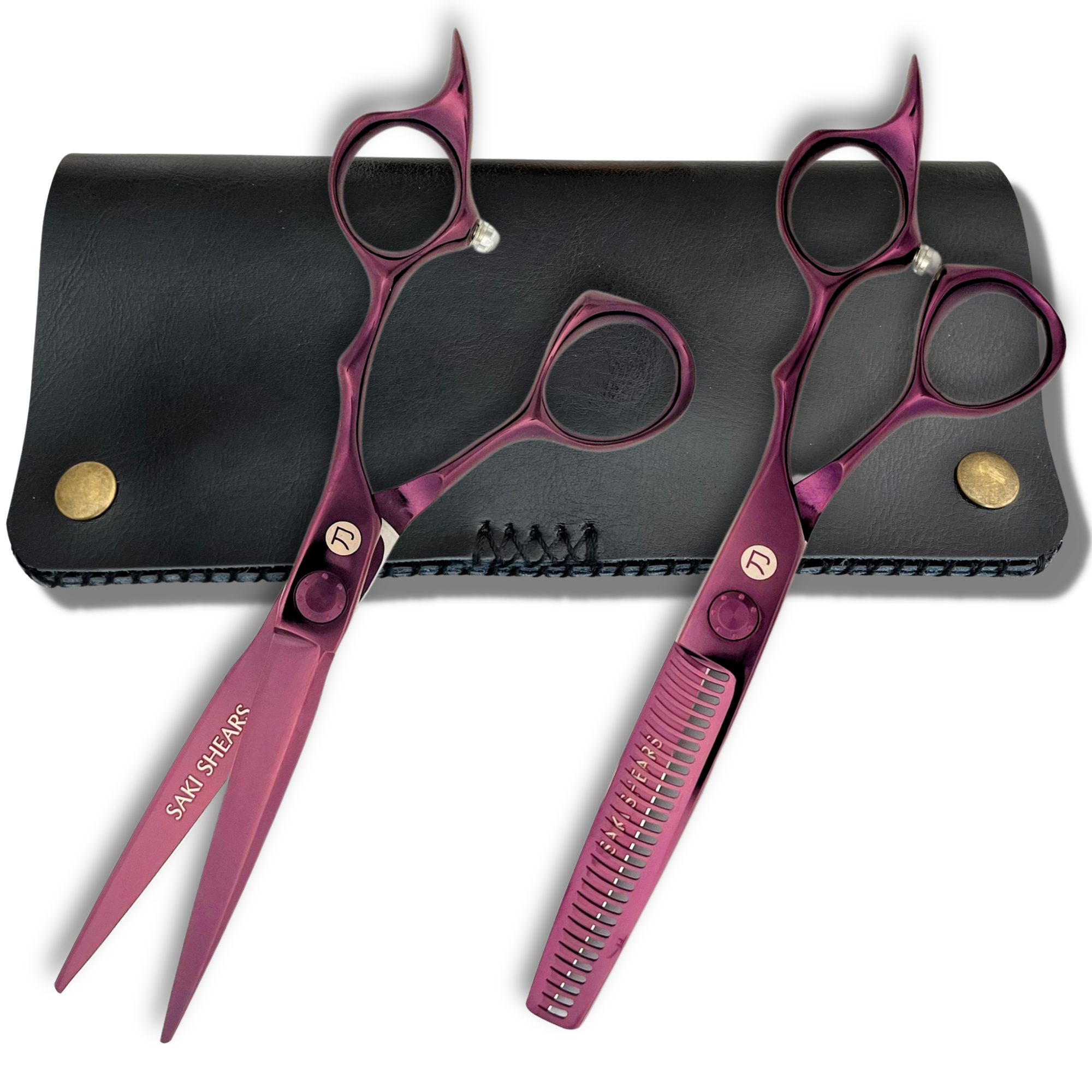
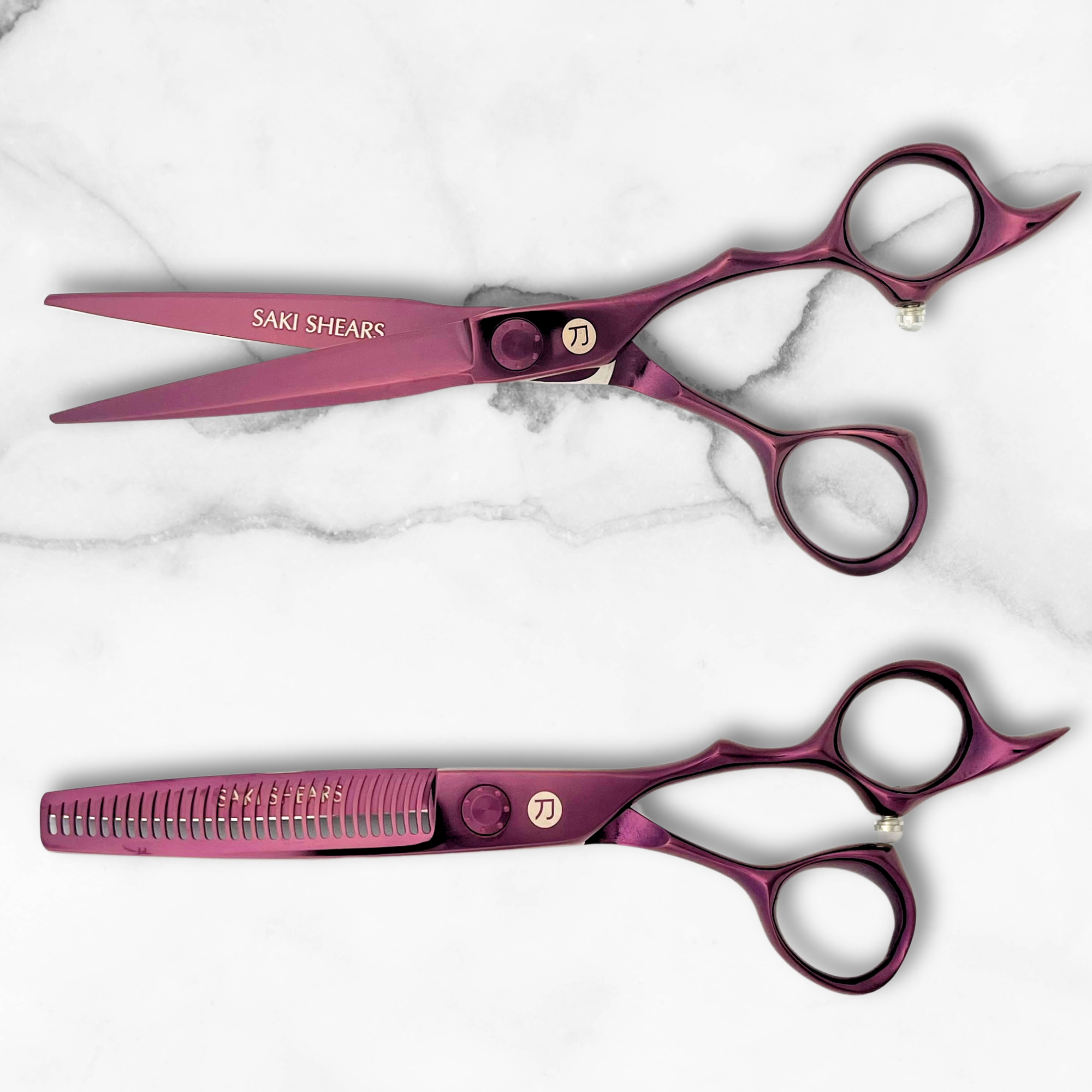
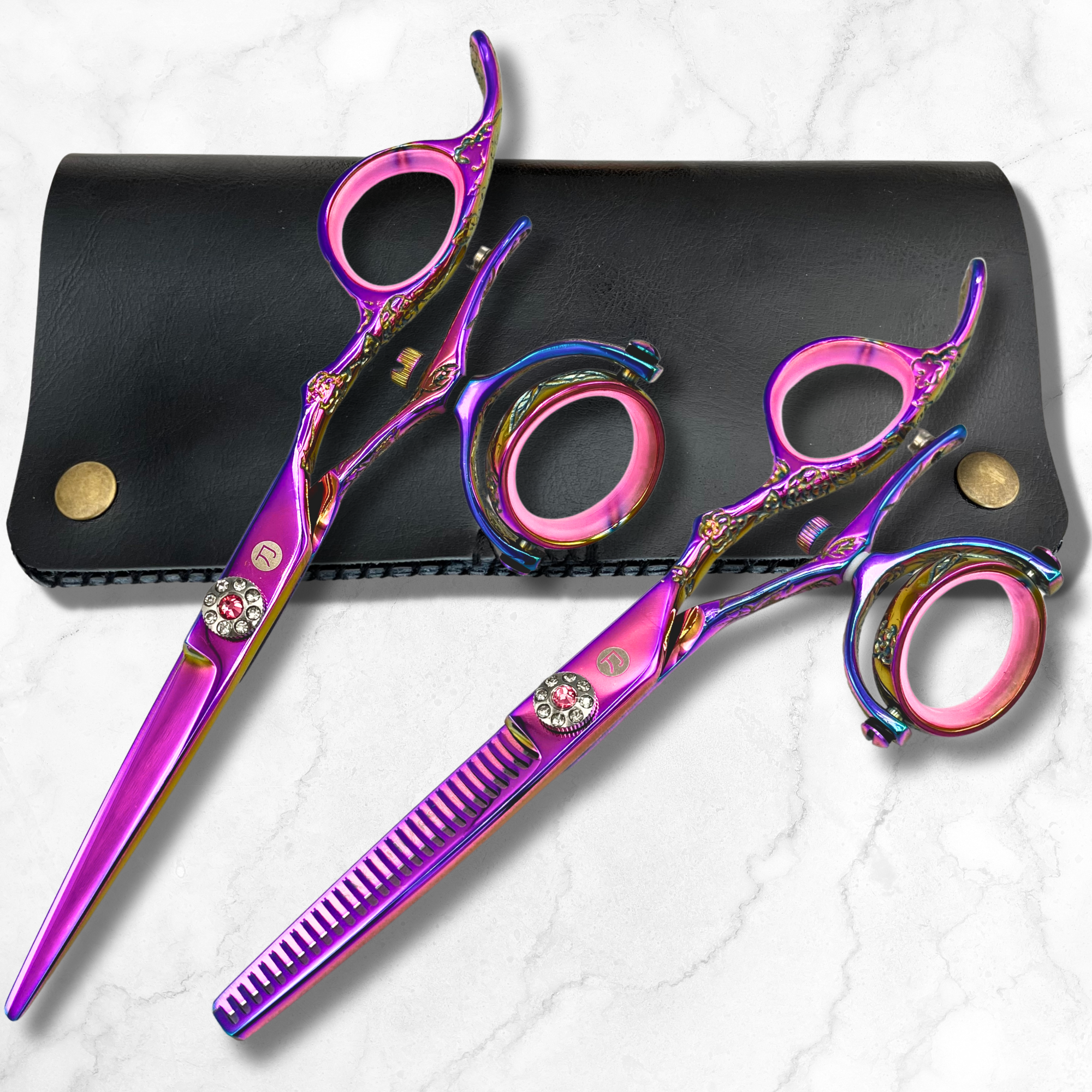
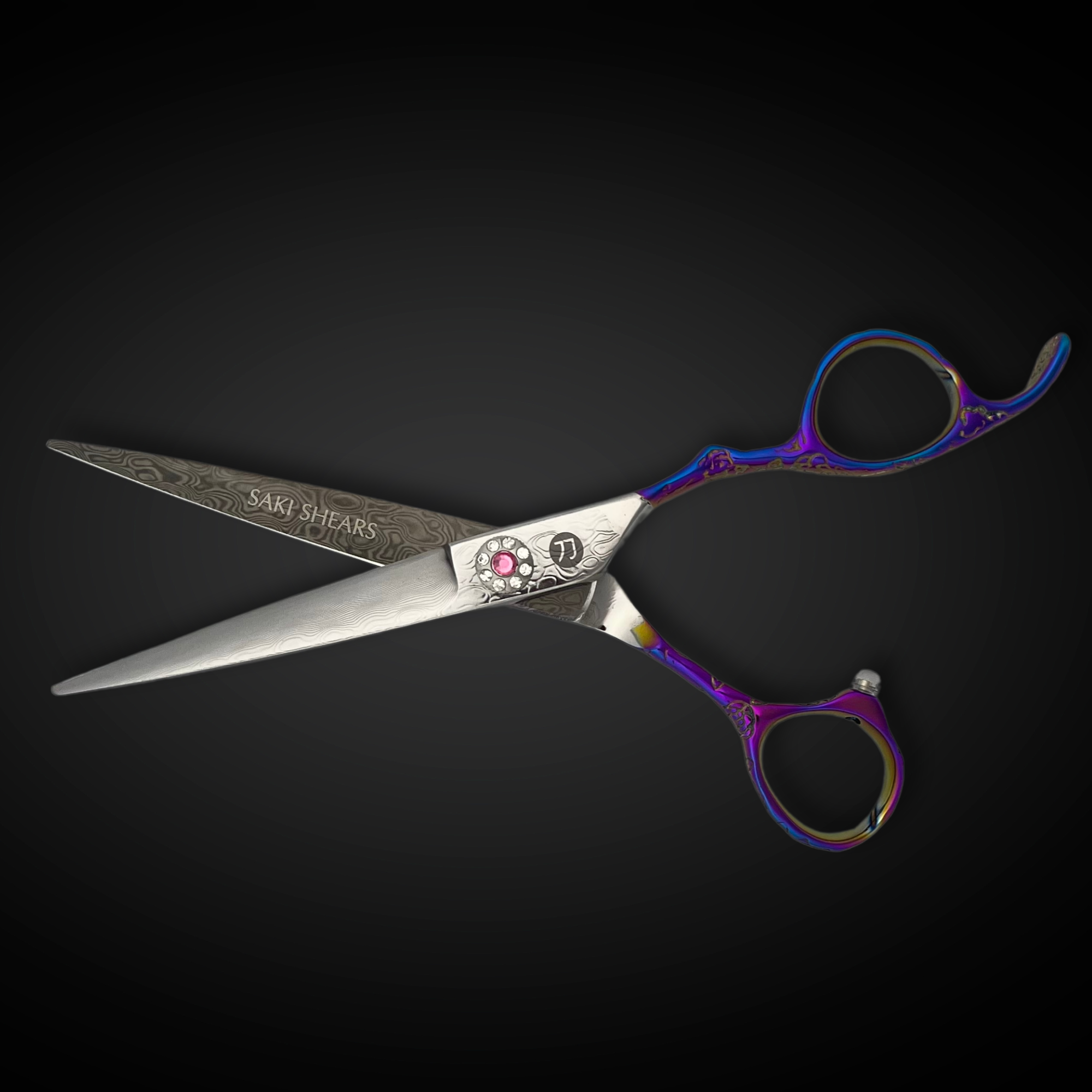
Most stylists don't switch to Japanese shears because of an ad. They switch after a specific bad day: a push-fold on fine wet hair in front of a client, a thumb that aches by the third balayage trim, or a blade that went dull six weeks after its last sharpening. If that day has already happened to you, this article explains what actually changes when you move to a Japanese-style shear — the steel, the edge geometry, the ergonomics — and what the switch costs you. The short version: a shear like the Saki Premium Gold VG-10 set cuts differently because it is built around a different edge, not because "Japanese" is a magic word. The details below are what separate a justified purchase from an expensive impulse.
What "Japanese" Actually Means on a Spec Sheet
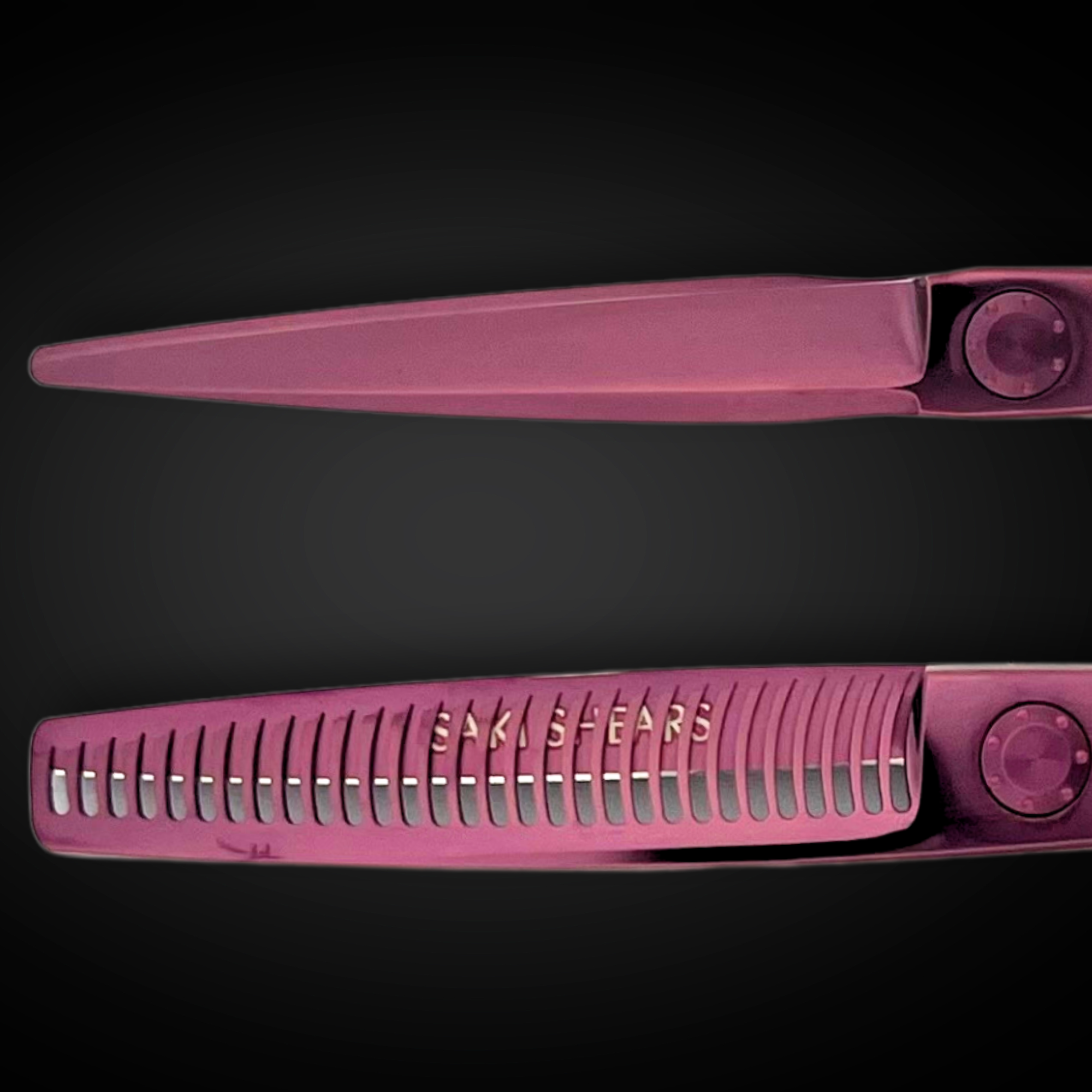
The label gets abused, so define it. A Japanese-style shear means three concrete things: a convex (hamaguri) edge ground to a steep cutting angle, a high-carbon stainless steel hard enough to hold that edge, and a slimmer, lighter body than the classic German pattern. None of these requires the shear to be forged in Seki City — Saki shears, for example, are built from 440C and VG-10 steels to Japanese-pattern geometry. When a stylist says a Japanese shear "feels sharper," they are describing the convex edge angle and the smoother glide of a hollow-ground inside blade, not national origin.
That distinction matters when you shop. A $60 shear stamped "Japanese style" with a beveled edge and soft steel will cut like the $60 shear it is. Judge the spec sheet — steel grade, edge type, hardness — not the flag on the box.
The Steel: What 440C and VG-10 Actually Do for You
Two steels cover most of the Japanese shear market, and both have published data behind them. 440C is a high-carbon stainless running roughly 1% carbon and 17% chromium, per the metallurgists at Knife Steel Nerds. VG-10 is a Takefu Special Steel alloy — the manufacturer's published composition is 1.00% carbon, 15.00% chromium, 1.00% molybdenum, 0.25% vanadium, and 1.55% cobalt, with hardness listed at HRC 60 and above. Knife Steel Nerds measured a VG-10 sample at about 60.7 HRC after heat treatment; the alloy dates back to around 1959.
Here is the part most shear marketing skips: in Knife Steel Nerds' CATRA edge-retention testing, VG-10 actually landed a small notch below 440C. VG-10 is not a longevity miracle. What the cobalt and vanadium buy you is a finer grain structure that takes a keener, more polished apex — the edge starts sharper and feels smoother through the cut — plus resistance to softening during finishing processes. 440C gives you most of the working hardness for less money. That is why a working stylist can be completely well served by a 440C shear and a salon owner cutting eight heads a day might justify VG-10.
| Steel | Carbon | Chromium | Cobalt | What it means at the chair | Saki price range |
|---|---|---|---|---|---|
| 440C | ~1.0% | 17% | None | Hard, corrosion-resistant workhorse edge | $150–$299 |
| VG-10 | 1.00% | 15.00% | 1.55% | Finer grain; takes a keener, smoother apex | $240–$350 |
The Real Difference Is Geometry, Not Metallurgy
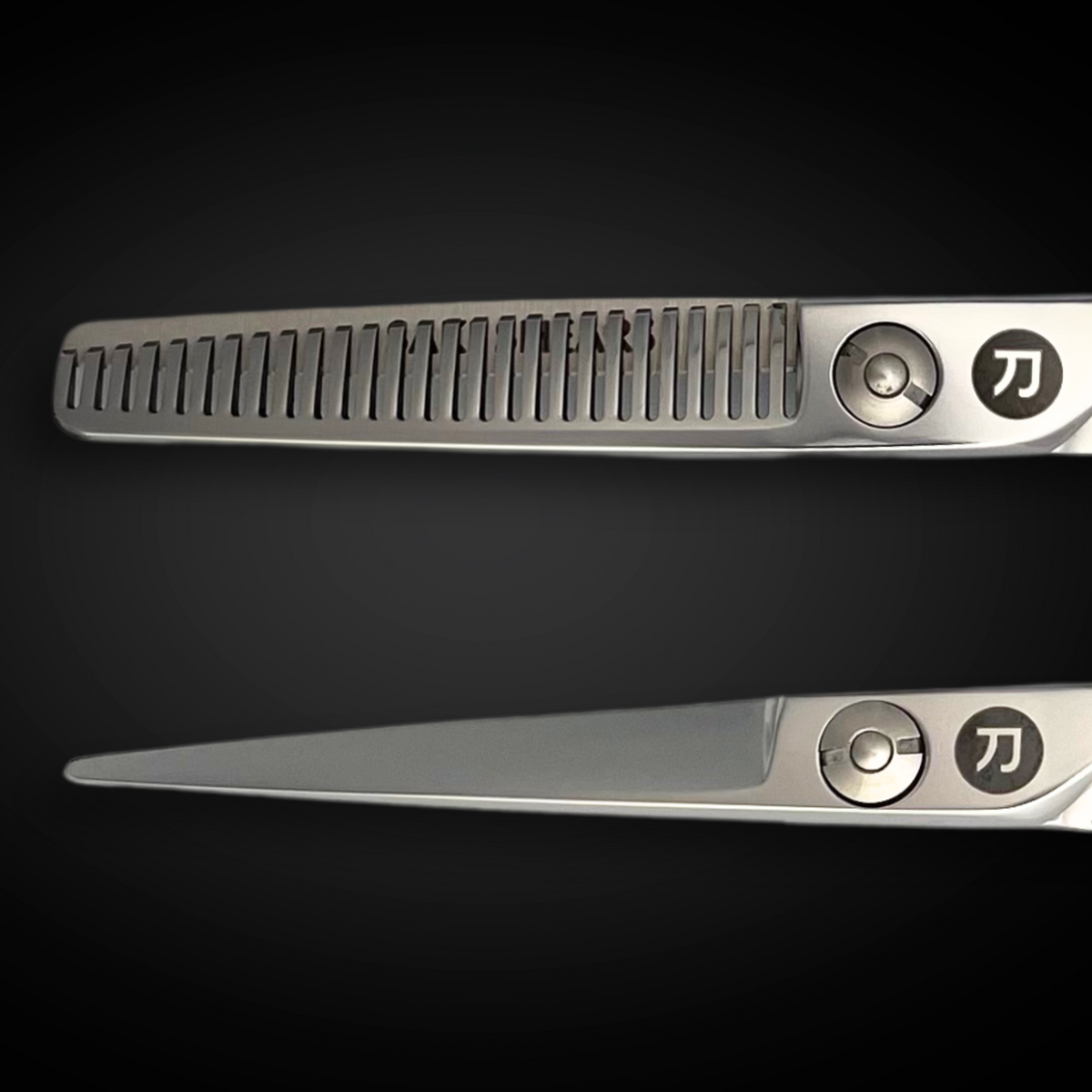
Stylists who switch and stay switched are responding to the convex edge, not the steel stamp. A German-pattern beveled edge meets the hair with a flat, angled face — durable, forgiving, and slightly crushing in the cut, which is why a worn bevel pushes fine hair instead of severing it. A convex edge is ground as a continuous arc to a much finer apex, and the inside of the blade is hollow-ground so only a narrow ride line touches the opposing blade. Less contact, less friction, a cleaner shear point. We cover the mechanics in more depth in our convex vs beveled edge guide.
At the chair, the difference shows up in three places. Slide cutting: a bevel chews and grabs mid-stroke, a convex edge travels the strand without snagging. Dry cutting: convex blades sever individual strands cleanly instead of bending them, which is why dry-cut specialists are almost universally on Japanese-style shears. Fine and damaged hair: the finer apex needs less closing pressure, so the hair doesn't fold over the blade. If your week is mostly uniform-layer wet cuts with heavy tension, a beveled shear still does the job. The stylists who feel the biggest difference are the ones doing detail, texture, and dry work.

Hardness Is What Makes the Geometry Possible
Steel hardness and edge geometry are one decision, not two. An edge ground to a convex apex concentrates stress on a very thin section of steel; grind that profile into soft steel and it rolls over within weeks. That is the engineering reason Japanese-style shears run hard steels in the HRC 60 range — the hardness exists to support the geometry. It is also why the reverse combination, soft steel with an aggressive edge, is the signature of the knockoff shears that sour people on the whole category. If HRC numbers are new territory, our HRC hardness explainer walks through the scale and what the trade-offs are at each band.
The trade-off is real: harder steel is more brittle. Drop a hard convex shear on tile and you can chip the edge where a softer bevel would dent and survive. Japanese-style shears assume you treat them like optics, not like pliers. If your shears live loose in a drawer with your clips, fix the storage habit before you spend the money.
Weight, Balance, and the Hand You Cut With
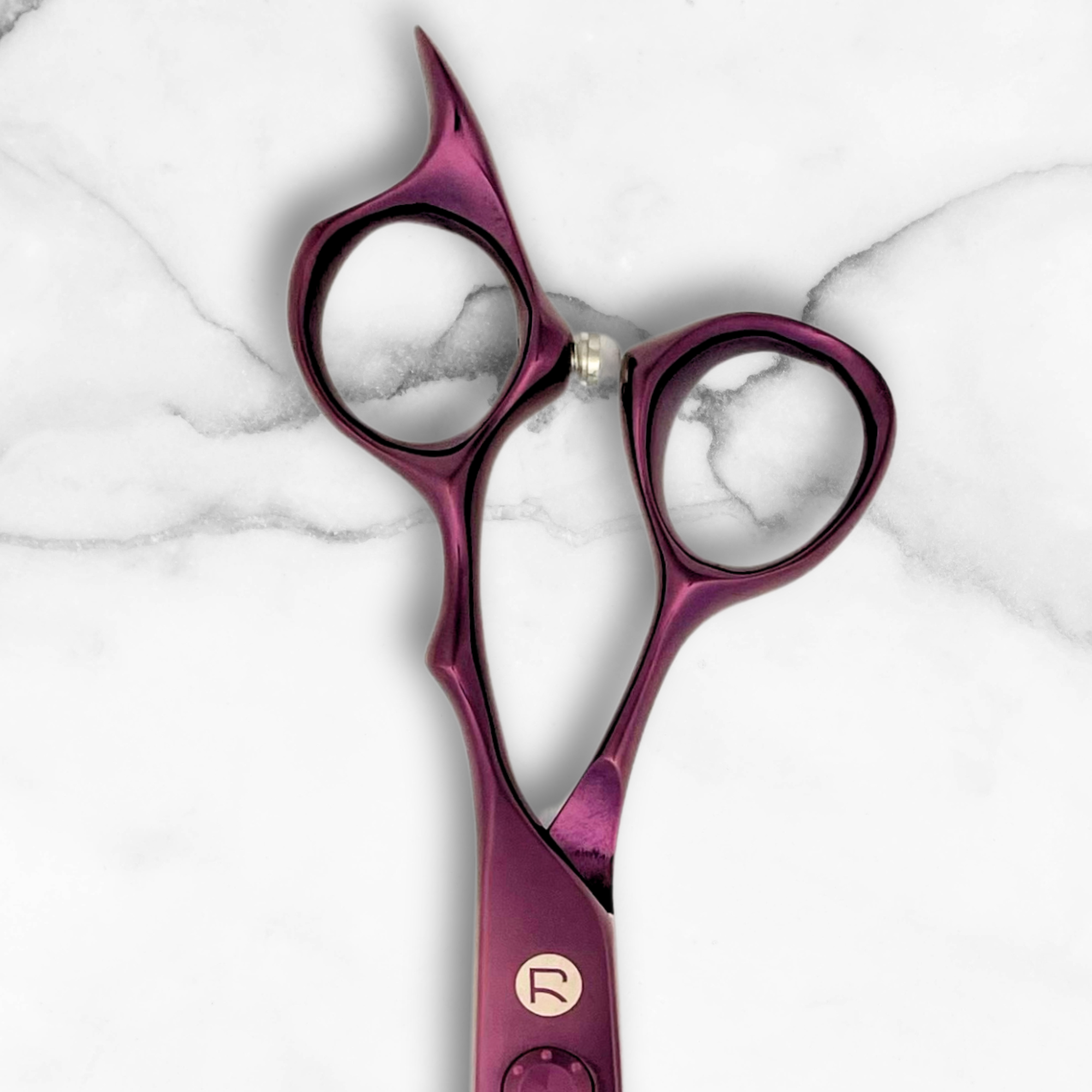
Pick up a classic German-pattern shear and a Japanese-pattern shear of the same length and the first difference you notice is mass. The Japanese pattern runs slimmer blades and a narrower tang, and most of the line is built on offset handles — the thumb ring sits forward and below the finger ring, so your thumb works in a shorter, more natural arc instead of reaching. Shorter thumb travel means less squeezing force through thousands of closures a day, and after a decade behind the chair, the handle design is where a shear either protects your hand or wears it down.
A shear like the Saki Kotaro is a good example of the pattern: 440C blades, offset grip, light enough that the back of your hand isn't doing stabilization work at the end of a double shift. The trade-off here: lighter, slimmer shears transmit more feedback. Stylists used to the planted, heavy feel of a German shear sometimes describe a Japanese shear as "twitchy" for the first week or two. That is your hand recalibrating, and it passes — but it is a real adjustment period, not marketing fine print.

The Cost Math, Without the Sales Pitch
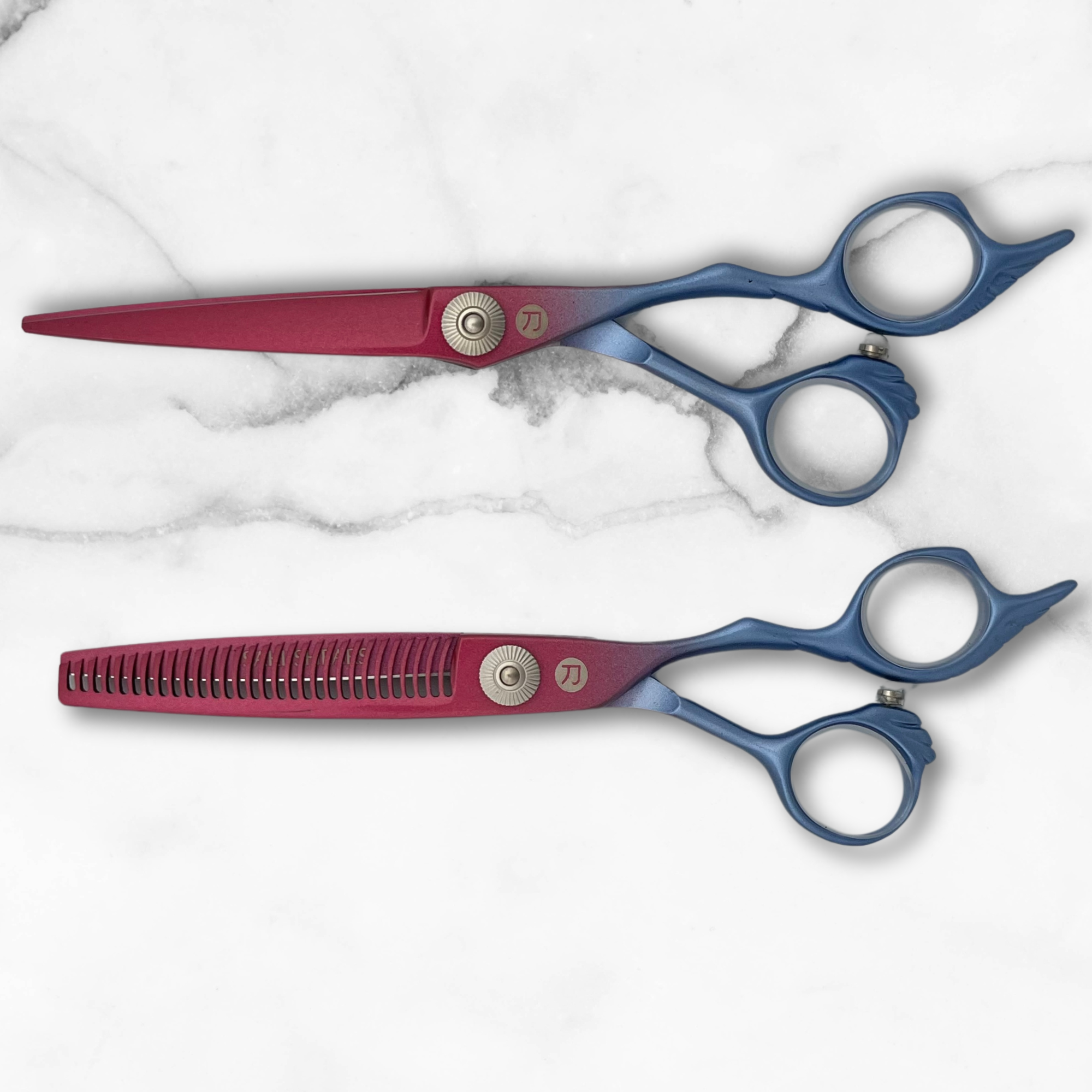
Run the numbers like a business owner, because you are one. The entry point into legitimate Japanese-style steel is lower than most stylists assume: the Saki Tomika is $150, the Kotaro is $189, and the Katana cutting-and-thinning set is $299. The VG-10 tier tops out at $350 for the Premium Gold set. Compare that against the replacement cycle on budget shears: if you are buying a $70 shear every year because it won't hold an edge past month eight, you are already paying premium-shear money — you are just paying it in installments and cutting with dull blades for a third of every cycle.
Where the math genuinely argues against switching: if you are a student or first-year assistant doing a handful of cuts a week, a mid-grade 440C shear is the ceiling of what your volume justifies. And be clear about what the VG-10 tier buys at volume: feel, not longevity. The keener starting edge and smoother glide are felt dozens of times a day; if your only criterion is weeks between sharpenings, 440C is the rational pick at any volume. Buy the steel your book supports, not the steel the ad supports.

What You Give Up When You Switch
Three things get worse when you switch. First, sharpening: a convex edge cannot go to the guy with the bench grinder at the beauty supply. It needs a sharpener with convex-specific equipment and training — which costs more per service, and in smaller markets means shipping your shears out, so the backup pair stops being optional. A bad sharpening also does more damage to a Japanese shear than to a German one — our guide to how long professional shears last covers what proper service does for the blade. Find your convex sharpener before you need one, not after.
Second, the adjustment period. Lighter weight, finer edge, and offset grip change your closing pressure and your hand position at once. Expect the first two or three working days to feel unfamiliar, and do not debut new shears on your most exacting client. Third, discipline: hard steel punishes drops, moisture left on the blades overnight, and cutting anything that isn't clean human hair. If a shear in your hands leads a hard life, buy the tougher, cheaper tool with a clear conscience.
How to Switch Without Wrecking a Workweek
A transition plan that works: keep your current shears in the roll as the backup pair. Set tension with the lift test — hold the shear points-up, raise one handle to 90 degrees, and let it fall; it should close about two-thirds of the way and stop. A blade that slams fully shut is too loose and will fold hair; one that barely moves is too tight and will burn out your thumb. Then book your first two days on the new shear with forgiving services — uniform layers, long trims, nothing precision-graphic. Check the tension screw on day one and again at the end of the first week; factory tension is a starting point, and a convex shear running loose will fold hair and convince you the shear is bad when the setting is. Wipe the blades down at close, every day, and oil the pivot weekly. By the end of week two the "twitchy" feeling is gone for most stylists, and going back to the old pair is what feels wrong. That reversal — when the backup pair starts feeling like the compromise — is how you know the switch took.
Frequently Asked Questions
Are Japanese hair shears worth it?
They are worth it if your work includes slide cutting, dry cutting, or detail work on fine hair, and if you cut at enough volume to feel the difference daily. They are not worth it if your blades lead a rough life or your weekly volume is low — a well-maintained 440C shear at $150–$199 covers that ground without the premium.
Why are Japanese hair shears so expensive?
You are paying for finishing labor more than for raw material. A convex edge and hollow-ground inside blade take slower, more skilled grinding and polishing than a flat bevel, and alloys like VG-10 cost more than commodity stainless. But "Japanese-style" does not have to mean $700: the current Saki range runs $150 for the Tomika to $350 for the Premium Gold VG-10 set, with the finishing work being what separates those tiers from supply-store blister-pack shears.
How often do Japanese shears need to be sharpened?
There is no honest fixed number — it depends on your daily volume, whether you cut clean dry hair, and how well tension is maintained. The reliable rule: sharpen on symptoms, not on a calendar. Pushing or folding fine hair at correct tension means the edge is due. When it is due, use a sharpener with convex-edge equipment, because a flat-ground "sharpening" permanently changes the blade's geometry.
The Bottom Line
The switch to Japanese shears is a switch to a finer edge on harder steel in a lighter body — three linked engineering choices, each with a real cost: specialist sharpening, careful handling, and an adjustment period. If your work rewards that edge, the move pays for itself in cleaner cuts and a hand that hurts less at close. Start with the steel your volume justifies; if that is the top of the range, the Premium Gold VG-10 set is the version of this argument you can hold.