What Is HRC Hardness in Hair Shears and Why Does It Matter?
Every spec sheet for professional shears lists an HRC number — 58, 60, 62 — and most stylists have no way to judge whether that number is good, bad, or marketing noise. The number is a Rockwell hardness rating, and it predicts three things you care about directly: how fine an edge the blade can hold, how many weeks of cutting you get between sharpenings, and whether a drop onto tile means a bent tip or a chipped blade. This article explains what the Rockwell C test actually measures, what the numbers mean for the steels used in shears like the Saki Gold cutting and thinning set, and — just as important — the trade-offs that come with chasing a higher number.
The Number Measures the Heat Treat, Not Just the Steel
HRC is shorthand for "Hardness, Rockwell C scale." The test is mechanical: a machine presses a diamond cone into the steel under a 150 kgf load and measures how deep the indent goes — shallower indent, harder steel, higher number. The Rockwell hardness test is standardized under ASTM E18, which is why an HRC value from a Japanese factory and one from a German factory mean the same thing; the C scale is the one used for hardened cutlery and tool steels, which is why it's the number on your shear's spec sheet.
Two things follow from how the test works. First, HRC measures resistance to permanent deformation — how much force it takes to dent the steel. It does not directly measure wear resistance, toughness, or corrosion resistance; those come from the alloy's composition and carbide structure. Second, hardness is a product of heat treatment, not just steel grade. The same bar of 440C can leave the factory at 55 HRC or 60 HRC depending on how it was hardened and tempered, a point covered in materials-testing references like Buehler's guide to Rockwell testing. That's why "440C" alone on a listing tells you less than "440C at 59–60 HRC."
Why Hardness Decides How Your Shears Cut
A shear edge is a wedge of steel ground thin. The harder the steel, the thinner and more acute that wedge can be ground without collapsing in use. This is the whole reason Japanese-style convex edges exist: a convex edge is ground to a far more acute angle than a beveled edge, and it slices through hair instead of chopping it. That geometry is only possible on hard steel. Grind a convex edge onto soft steel and the fine apex rolls over within days of salon work — you get a wire edge that folds, drags, and pushes hair.
Hardness also governs edge retention. Cutting hair is abrasive work; hair itself is surprisingly hard, and mineral residue from hard water, product build-up, and dry cutting all accelerate wear. Softer steel abrades and deforms faster, so the apex rounds off sooner and the shear starts to fold hair at the tips before it stops cutting outright. If you've noticed a shear that bends fine hair instead of cutting it at the very tips, that's usually a rounded or rolled apex — a hardness and wear problem, not a tension problem. (Worth ruling tension out first, though — our guide to the signs your shears need maintenance walks through how to tell the difference.)
The practical consequence: two shears with identical geometry but a 4-point HRC difference will feel identical in week one; by month four, one of them is folding fine hair at the tips.
The Numbers: What 54, 58, and 62 HRC Actually Buy You
Here's how the steels commonly used in hair shears compare. Hardness figures are typical as-tempered ranges from published steel data; individual makers' heat treatments vary within them.
| Steel | Typical HRC | Edge retention | Chip risk | Where you'll find it |
|---|---|---|---|---|
| 420-class stainless | 50–55 | Low — edge rolls quickly | Very low | Budget and student shears |
| 440C | 58–60 | Good | Low | Professional workhorse shears |
| VG-10 (cobalt alloy) | 60–62 | Very good — holds a keen apex longer than 440C | Moderate | Premium Japanese shears |
| Cobalt super-alloys (ATS-314 class) | 62+ | Excellent | Higher — demands careful handling | Top-tier specialty shears |
Typical hardness ranges for shear steels; heat treatment determines where in the range a given shear lands.
The jump from 420-class to 440C is the one that matters most. Below roughly 56 HRC, a maker physically cannot put a durable convex edge on the blade, so budget shears ship with beveled, often serrated edges — the serrations grip hair because the edge isn't keen enough to slice it. Serrated bevels rule out slide cutting entirely. From 440C upward, you're paying for degrees of refinement: VG-10's extra carbon and cobalt let it be hardened 2–3 points past 440C without falling apart, and its finer carbide structure holds the apex longer as it wears. We've broken down that comparison in detail in our VG10 vs 440C steel guide.
The Trade-Off Nobody Puts on the Spec Sheet: Hard Means Brittle
Hardness and toughness pull in opposite directions in steel. Toughness is the ability to absorb impact by deforming instead of cracking; hardness is resistance to deforming at all. Push HRC up and the steel stops bending and starts chipping. This is not a defect — it's metallurgy — but it changes how you have to treat the tool.
In salon terms: drop a 54 HRC shear on a tile floor and you'll likely get a bent tip or a rolled edge, which a sharpener can straighten. Drop a 62 HRC shear the same way and you can chip a half-millimeter crescent out of the blade, which means grinding the entire edge back past the chip — losing real blade life in one repair. Hitting a clip or bobby pin mid-cut does the same thing. Harder shears also cost more per sharpening, because fewer sharpeners have the equipment and skill to re-establish a convex edge on very hard steel, and a bad sharpening job destroys more value on a $350 shear than a $90 one. If you're weighing doing it yourself, read whether to sharpen your own shears or use a professional first — the answer changes with hardness.
So "higher is better" is only true if you'll actually bank the benefit. A stylist who cuts eight heads a day, dry cuts often, and keeps their shears cased between shifts gets months of extra edge life from 61 HRC steel. A student sharing a station, or anyone whose shears ride loose in a drawer, will pay the brittleness tax without collecting the edge-retention dividend.
Matching HRC to Your Work
This is how the trade-off maps onto an actual buying decision, using our own line as the example since we publish what steel each shear uses.
High-fifties HRC (440C) — the professional default. Hard enough for a true convex edge and slide cutting, tough enough to survive real salon life, and any competent sharpener can service it. The Katana ($199) and the Kotaro ($189) are both 440C Japanese steel in this range — shears you can use hard for a decade of daily work. If you're building out from cosmetology school on a budget, the 440C Tomika at $150 gets you the same steel class in a 5.5-inch frame suited to detail work.

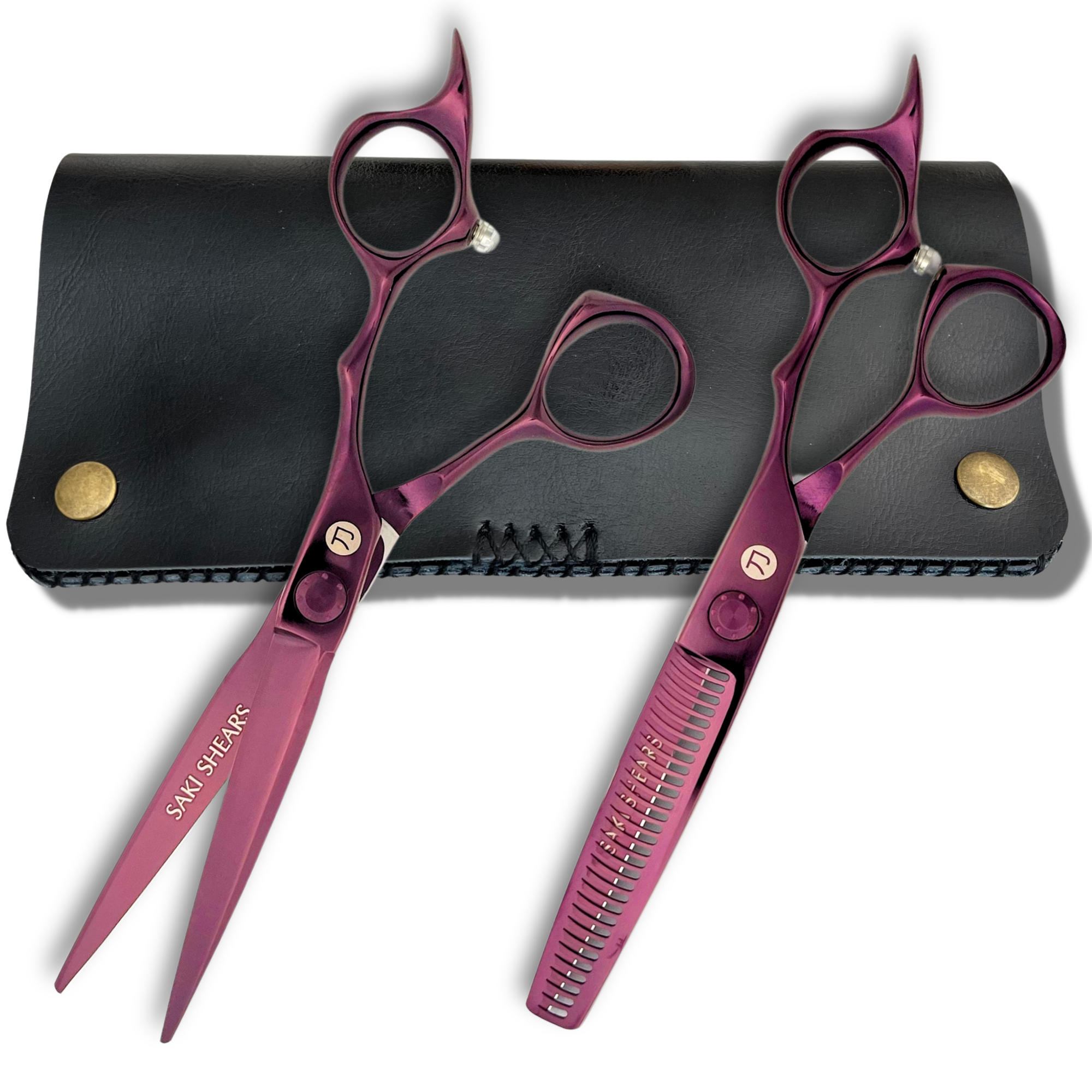
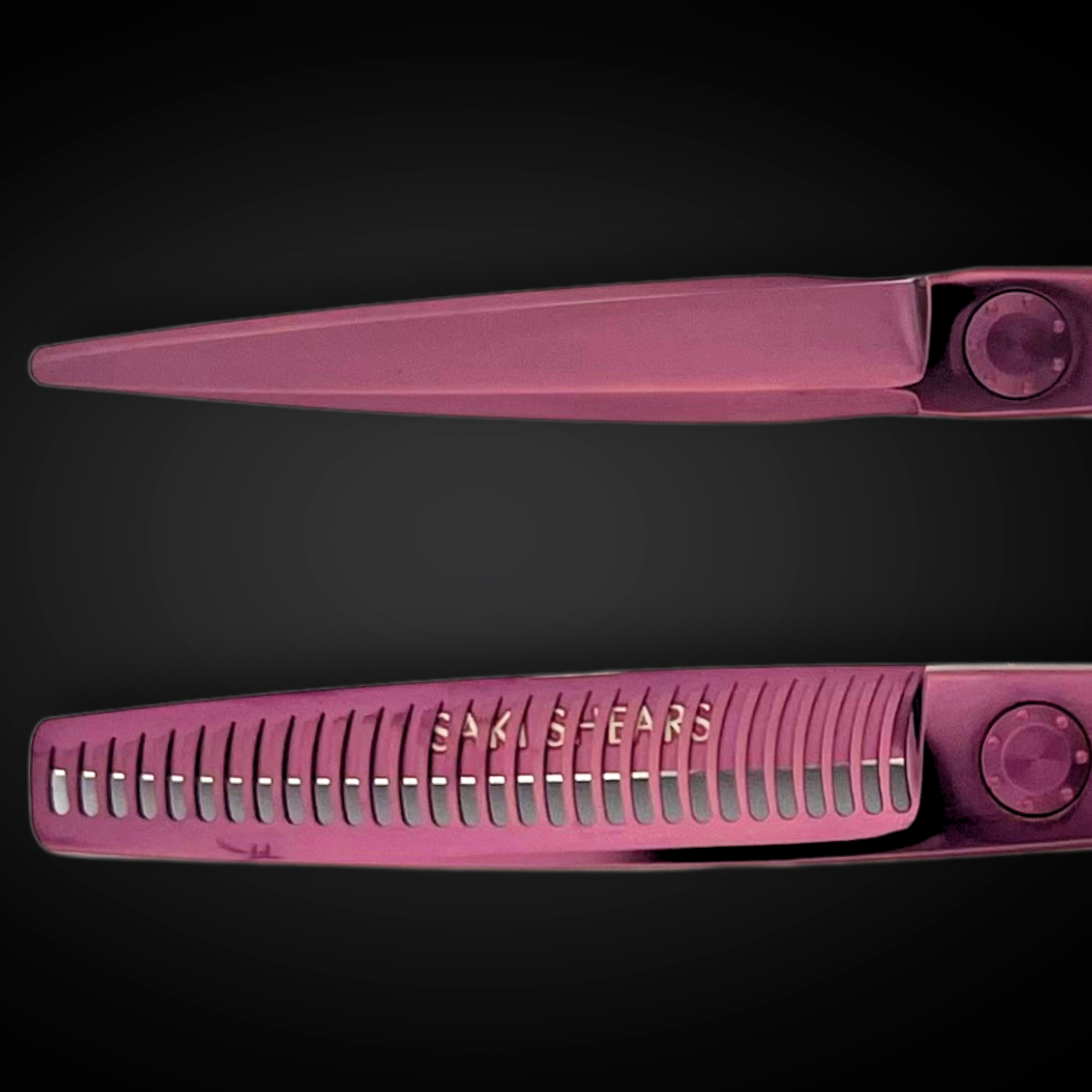
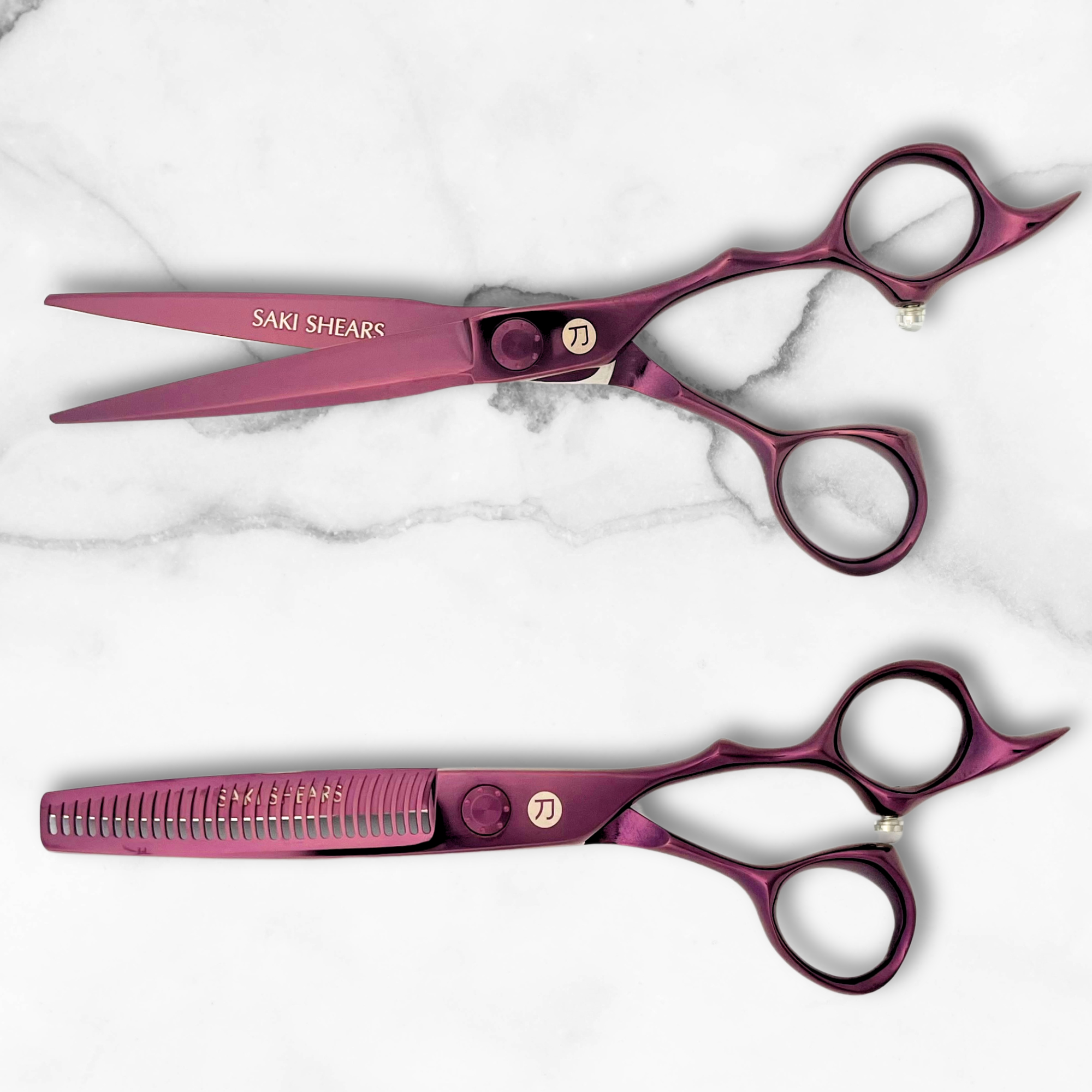
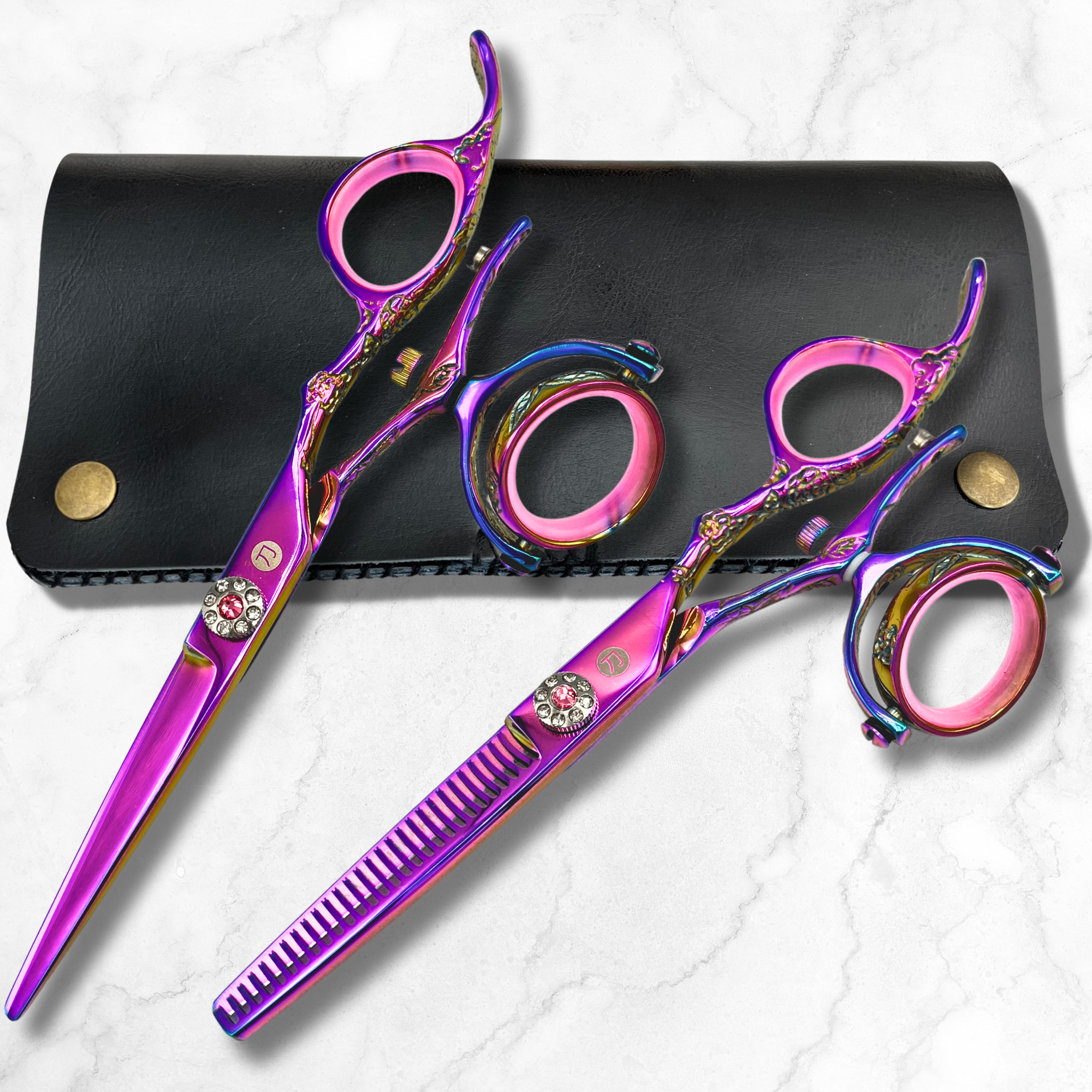
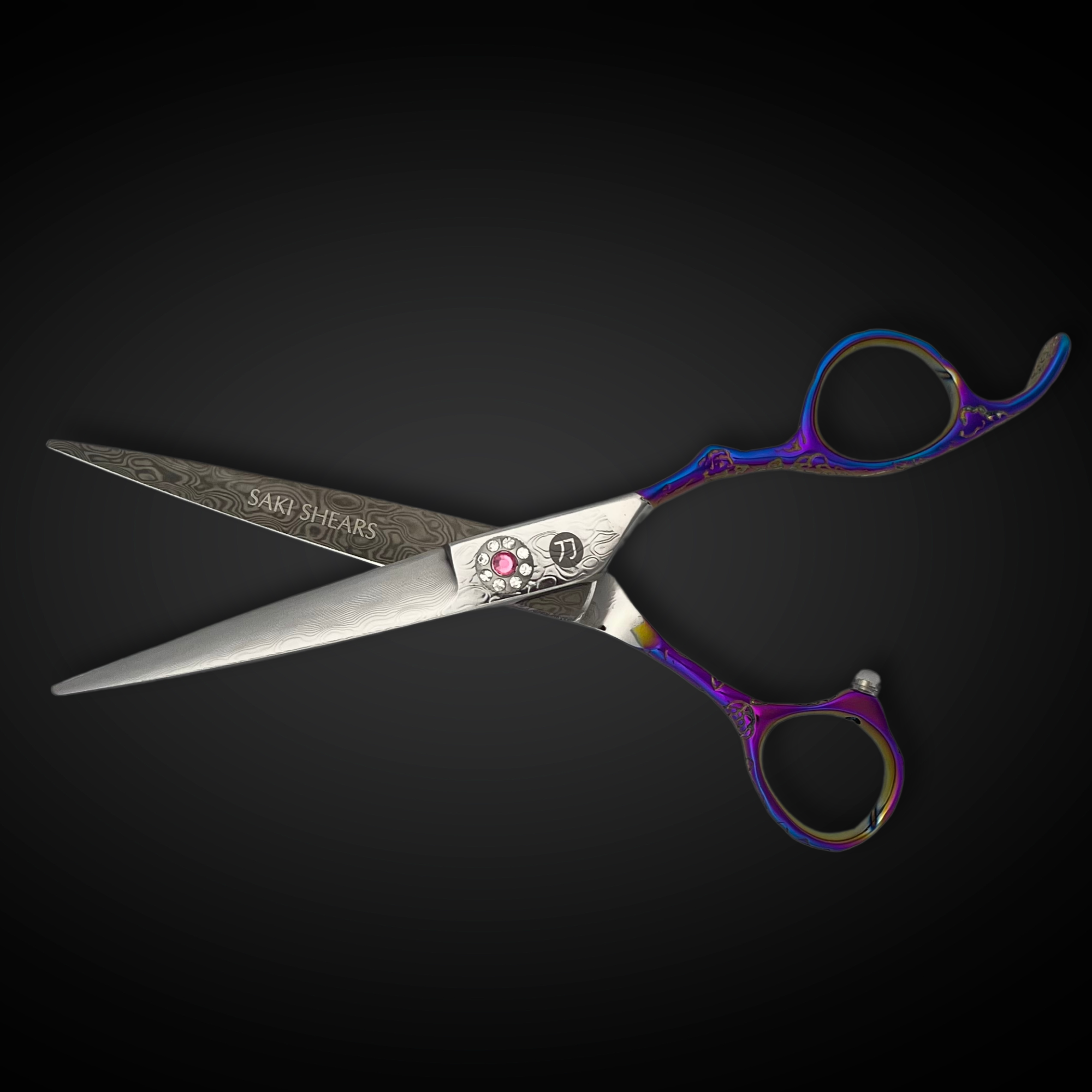
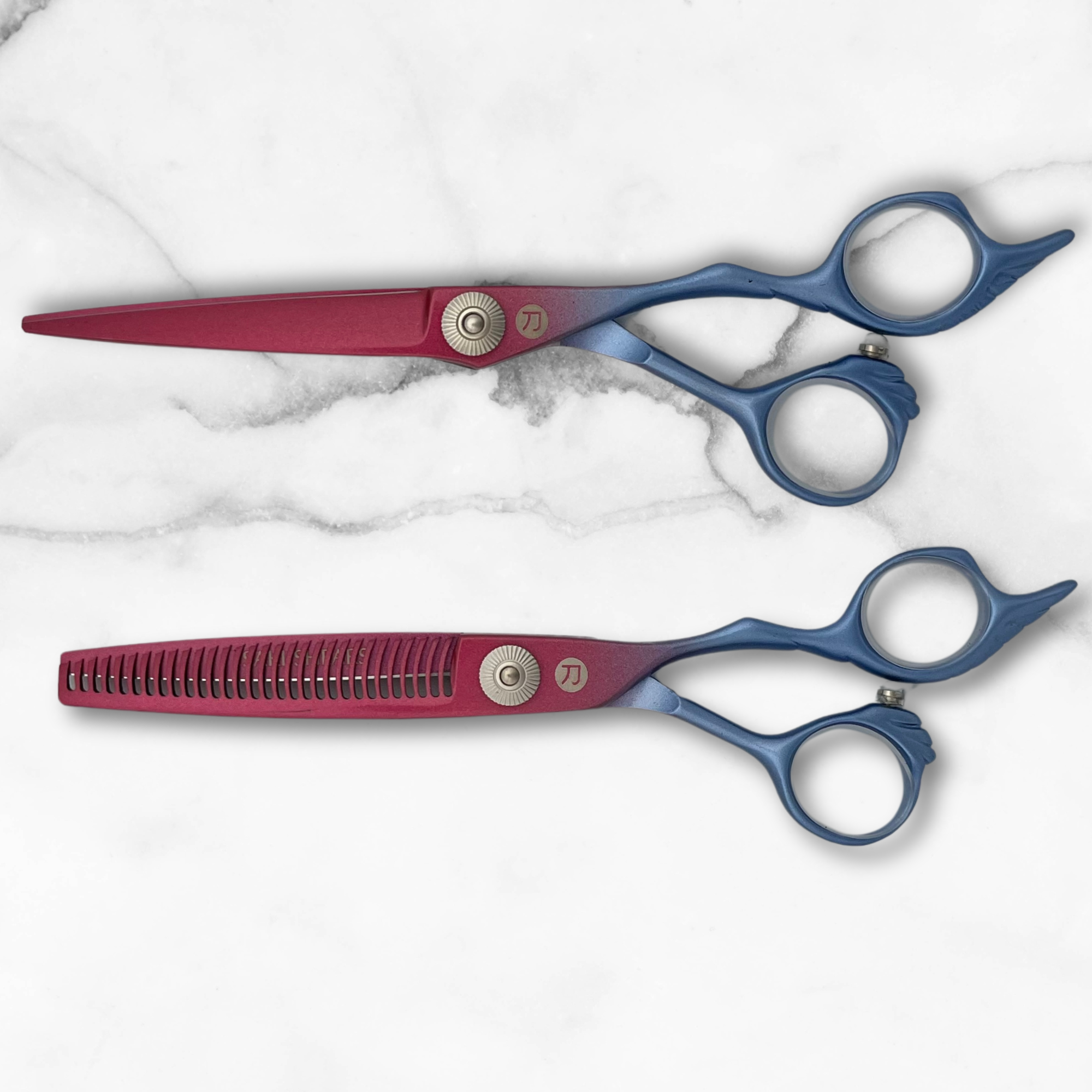
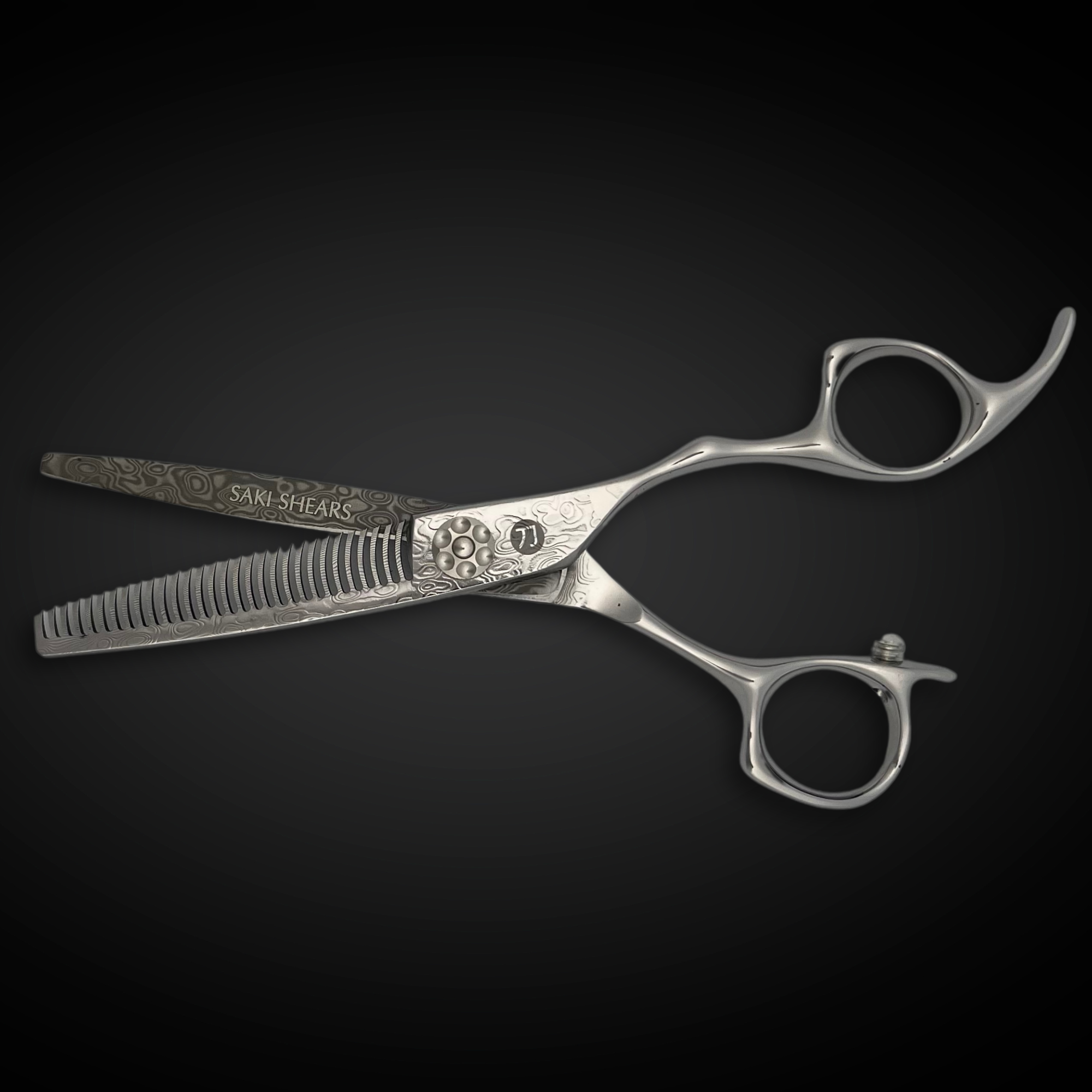
Low-sixties HRC (VG-10) — for high-volume and dry-cutting work. The extra 2–3 points of hardness show up as noticeably longer stretches between sharpenings and a keener working edge at the end of each stretch. The Saki Gold set pairs a VG-10 cobalt cutting shear with a matching thinning shear, which matters because thinning teeth are miserable to sharpen well — many sharpeners won't touch teeth at all, or charge extra for them — so the longer the edge holds, the better. The trade-off is exactly as described above: treat it like the precision instrument it is, and budget for a sharpener who knows Japanese convex edges.

One honest note on the low end: if a shear is under about $60 and doesn't state its steel or hardness, assume 420-class in the low fifties. It will cut hair. It will not hold a slicing edge, and no sharpener can put one on it, because the steel physically can't support the geometry.
What Wear Actually Feels Like on the Salon Floor
Hardness numbers are abstract until you connect them to the sequence every stylist recognizes. A shear never goes from sharp to dull overnight; it degrades in stages, and HRC controls how fast you move through them.
Stage one is the tips. The last quarter-inch of the blade does the most detail work and wears first, so the earliest symptom is fine hair folding or sliding at the very tips while the mid-blade still cuts clean. Stage two is force: you start closing the shear harder without noticing, and by the end of a full day your thumb web aches in a way it didn't three months ago. Stage three is audible and visible — the blade pushes wet hair instead of slicing it, blunt lines need a second pass, and clients with fine or damaged hair show split, compressed ends a week after the cut.
Softer steel moves through those stages faster, and it also enters stage one earlier after each sharpening, because the freshly ground apex rolls sooner. That compounding effect is what you're really buying with hardness: not just a longer interval between sharpenings, but a longer stretch of that interval spent in the "cuts like new" zone rather than the "still usable, but working harder" zone. Two stylists can own shears the same age and sharpen on the same schedule, and the one on harder steel spends far more of each cycle doing their best work.
One caveat that surprises people: technique wears an edge faster than volume. Heavy dry cutting on product-loaded hair, point cutting into dense sections, and cutting over-toweled hair full of mineral residue will run any steel through the wear stages faster than a higher head count on clean, wet hair. If your work leans that way, hardness buys you proportionally more.
How to Read HRC Claims Skeptically
Three things to watch for when a spec sheet quotes a hardness number.
First, unverifiable precision. A listing that claims "63 HRC" on a $45 shear is almost certainly quoting the steel's theoretical maximum, not the tested hardness of the finished blade. Hardening steel to the top of its range and then grinding, polishing, and assembling it without ruining the temper is expensive; that cost shows up in the price, and its absence does too.
Second, steel names doing the work numbers should do. "Japanese steel" is a country of origin, not a specification — 420J2 is Japanese steel. A trustworthy maker names the grade and the hardness range. If a listing names neither, that is itself the information.
Third, hardness quoted without geometry. A 61 HRC blade with a beveled edge cuts worse than a 58 HRC blade with a well-ground convex edge. HRC sets the ceiling on edge geometry; the grind determines whether the shear reaches it. Ask what the edge is, not just what the steel is — our guide comparing shear steels by hardness goes deeper on how grade, hardness, and grind interact.
Hardness Is Not a Maintenance Exemption
A 61 HRC edge wears slower; it does not wear never — and higher-carbon steels give up some corrosion resistance in exchange for that hardness, so chlorinated water or perm solution left on the blade overnight bites harder, not softer. Hard steel's fine apex is also more sensitive to microscopic corrosion pitting, because the apex is thinner. The routine doesn't change with hardness: wipe down between clients, dry and oil at the pivot at the end of the day, store the shears in their case rather than loose in a drawer with metal tools. What changes is the payoff — on hard steel, that ten-minute daily habit is the difference between sharpening once a year and sharpening three times a year, at a higher per-visit cost.
The Bottom Line
HRC is the most useful single number on a shear spec sheet, provided you read it as a trade-off rather than a score. Mid-to-high fifties buys you a real convex edge, easy servicing, and forgiveness; low sixties buys you longer edge life and a keener apex at the price of chip risk and pickier sharpening. Match the number to your cutting volume and how you treat your tools — and if your work justifies the top of the range, a VG-10 pairing like the Gold cutting and thinning set is where the extra hardness pays for its own brittleness. Barbers weighing hardness against the rest of the spec sheet — length, edge grind, handle geometry — can see how it all fits together in our guide to the best hair shears for barbers.
Frequently Asked Questions
What is a good Rockwell hardness for hair cutting shears?
For professional use, look for 58 HRC or higher. 440C steel at 58–60 HRC is the professional standard: hard enough to hold a convex slicing edge, tough enough for daily salon work. Premium steels like VG-10 run 60–62 HRC and hold their edge longer between sharpenings. Below about 56 HRC, the steel can't support a durable convex edge at all.
Does harder steel stay sharp longer?
Yes, all else equal. Harder steel resists the abrasion and edge-rolling that cutting hair causes, so the apex stays keen longer. VG-10 at 60–62 HRC will typically go noticeably longer between sharpenings than 440C at 58–60 under the same workload. The trade-off is brittleness: harder blades are more likely to chip if dropped or run into a clip, and they cost more to sharpen properly.
Why do harder shears chip more easily?
Hardness and toughness are opposing properties in steel. Hard steel resists denting by refusing to deform — so when the force exceeds what it can absorb, it cracks instead of bending. Closing a very hard blade on a hidden bobby pin, or dropping it on tile, can chip the edge, which requires grinding the whole edge back past the damage; a softer blade in the same accident usually just bends, which a sharpener can fix cheaply. That's why high-HRC shears reward careful handling and case storage.