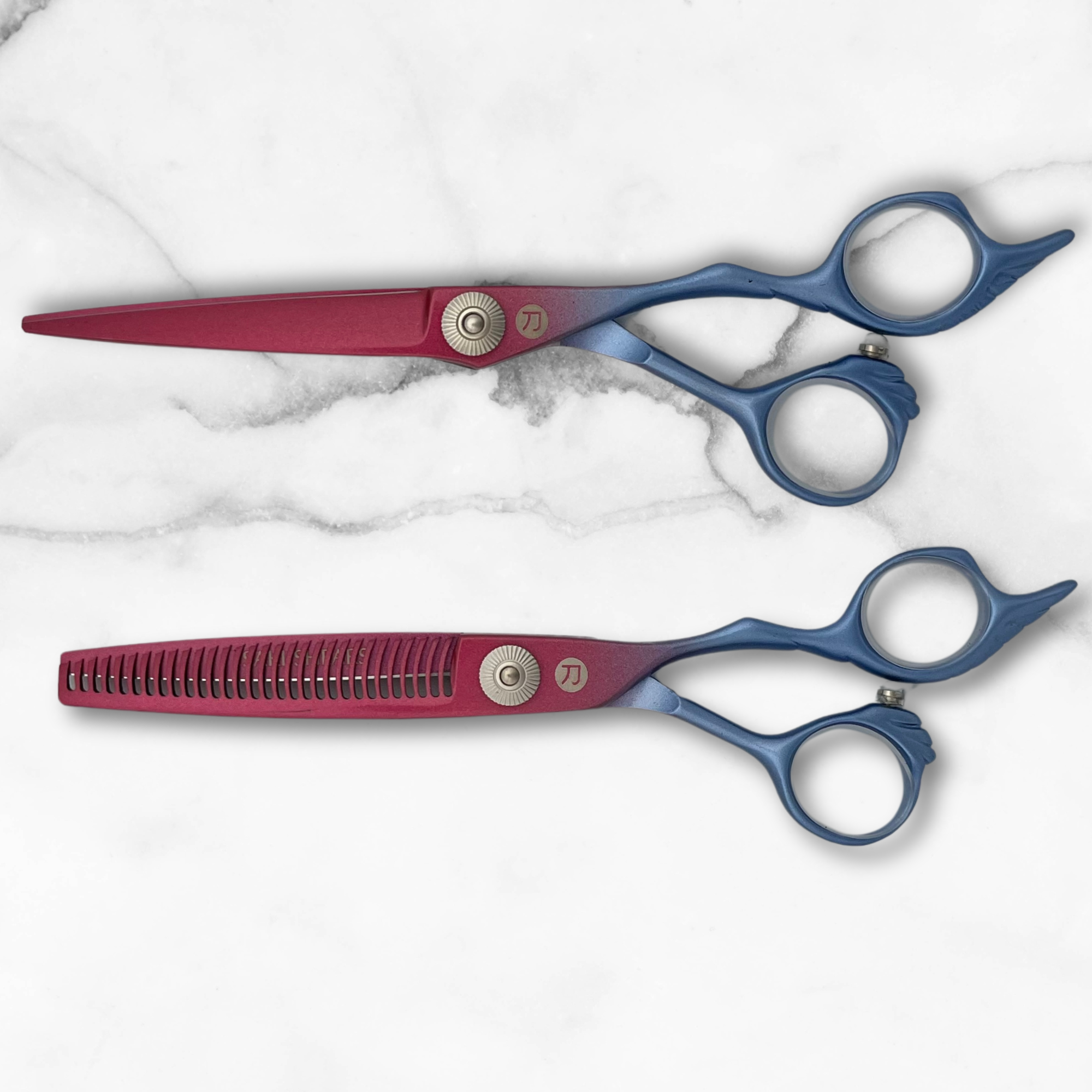
Saki Tomika Hair Shears: The Ideal Entry Point for Rising Stylists
Your first professional shear purchase is the one most likely to go wrong. Fresh out of cosmetology school, you're choosing between a $40 beauty-supply special that will fold hair within a year and a $500 flagship you can't yet justify. The middle of that range is where careers actually get built, and it's where the Saki Tomika hair shears sit: a shear handmade from Japanese 440C stainless steel, with a convex edge and an offset ergonomic handle, at $180. This review covers what the Tomika does well, where its limits are, and how it compares against the other shears a new stylist should be weighing.
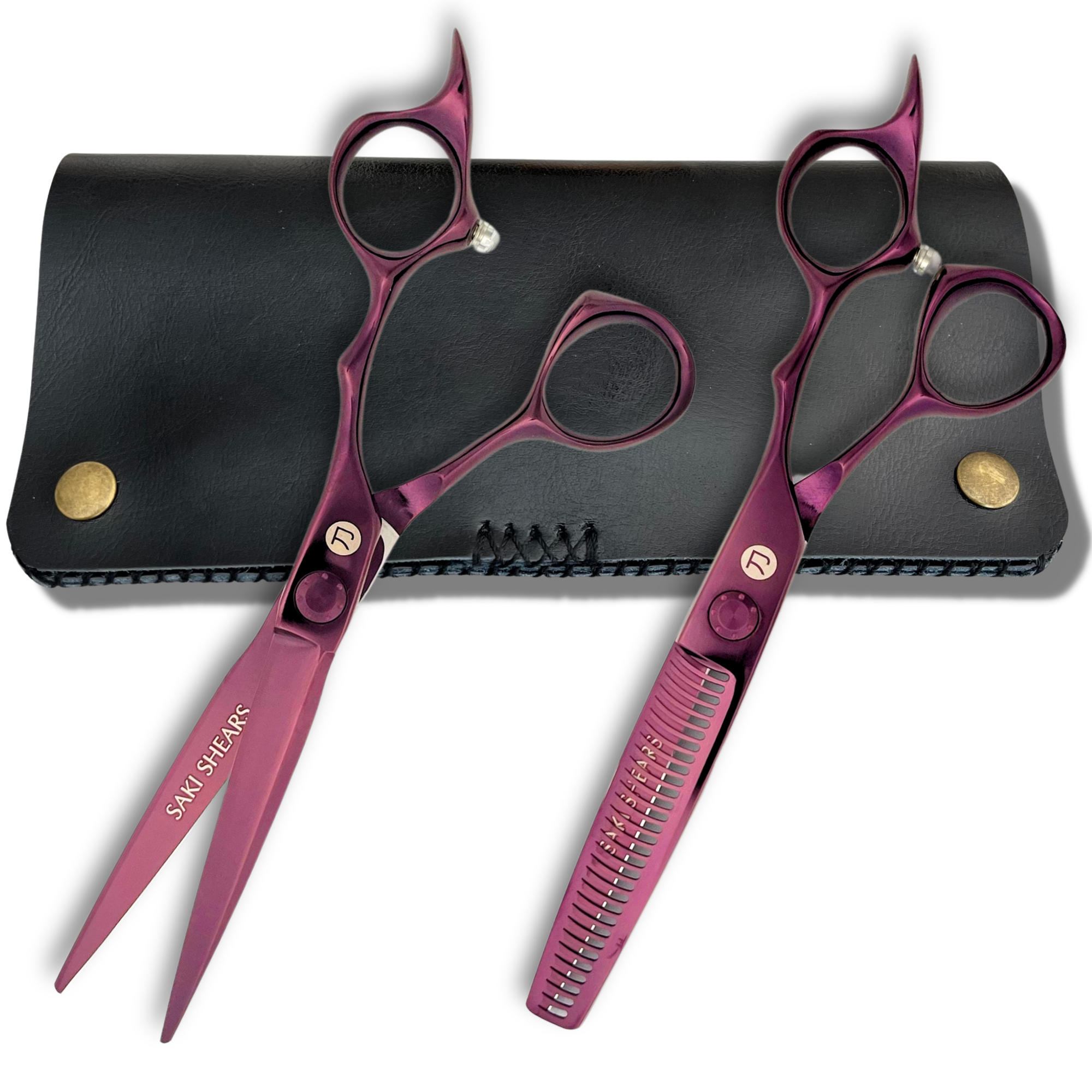
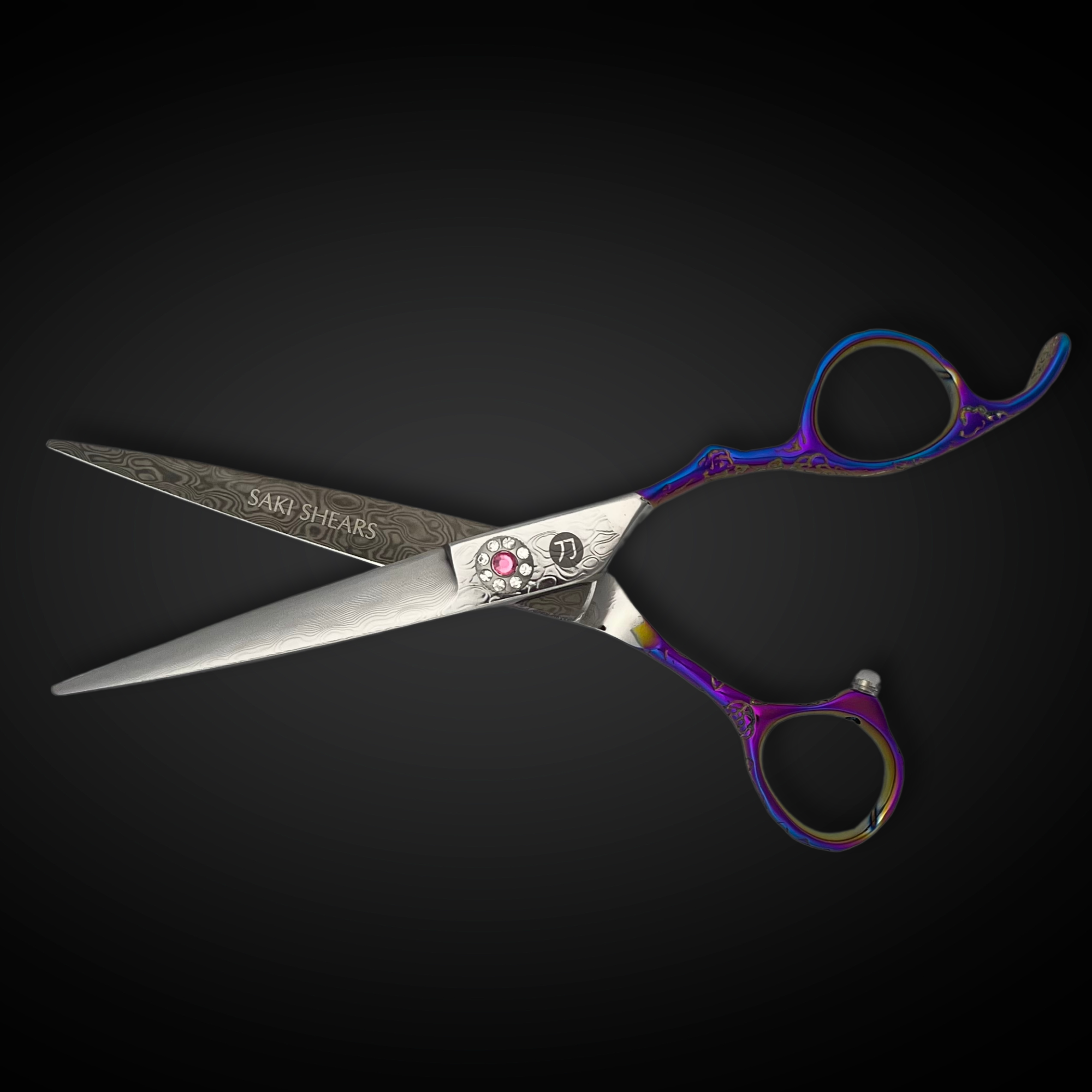
The specifics: a 5.5-inch, two-piece welded shear with an offset handle, removable thumb rest, comfort rings, and a convex 440C blade at 60–61 HRC, shipped with a hair razor and a carrying case. Underneath those specs are the two decisions that matter most for a developing stylist — a forgiving, sharpenable steel, and handle geometry that protects your wrist through the years you're building speed.
Saki Tomika Review: What 440C Steel Gives You at $180
The Tomika's blades are Japanese 440C stainless steel, hardened to 60–61 HRC according to Saki's specification. 440C is a high-carbon martensitic stainless with roughly 1% carbon and 17% chromium; typical hardness after heat treatment runs 58–60 HRC, with well-executed examples reaching 61 (see the 440C material data at Abrams Industries). Those numbers translate into three things you'll feel at the chair.
Edge life comes from the hardness: 60 HRC is what lets a blade hold its working edge under daily cutting, where the failure mode of soft, no-name stainless is an edge that rolls and starts pushing hair instead of cutting it. Corrosion resistance comes from the 17% chromium — the shear tolerates the wet-hair, color-residue environment of a real salon without spotting, provided you dry and oil it. And the underrated one for a first shear: 440C is forgiving to sharpen. Any competent sharpener can restore a 440C convex edge. Harder premium alloys hold an edge longer but punish a bad sharpening job, and new stylists don't yet have a trusted sharpener on speed dial.
The trade-off is real: premium VG-10 and cobalt-alloy shears hold their edge longer between services and take a slightly finer edge — and sit a full price tier higher. You're trading some edge retention for a lower cost of entry. For a stylist still developing technique, that's the right trade. The full comparison is in our guide to 440C vs VG10 vs Damascus steel types.

The Handle Is the Part That Protects Your Career
New stylists shop blades; experienced stylists shop handles. Repetitive scissor work with the wrist out of neutral position is a documented driver of musculoskeletal complaints in hairdressing, and research published in the International Journal of Industrial Ergonomics found that ergonomically designed hairdressing scissors increase the time the wrist spends in a neutral position compared with conventional designs. That's the problem the Tomika's handle is built against.
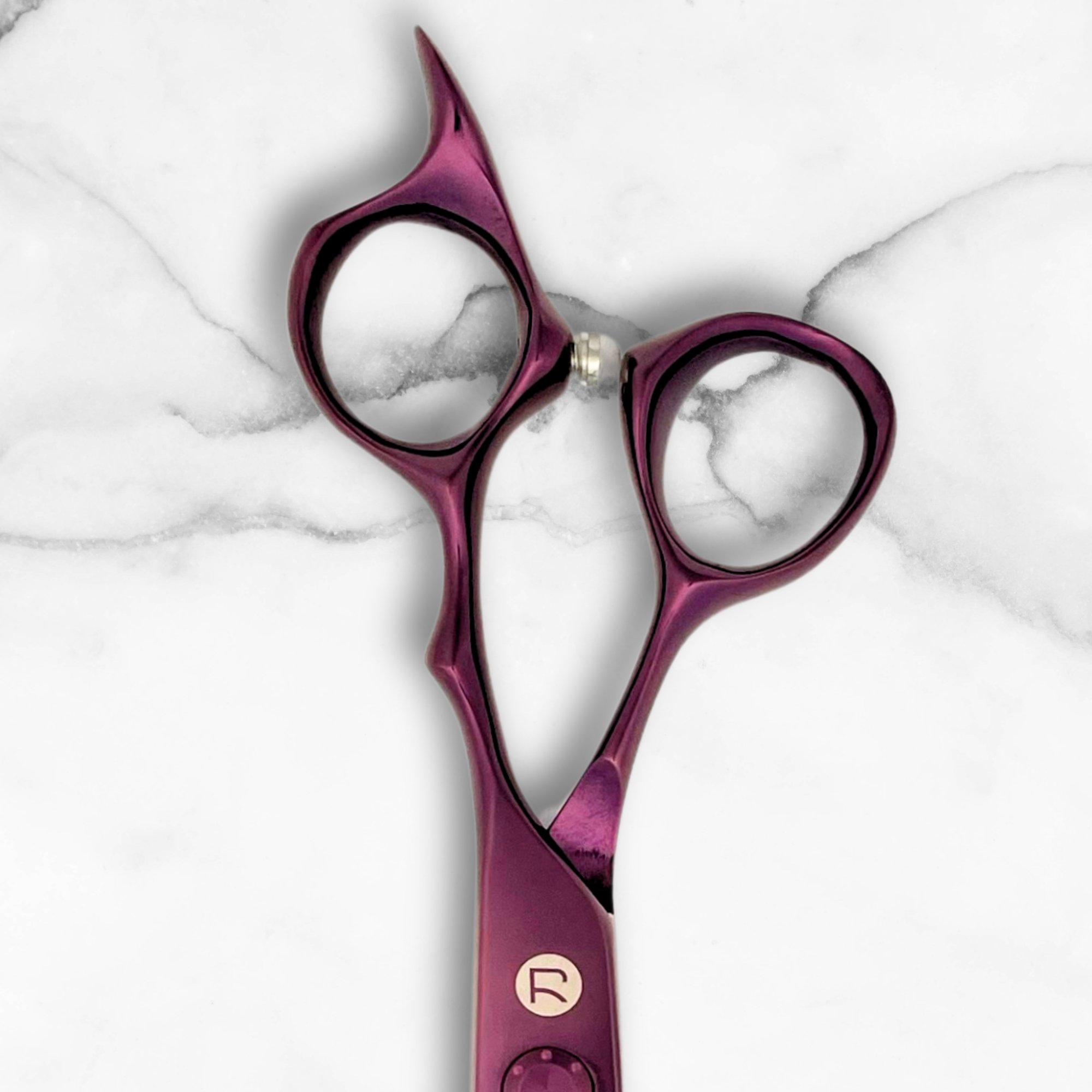
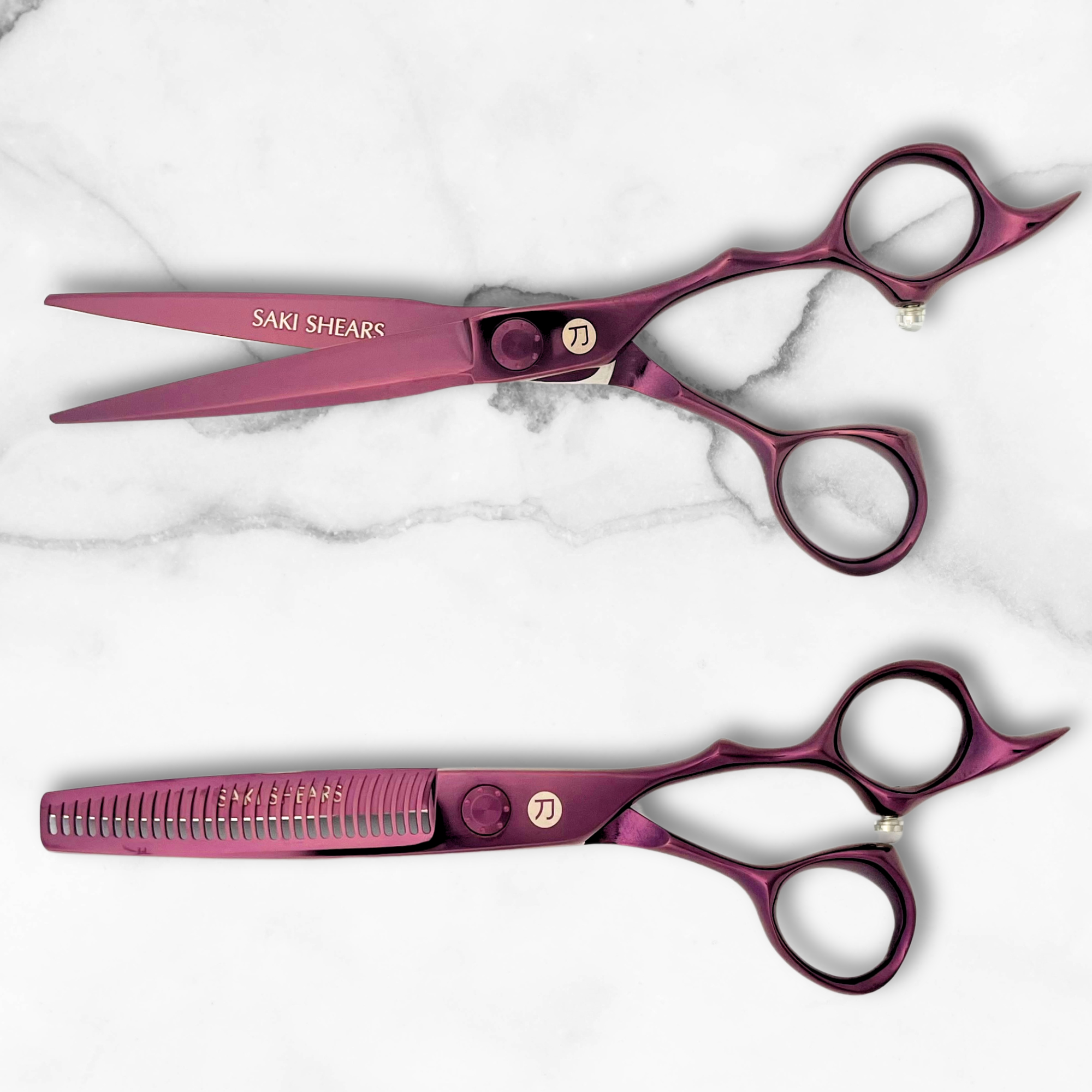
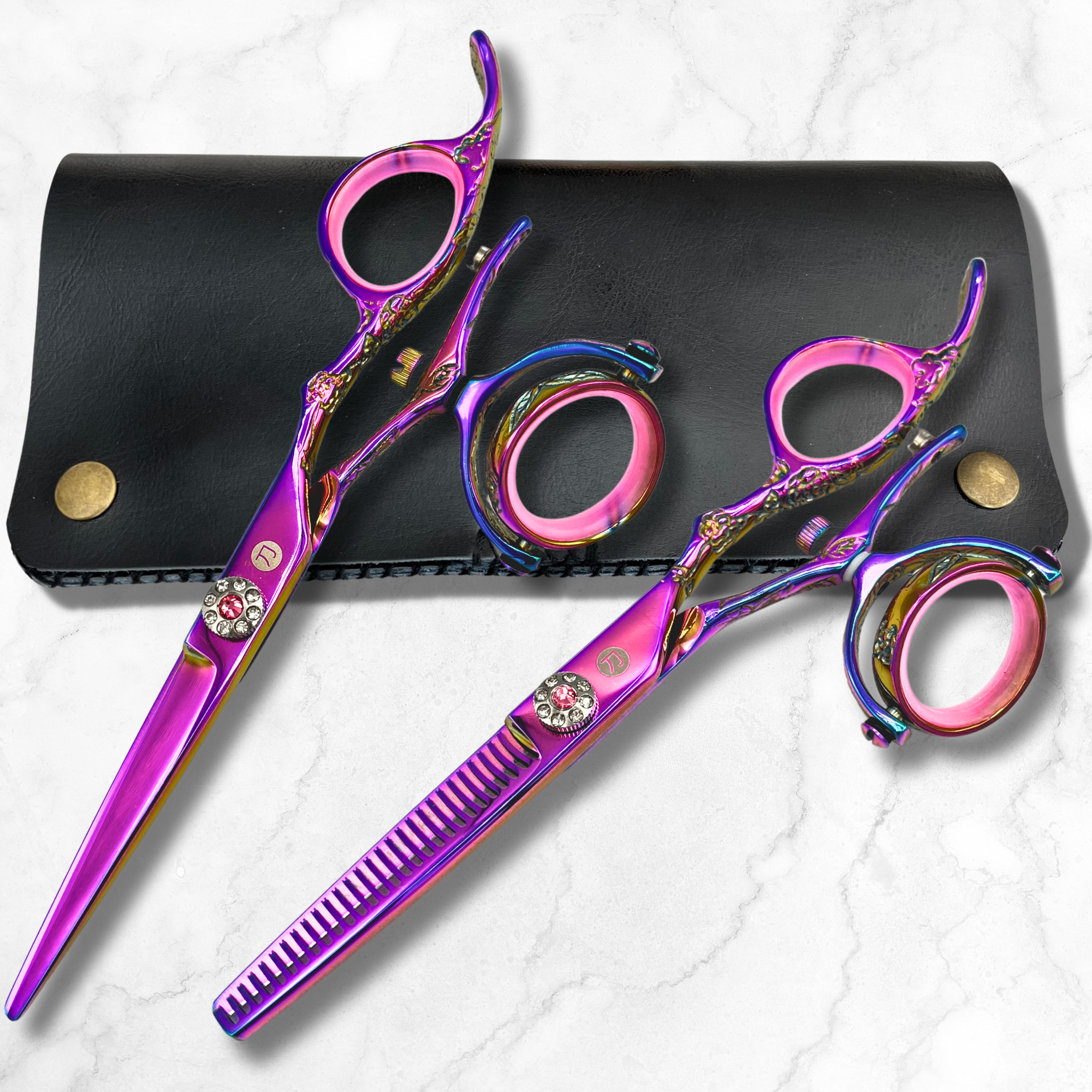
It uses an offset design: the thumb ring is set forward on a shortened handle, so your thumb travels less to close the blades and your elbow can drop while cutting. Compared with a classic opposing-grip shear, you cut with a more natural hand position and less tension across the top of the hand. The Tomika adds a removable thumb rest — worth keeping on while you're building palm-to-palm technique, easy to take off once you find it in the way — and comfort rings that stop the metal edges of the finger holes from rubbing during a full column of clients.

The caveat: no handle design substitutes for technique. If you cut with a flying elbow and a cocked wrist, an offset handle reduces the damage; it doesn't eliminate it. Build the habit of cutting palm-to-palm early — it's far harder to unlearn bad mechanics five years in.
Convex Edge, Triple-Honed: What That Buys You
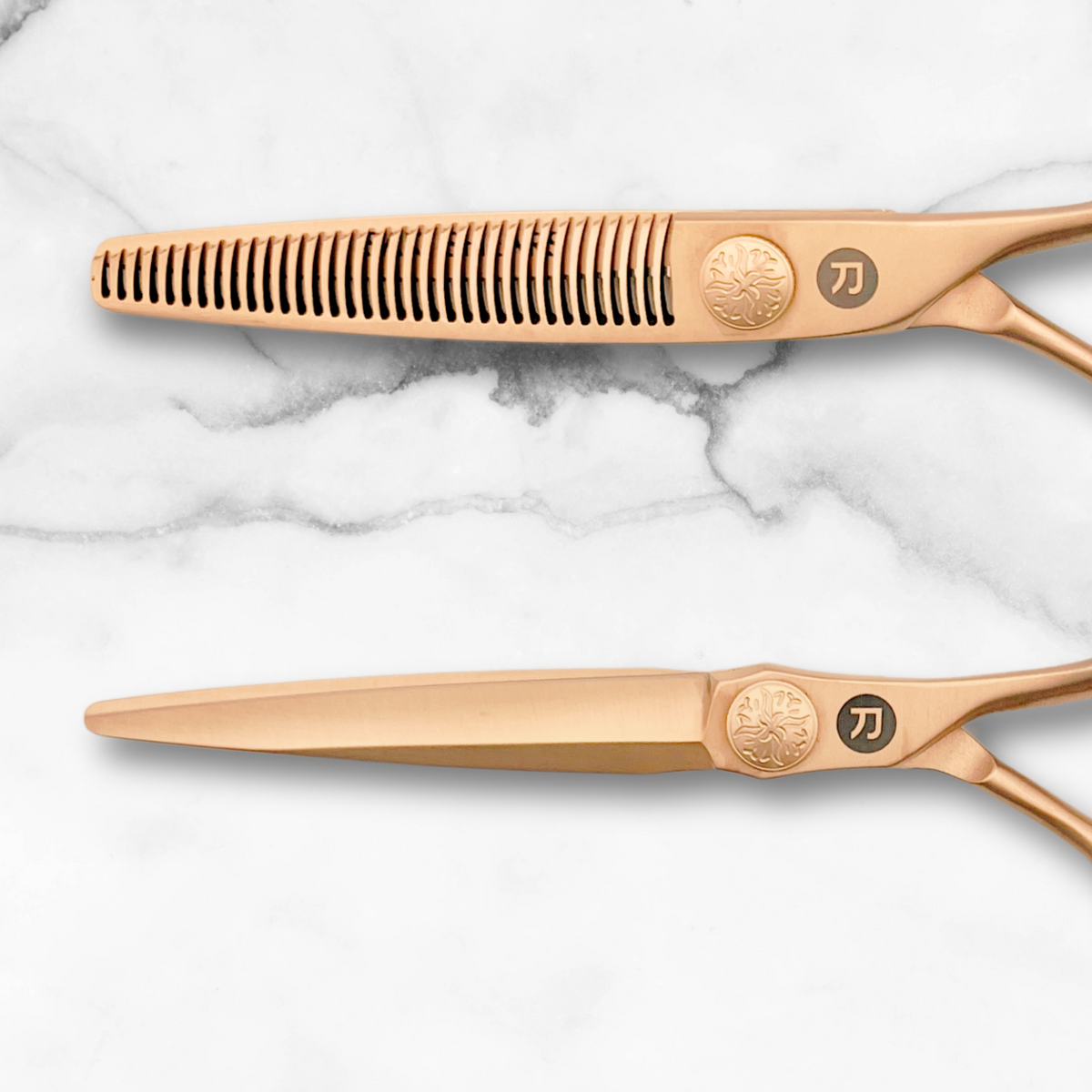
The Tomika carries a Japanese-style convex edge — "triple-honed" in Saki's spec, meaning the factory finishes the edge in multiple honing passes rather than a single grind. A convex edge curves smoothly to its cutting apex instead of meeting at a flat bevel, which is why it slices rather than snips. In practice that means it supports the techniques that beveled budget shears fight you on: slide cutting, point cutting, and soft channel work all depend on a blade that can travel through hair without grabbing.
For a rising stylist this matters in a specific way — you're learning those techniques right now. Practicing slide cutting with a serrated or beveled edge teaches you to push through resistance that shouldn't be there. A convex edge gives you accurate feedback: when the cut drags, it's your angle, not the tool.

The trade-off with any convex edge: it must go to a sharpener who works convex edges on a flat hone or wheel. A standard-bevel grind will flatten the geometry and dull the shear's slide-cutting ability permanently. Budget for professional sharpening on a regular cycle — how often depends on your client volume; that's the cost of ownership for every convex shear, not just this one.
Why 5.5 Inches Is the Right First Length for Most Stylists
The Tomika comes in one size: 5.5 inches. That's a deliberate fit for its audience. A 5.5-inch shear keeps the blade tip close to your control point, which is what you want for precision work — cutting around ears, necklines, fringe, and any detail where a longer blade would overshoot. It also matches smaller and average hand sizes better than the 6-inch-plus shears barbers favor for scissor-over-comb volume work.
Picture the two cuts that bracket a new stylist's week. A one-length bob with a hard perimeter: the 5.5-inch blade lets you work the line in short, controlled closures with the tips visible against the skin, so any correction stays small. Then a dense, all-over men's crop: there you'll feel the length limit, closing the shear twice where a 6-inch blade would pass once. Neither is wrong — that's the trade the length makes, and it's why the second shear most stylists buy is a longer one, not a better one.
What you give up is speed on long, heavy sections; a 6-inch blade removes more hair per closure. Most working stylists eventually own both lengths and reach for each daily. Starting at 5.5 teaches control first, which transfers up; starting long teaches speed first, which doesn't transfer down. Our 5.5 vs 6 vs 7 inch shear size guide covers the decision in depth.
How the Tomika Compares in the Saki Line
The honest question isn't "is the Tomika good" — it's "why this one instead of the shear $10 or $20 away from it." Here's the direct comparison:
| Shear | Size | Steel | Price | Best fit |
|---|---|---|---|---|
| Tomika | 5.5" | Japanese 440C, 60–61 HRC | $180 | Precision-first stylists; smaller hands; first pro shear |
| Kotaro | 6" | Japanese 440C | $189 | All-around salon work; larger hands; scissor-over-comb |
| Katana | 6" | Japanese 440C | $199 | Barbers and stylists wanting a heavier workhorse |
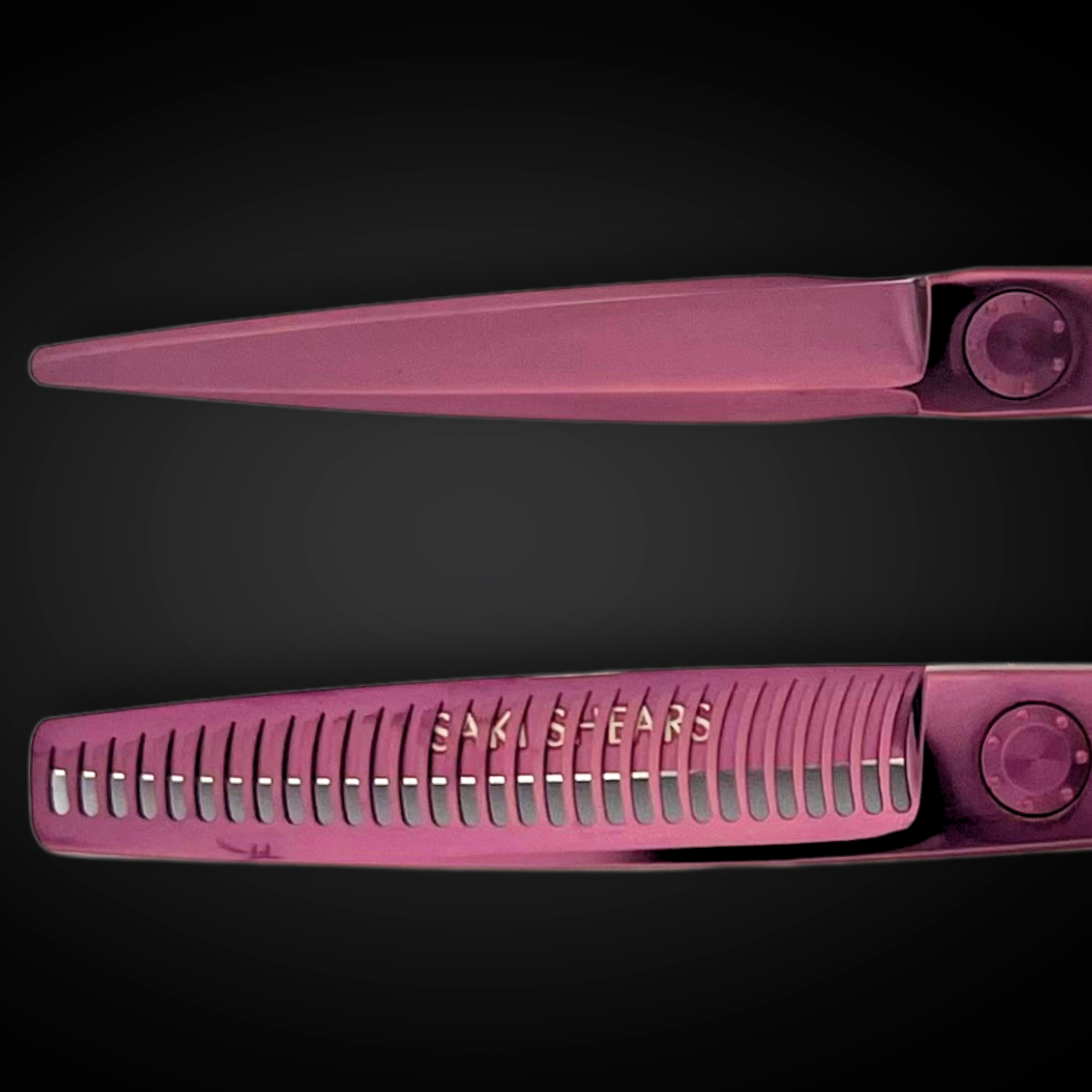
| Kohana Set | 5.5" cutting + thinning | Japanese 440C | $265 | Stylists who want cutting and thinning shears matched from day one |
Current Saki Shears pricing at time of writing; sizes and steel from each product's specification.
Read the table this way. If texturizing and blending show up in a large share of your services, the Kohana Set's matched thinning shear is worth the extra $85 over the Tomika alone — a matched pair from day one beats fighting a mismatched thinner bought later. If your book leans men's cutting or you have large hands, the extra half inch on the Kotaro or Katana earns its keep. The Tomika wins when precision work is the priority and you want the offset ergonomics at the lowest cost of entry into handmade Japanese steel. Students working with a tighter budget can also look at the Makoto — Saki's dedicated student hair cutting scissors at $175 — though at a $5 difference, the Tomika's jewel-and-ring styling and included extras usually settle it.
On that styling: the pink rings and jeweled tension screw are cosmetic, full stop. They cut nothing. But tools you enjoy picking up are tools you maintain, and in a row of black-and-steel shears on a salon station, yours is the one nobody "accidentally" borrows.

Setting Up the Tomika: First Habits That Stick
A new shear either becomes an extension of your hand or a source of mystery problems, and the difference is usually setup and habit, not the shear. Three things to get right early.
Set the tension before your first cut. Out of the box, check it: hold the shear points-up, lift one handle to 90 degrees, and release. The blade should fall about two-thirds closed on its own. Too loose folds hair; too tight burns your thumb out by mid-afternoon. The Tomika's tension screw adjusts without tools — our walkthrough on how to adjust shear tension correctly shows the test in detail.
Build a two-minute maintenance habit. Wipe the blades between clients, then end each day with a proper clean and two drops of shear oil at the pivot. 440C resists corrosion; it doesn't ignore a shear put away wet with color residue in the pivot. The routine in our guide to cleaning and oiling professional hair shears takes less time than sweeping your station.
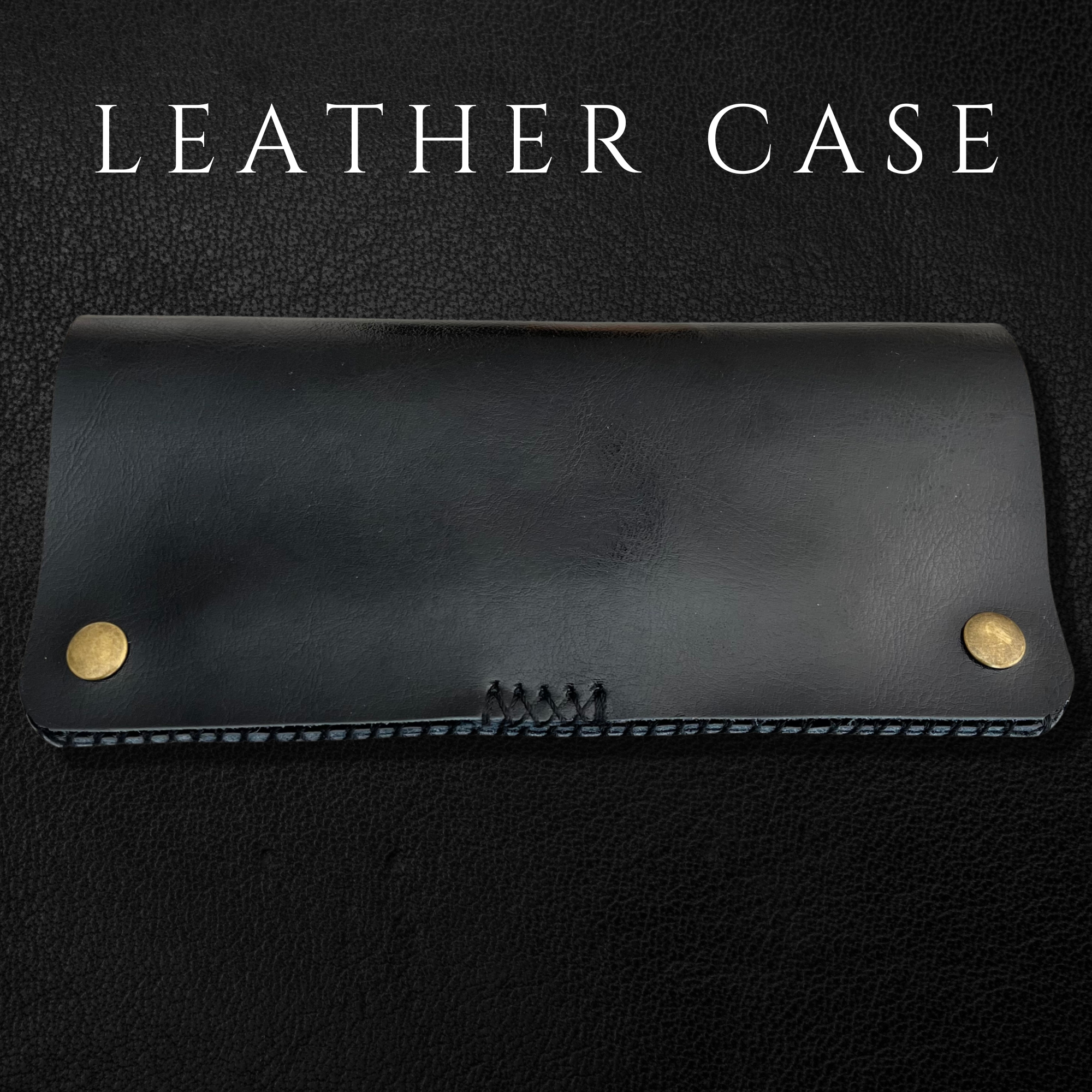
Use the case. The Tomika ships with a carrying case and a hair razor. The case isn't packaging — a shear loose in a drawer with combs and clips is how convex edges chip. Drops onto salon tile are the other killer; the tips almost always land first, and tip damage means a sharpening visit at minimum.
Common early mistake worth naming: cutting anything that isn't clean human hair. Mannequin practice is what your school shears are for; dry-cutting a mannequin's synthetic-blend hair with a convex edge dulls it far faster than client work ever will.
Frequently Asked Questions
How often do convex hair shears need to be sharpened?
Go by performance, not the calendar. When a well-tensioned shear starts pushing, folding, or tugging hair instead of slicing cleanly, it's due — and how fast you get there depends on your client volume, the hair types you cut, and how consistently you clean and oil the pivot. The non-negotiable part: a convex edge must be serviced by a sharpener who works convex geometry, because a standard bevel grind permanently changes how the shear cuts.
What size shears should a new stylist start with?
Most new stylists do best starting at 5.5 inches. The shorter blade keeps the tip close to your control point for detail work around ears, fringe, and necklines, and it suits small-to-average hands. Add a 6-inch or longer shear later for scissor-over-comb and heavy sections — control learned on a short shear transfers up better than speed learned on a long one transfers down.
How much should I spend on my first pair of professional shears?
The practical range is $150–$300. Below that, you're typically getting soft steel and stamped construction that quickly loses its edge and often can't be properly re-sharpened. Above it, you're paying for premium steels and refinements a developing stylist won't yet feel. A handmade 440C shear like the $180 Tomika sits in the zone where the tool outlasts the learning curve.
The Bottom Line
The Tomika is not the shear you'll retire with — it's the shear that gets you there with your wrist intact and your technique built on accurate feedback. Handmade from Japanese 440C steel at 60–61 HRC, a true convex edge, offset ergonomics, and a tension system you can manage yourself, at $180 with the razor and case included. Its limits are known and priced in: one length, and edge retention a tier below the exotic steels. For a rising stylist choosing a first serious shear, that's a clean trade. Full specifications are on the Tomika product page.